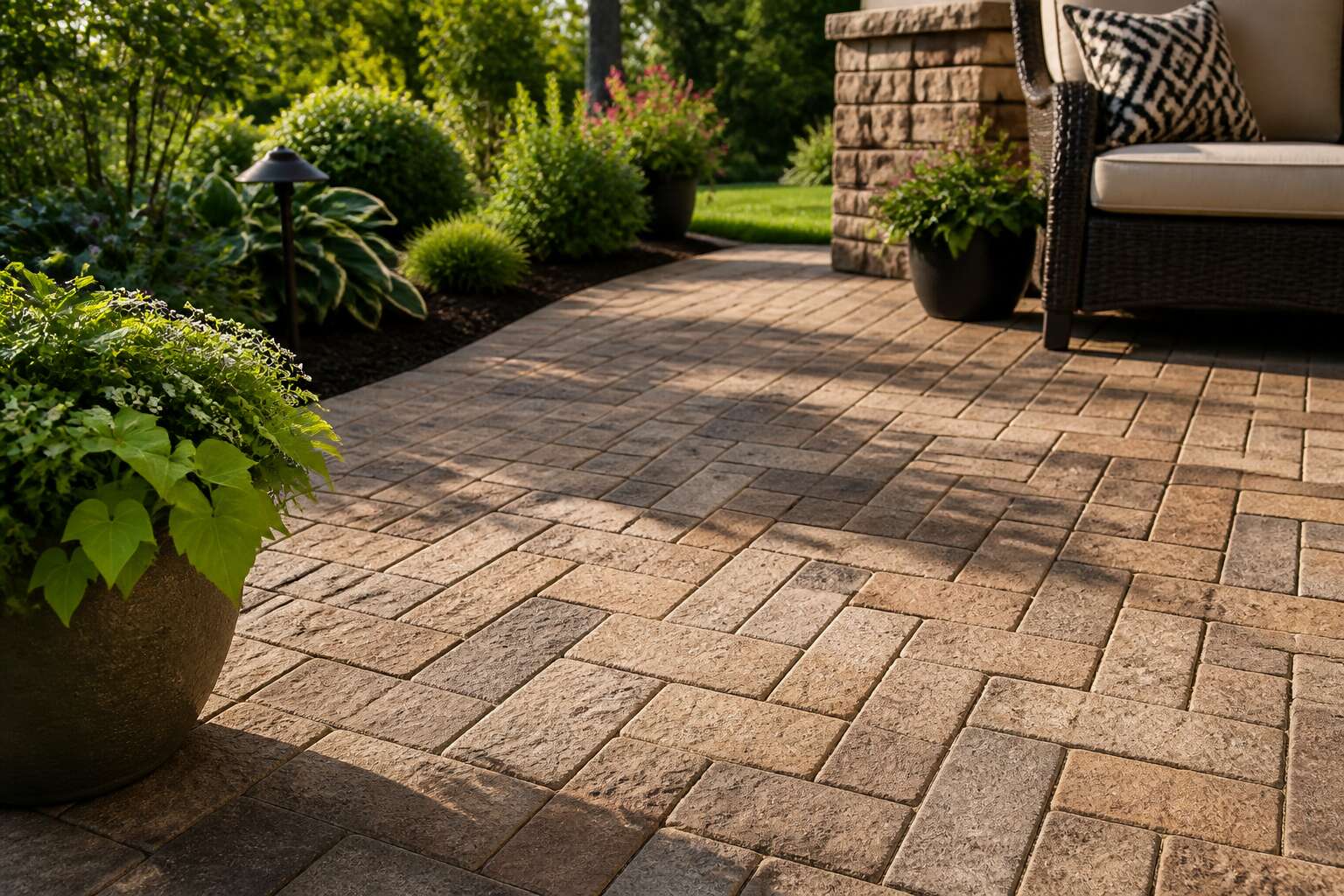
Defining Man-Made Stone Pavers
Composition and Raw Materials
Most people never inspect the paver beneath their feet. That is a mistake. The composition of man-made stone pavers determines everything from load-bearing capacity to colour retention.
The raw materials are straightforward: crushed granite or quartzite aggregate, Portland cement, polymer admixtures, and synthetic iron oxide pigments. The proportions matter more than the ingredients themselves. A typical blend looks like this:
- 70 to 80% aggregate by weight
- 10 to 15% cementitious binder
- 3 to 5% iron oxide pigment
- 2 to 3% polymeric additives for water resistance
This dense matrix produces a paver with low water absorption and high compressive strength. Simulated stone paving relies on this exact formulation to endure South African temperature swings without cracking or fading.
Manufacturing Processes and Curing Methods
The first 48 hours after pressing determine whether a paver survives three decades of Highveld sun or spalls within one rainy season. Simulated stone paving manufacturing follows a strict sequence of vibratory compaction, hydraulic pressing, and staged hydration.
- Vibratory compaction removes trapped air from the dense aggregate matrix.
- Hydraulic pressing at 150 bar shapes the unit to precise dimensional tolerances.
- Controlled demoulding prevents micro fracturing along the paver edges.
The curing methods determine the final strength. Fresh pavers enter a humidity controlled chamber where temperature and moisture are calibrated daily. Ambient air drying suits low volume orders, while steam curing accelerates the process for large scale projects. Both methods share one rule: the cement binder must hydrate slowly to form a dense, interlocking crystal structure. In our experience, pavers that fail in the field are almost always the ones rushed out of the chamber.
Common Residential and Commercial Applications
Simulated stone paving bridges the gap between natural quarried stone and the practical demands of modern construction. In South Africa, where Highveld frost and coastal humidity test exterior surfaces, these man-made units offer a controlled alternative. They are not hacked from a hillside. They are engineered in a factory, which means every batch delivers the same colour, texture, and strength.
Residential driveways remain the most common application. Homeowners choose these units for their consistent finish and slip resistance. Commercial spaces, such as hotel forecourts and shopping centre walkways, favour them for high traffic durability. A typical project might involve:
- Interlocking driveway units that handle heavy vehicle loads
- Patio pavers with a tumbled finish for a weathered look
- Commercial walkway slabs cut to exact dimensional tolerances
The appeal lies in predictability. Natural stone varies from batch to batch. Simulated stone paving removes that uncertainty.
Expected Lifespan and Durability Factors
The expected lifespan of a properly manufactured simulated stone paving unit can exceed thirty years. That figure depends on two metrics: compressive strength and water absorption. A paver with lower porosity resists the cyclical freezing and thawing that cracks lesser products on the Highveld.
Durability comes down to a few controllable variables:
- Compressive strength above 30 MPa for driveway traffic
- Water absorption below 6 percent for coastal salt exposure
- A calibrated surface texture that retains slip resistance as it wears
I have walked across ten year old installations where the pavers still held their edge and colour, and others where the surface spalled within three winters. The difference was the raw material and the cure. Quality simulated stone paving rewards the buyer who reads the technical sheet over the showroom sample. The ground beneath each paver matters too; a compacted base and proper edge restraints extend service life.
Benefits Over Natural Stone
Cost Efficiency and Budget Impact
Natural stone prices in South Africa have climbed sharply over the past decade, pushed by quarry shortages and rising diesel costs. That pressure lands directly on homeowners. Simulated stone paving cuts the financial load without asking you to settle for a lesser look. We see that tradeoff every week.
The savings show up across the whole job:
- Material costs run lower, since the base is readily available aggregate and cement.
- Installation takes less time, so labour bills shrink.
- Durability cuts future expenses, meaning fewer replacements.
Budget impact follows the same trend. Contractors frequently add surcharges for uneven natural slabs, while simulated stone paving delivers predictable estimates and fewer surprises during a build. For a driveway or pathway, that predictability keeps a project within its original allocation. South African suppliers now offer these pavers locally, so you avoid the import premiums attached to natural stone. You plan once, and the final invoice matches.
Lightweight Characteristics and Ease of Handling
Carrying natural stone slabs is physically demanding. These pavers change that. Each paver is lighter, so two people can manage a load that used to require four. That translates into quicker placement and less strain on your team. You can cut and shape them with standard tools, no diamond blades needed. For a DIY homeowner, that makes all the difference!
- Easier lifting means less fatigue over a long day.
- Faster cutting and fitting reduce overall installation time.
- Simple handling allows precise adjustments without heavy equipment.
The lightness also opens up design options. Rooftop terraces and elevated walkways, where natural stone would be too heavy, become viable with simulated stone paving. You get the texture and colour of quarried rock without the back-breaking work.
Uniformity in Color, Size, and Texture
Natural stone varies from one batch to the next. Quarry veins shift mid extraction, so colours clash and textures feel mismatched. Simulated stone paving removes that uncertainty. Every paver matches the next in hue, edge, and surface finish, creating a patio that forms a single, consistent surface.
Uniformity extends beyond visual appeal. In my experience, natural stone sizes differ by millimetres, forcing improvised joints. The material holds consistent dimensions, so lines stay straight and spacing even. Your crew’s layout works on the first attempt!
For a large courtyard or a commercial path, this consistency matters:
- Showroom samples match the delivered product.
- Future repairs blend seamlessly.
- Texture stays predictable underfoot.
Simulated stone paving turns planning from a guess into a fixed specification. You focus on design, not on compensating for what the rock happened to be that day.
Reduced Maintenance Requirements
Most homeowners underestimate the ongoing cost of natural stone. Joints need re-sanding. Surfaces need sealing. Weeds push through the gaps. Simulated stone paving removes those rituals. The dense, non-porous surface resists staining from red wine, braai fat, and rust. A quick rinse with a garden hose handles the rest.
In South Africa, where summer thunderstorms and dusty winters test outdoor surfaces, this matters. The pavers do not spall, chip, or effloresce. You get a patio that stays presentable with minimal effort. With simulated stone paving, upkeep becomes a thoughtless habit.
Consider what disappears once the pavers are down:
The sealant bucket.
The joint sand.
The weed killer.
The pressure washer rental.
None of it earns a place in your garage. You buy the surface once, then live with it.
Environmental and Sustainability Advantages
Natural stone extraction leaves visible scars on the land. Quarries consume water, displace soil, and demand heavy machinery for decades. Simulated stone paving avoids that destruction entirely. The manufacturing process uses controlled inputs, often including recycled industrial aggregates, and produces uniform units with minimal waste.
Transport emissions also drop. Because simulated pavers are lighter than their natural counterparts, delivery trucks carry more surface area per load. Local South African production shortens the distance from factory to site. Across a typical suburban project, that difference compounds into meaningful fuel savings.
- Less quarrying means preserved indigenous flora
- Recycled materials reduce landfill pressure
- Lower shipping weights cut diesel consumption
- No chemical treatments needed during installation
Over years of service, simulated stone paving holds its shape and colour, delaying resource-intensive replacements. For me, that endurance reflects true sustainability.
Design Possibilities and Aesthetic Flexibility
Replicating Premium Stone Looks and Textures
When a homeowner in Cape Town or Johannesburg first touches simulated stone paving, the reaction is usually surprise. The surface carries the same tactile variation as natural slate or travertine, yet costs a fraction of the quarried original. It is a design tool with its own logic.
Textures range from smooth, water-worn river stone to rugged, split-faced granite. Grain, fissures, and subtle colour shifts reveal themselves on close inspection; I find that realism striking every time.
Different finishes suit different contexts:
- Honed surfaces that read smooth and contemporary
- Tumbled edges that carry an aged character
- High-relief faces that cast strong shadow lines
Design flexibility extends beyond texture. Specify a consistent palette for a corporate plaza or a varied, organic blend for a garden trail. That control is the real advantage of simulated stone paving.
Color Blends, Finishes, and Surface Patterns
Colour blending in simulated stone paving is a subtle craft. Pigments are layered, not simply stirred through, so each slab carries its own tonal drift. A warm grey may reveal ochre veins, while a charcoal blend holds faint blue undertones. This variation lets landscapers compose surfaces that feel organic rather than manufactured.
Finishes and surface patterns work together to define a space. A homeowner in Pretoria might choose a flamed finish for a braai area, while a garden path calls for a brushed texture that catches the light softly. The pattern options include:
- Running bond layouts that extend sightlines
- Basketweave patterns for courtyard intimacy
- Random flagstone arrangements that mimic natural scatter
Each choice shifts how the paving reads from the street and from the stoep. This is where simulated stone paving earns its place in the design conversation. The palette and pattern are decided together, not in isolation.
Creative Layouts and Paver Shapes
Simulated stone paving responds to the designer’s intent without the limitations of natural quarries. In Johannesburg, I have watched a plain driveway shift character with long rectangular planks that pull the eye toward the garage. In Stellenbosch, a winery courtyard used hexagonal pavers to add visual rhythm across a wide open space. The unit shape changes how the ground plane reads:
- Rectangular planks create directional flow
- Square modules offer stable, repetitive order
- Irregular forms introduce a less predictable surface
The casting process produces these forms with minimal waste. That is the practical advantage. The aesthetic advantage is the freedom to combine shapes within one project, pairing large squares with narrow planks to define separate zones. This is where simulated stone paving shows its flexibility. The finished surface feels designed, deliberate, and specific to its setting.
Integrating with Landscaping and Hardscaping Elements
A paving material reveals its quality when it meets the garden bed, the retaining wall, or the outdoor kitchen counter. Simulated stone paving handles these junctions with a composure that quarried stone rarely offers. In Cape Town, I have watched a pool deck transition into a lawn edge without the usual awkward lip. The dimensional consistency of each unit simplifies alignment with surrounding hardscaping.
Consider the intersections between paving and planting. Clean edges create precise termination points. No chipped corners, no irregular gaps where weeds establish a foothold. The integration points carry the design:
- Step treads and copings sourced from the same manufacturer
- Contrasting textures that distinguish entertaining zones
- Joint widths scaled to match adjacent masonry courses
The outcome is a landscape where every element appears intentional. That sense of coherence is difficult to replicate with quarried material!
Mixing Textures for Modern or Rustic Styles
Texture changes the way a surface feels underfoot and at the eye. In a Johannesburg courtyard, I once placed a smooth, honed paver next to a rough, split-face band running through the centre. The contrast created a modern rhythm without any extra decoration. That flexibility is why simulated stone paving works across styles.
Because every unit is cast in a controlled setting, you can mix surface textures with no concern for thickness differences. The joints stay tight, and the transition feels deliberate. This is not possible with quarried material, where depth varies and matching textures means paying for rare blocks.
Think about these combinations:
- A matte, brushed finish for a contemporary patio
- A tumbled, weathered surface for a farmhouse path
- A lightly cleft texture for a rustic driveway
The same system moves easily from a penthouse terrace to a wine farm stoep. Texture determines the style. The paving simply follows your hand.
Customization Options for Unique Projects
Every plot in Johannesburg or Cape Town carries its own constraints. A narrow urban garden, a steep kloof, a windy coastal erf. Simulated stone paving bends to these conditions. I once worked with a client who wanted a herringbone pattern curving around an olive tree. Cast units made that geometry possible. The tree remained the centrepiece.
Customization goes beyond pattern. You can request edge treatments, thicknesses, and density gradients to manage drainage on a sloped site. Moulds allow irregular shapes, so a pathway can mimic a dry riverbed or a formal square can hold its geometry.
Options include:
- Non-standard shapes for custom inlays
- Variable paver dimensions for random, organic layouts
- Surface finishes that respond to light
The result reads as intentional. Simulated stone paving offers flexibility that quarried stone cannot match, because the design starts with your project, not with the limitations of a quarry block.
Installation Best Practices and Technical Guidelines
Base Preparation and Subgrade Requirements
Subgrade failure accounts for nearly 80% of paving problems, according to civil engineers. For simulated stone paving, the ground beneath is the real foundation. Excavate to a depth of 150 to 200 mm for pedestrian paths, or 250 mm for vehicle access. Compact the subgrade in 100 mm lifts, checking density with a nuclear gauge.
– Remove all topsoil and organic material.
– Wet the subgrade if it is too dry, but avoid overwatering.
– Slope the finished base at 1.5% for drainage.
After compaction, add a 100 mm layer of G5 crushed stone. Spread and compact this base with a vibrating roller. A stable, level base prevents uneven settling and cracked joints. Take time to inspect your work before laying any pavers. When installing simulated stone paving, these steps are non-negotiable.
Laying Techniques for Patterns and Edging
When the base is ready, laying simulated stone paving requires precision and a steady hand. Start from a straight reference line, the edge nearest the building. Dry lay a few stones first to visualise the pattern and adjust joint widths before committing to mortar.
For edging, use full stones wherever possible. Cut pieces belong at the ends, not the middle. A mechanical saw with a diamond blade gives clean edges. Keep joints consistent, 5 to 10 mm, and tap each paver with a rubber mallet to seat it evenly.
Common patterns for simulated stone paving include:
- Running bond, where joints stagger by half a stone.
- Basket weave, for a more structured, geometric feel.
- Random ashlar, using mixed sizes for a natural stone look.
Check the level with a straightedge. A hollow will collect water! Edging restraints, whether concrete haunching or steel strips, hold outer stones and prevent creep over time.
Jointing Materials and Sealing Options
I have watched more than one finished surface fail in the joints, not the stones. The choice of jointing material is a quiet admission of how this surface will age, and how much patience you are willing to offer it. Polymeric sand tightens into a firm matrix, resisting ants and washout, but it demands a dry installation. Mortar feels permanent, yet it can crack under movement. Open gravel joints drain freely but invite weeds. Each option is a compromise between stability and flexibility:
- Polymeric sand hardens into a tight bond, though it needs stable weather.
- Mortar offers permanence but transfers ground movement into cracks.
- Gravel joints allow drainage and simplify later repairs.
For sealing, penetrating sealers protect each paver without altering its texture. Film-forming sealers change the surface entirely, and they wear unevenly. In the South African sun, that means yellowing within months! Simulated stone paving rewards honest maintenance choices.
Drainage and Slope Considerations
Water is the quiet enemy of any paved surface. In South Africa, where summer storms arrive with little warning, a standing puddle can undermine months of careful work. Drainage begins before the first paver is placed. The subgrade needs a consistent fall of at least 1.5% away from buildings. This gentle slope moves runoff toward designated collection points, preventing hydrostatic pressure from lifting the stones.
For simulated stone paving, the base layer must also breathe. A compacted crushed stone foundation allows water to percolate downward rather than pooling between joints. I always check the contour lines twice before laying. A simple string line and level can save you from costly rework later. Consider these slope guidelines:
- Avoid low spots where debris and moisture accumulate.
- Direct runoff toward existing drainage channels, not onto neighbouring properties.
Steeper gradients demand additional edge restraint. The balance between speed of water flow and stability of the surface is delicate. Test the fall with a hose before committing to the final jointing stage.
Essential Tools and Equipment
Precision in simulated stone paving depends on the tools you bring to the site. A wet saw with a diamond blade grants clean edges, while a plate compactor with a urethane pad settles the stones without crushing their finish. I have seen sloppy work traced back to a missing spirit level.
Build your kit with these essential items:
- Rubber mallet for seating pavers evenly
- String line for long-run straightness
- Jointing brush for sweeping sand into gaps
Technical guidelines demand consistent thickness checks across the base. Use a screed rail to level the bedding sand, and never trust your eye alone. A 3 mm tolerance separates a smooth walkway from a trip hazard. The tools become an extension of your judgment, nothing more.
DIY Installation vs Hiring a Professional
Nothing humbles a weekend project like a shifting paver. For simulated stone paving, the line between a rewarding DIY job and a costly mistake often comes down to site conditions. In South Africa, clay soils swell and sandstone slopes shed water fast. I have watched homeowners lay a perfect surface over a mediocre subgrade, only to see it settle within a year.
Hiring a professional brings calibrated laser levels and skilled jointing techniques. A confident DIYer can succeed on simpler projects. Follow the guidelines: compact the subgrade in 150 mm layers, use a screed rail for bedding sand, and set edge restraints.
- Small patios suit a careful homeowner.
- Driveways and steep slopes demand a contractor.
- The plate compactor with a urethane pad decides.
Your call hinges on drainage and soil type. Get those right.
Maintenance and Long-Term Care Strategies
Routine Cleaning Methods and Products
Water alone removes most surface debris from simulated stone paving, yet the true test comes with oil stains and organic growth. A pH-neutral cleaner, applied with a soft brush, preserves the factory finish that mimics natural stone. My own patio endured a braai mishap last summer, and the clean-up took less than fifteen minutes!
For stubborn marks, a diluted solution of warm water and mild dish soap is effective. Avoid acidic products, which can etch the surface. High-pressure washing should be used sparingly, as aggressive nozzles may dull the texture.
Here is the routine I recommend:
- Sweep weekly to prevent grit from scratching the surface
- Rinse with a garden hose after dusty spells
- Treat stains immediately with a dedicated paver cleaner
Consistency matters more than intensity. A gentle approach keeps simulated stone paving resilient against the South African sun and seasonal rains.
Stain Prevention and Removal Techniques
After a decade of South African sun and thunderstorms, the difference between a faded patio and a pristine one comes down to prevention. Simulated stone paving does not give in to wear easily, yet its surface will reward a disciplined owner. A penetrating sealer applied every two years creates a barrier against the oils from braai drips and the tannins from fallen leaves. Without it, stains sink into the interstices and become permanent.
For spot stains, a paste of bicarbonate and water works quietly. Spread it over the mark, cover with cling film, and let it draw the grease out overnight. The texture stays untouched. I have watched neighbours lose their paving to neglect within three years, and the fix is always more costly than the upkeep.
Inspect the jointing sand annually. Weed growth, if left alone, pushes the sand away and exposes the base. A simple crack between pavers is where trouble starts.
Repairing Cracks, Chips, or Uneven Pavers
One hairline crack can compromise an entire courtyard, yet most owners defer the repair until a paver shifts. Simulated stone paving responds well to timely intervention. I clean the damaged seam with a wire brush, flush out dust, then press in a flexible polyurethane filler. For chips, a heat applied acrylic paste blends without leaving a scar.
Uneven pavers demand patience.
- Pry the paver out using a screwdriver.
- Adjust the bedding sand by 5 mm increments.
- Re seat and tap with a rubber mallet.
This level of care sustains the uniform surface you originally paid for. A neglected crack invites ant nests and water washouts. The base erodes silently, and soon the whole patio needs lifting. The lesson is simple: repair while the problem is still local.
Seasonal Maintenance and Weather Protection
In the Highveld, summer thunderstorms arrive with a ferocity that tests every outdoor surface. Simulated stone paving absorbs the deluge and releases it through proper drainage, but only if the joints remain open and the edges stay clear of encroaching lawn. Winter brings the opposite trial, with frost heave in the southern mountains and dry dust settling into every crevice.
Seasonal care follows a set pattern. Before the first heavy rain, inspect the perimeter for soil buildup that redirects water toward your foundation. After the frost months, check for any shifting along the sand base.
South African conditions present their own patterns:
- Leaf litter in joints each autumn holds moisture through winter.
- Salt or chemical residue from coastal treatments lingers until summer rains.
- Overhanging branches shed sap and seeds, leaving stains that bake on.
Such care preserves the compacted base and keeps simulated stone paving stable through harsh weather cycles.
Weed and Moss Control for Paver Joints
Every crack in the joint is a foothold. Weeds and moss seek out the tiny spaces between simulated stone paving, and once established, they hold moisture against the base. A single summer of neglect gives them a network of roots!
- Hand-pulling after a light rain clears isolated weeds.
- A stiff brush removes moss before it crusts over.
- Annual joint sand replenishment maintains the gap fill.
Controlling weeds is about protecting the structural integrity of simulated stone paving. The roots pry apart the joints, allowing water to wash away the bedding layer. When moss takes hold in shaded areas, it keeps the surface damp long after the sun has passed. This dampness accelerates the breakdown of the jointing material. Regular inspection of the perimeter and the joints themselves is the most effective long-term strategy. I find that a quick weekend sweep prevents the need for heavy chemical treatments, preserving the clean lines of simulated stone paving.
Comparing Leading Brands and Product Offerings
Market Leaders and Established Manufacturers
South Africa now hosts more than 40 manufacturers of simulated stone paving, and every one of them claims their paver will make your neighbours question every paving decision they have ever made. The truth is less poetic.
The market splits into two camps. Established manufacturers such as Via Top, Cape Stone, and Techo Bloc have spent decades refining pigment ratios and pressing pressure. Newer entrants often slash prices, but they slash pigment control and structural testing right along with them. Local brands like Pebble Master and Stone Age have earned respect through consistent batch quality, something imported options rarely manage.
What should you actually compare?
- Compressive strength printed on the box versus the number from an accredited lab
- Warranty clauses that quietly exclude water damage or subgrade failure
- Colour retention after three summers of Highveld ultraviolet punishment
Those three criteria separate a premium product from a pretty impostor. A leader in simulated stone paving will hand over third party test certificates without a lawyer present. A fly by night brand offers a PowerPoint presentation and vague promises.
Budget-Friendly Alternatives Without Compromise
Comparing leading brands in simulated stone paving means looking at their quality control systems rather than their marketing brochures. Established manufacturers typically run in-house testing for flexural strength and freeze-thaw resistance, while budget friendly alternatives often rely on outsourced production. The visible difference appears in edge sharpness and pigment dispersion across multiple batches.
Budget friendly alternatives do not require compromising on essential performance. Several regional producers now use the same polymer modified concrete blends as premium lines, just with simpler palettes. For example, a basic grey paver from a smaller factory may outperform a boutique brand’s textured range after five Highveld summers. What matters is the independent test certificate, not the price bracket.
When comparing options, ask for:
- Third party lab reports on abrasive wear and compressive strength
- Documented colour retention testing under ultraviolet exposure
- References from local installers who have laid the product
Eco-Friendly and Recycled Material Options
Comparing leading brands in simulated stone paving now hinges on environmental transparency. The best manufacturers publish recycled content percentages as readily as flexural strength data. Some incorporate post-industrial plastic waste and quarry dust into polymer modified blends. Others run closed-loop water systems during curing. Recycled glass and ceramic waste appear as decorative aggregates in premium product lines.
Eco-friendly options no longer mean settling for dull greys. Leading brands offer recycled material choices that match conventional simulated stone paving in colour depth and surface texture. Product offerings diverge mainly in certification and traceability. A paver with verified recycled content carries different credentials than one with vague marketing claims. That distinction matters for green building ratings.
Here is what I check.
– Independent verification of recycled content by weight;
– Environmental product declarations from the factory;
– Distance between raw material sources and production plants.
Warranty Coverage and Customer Support
Warranty coverage separates premium simulated stone paving from the rest. Leading brands back their products with 15 to 25 year structural warranties, while lesser known manufacturers often offer only five years. The difference matters when you consider South African weather extremes, from Highveld hail to coastal salt spray.
Customer support quality varies just as widely. Some brands employ technical teams who assist with installation queries. Others leave you to source answers from retailers. Before purchasing, I recommend checking:
– Whether the warranty transfers if you sell the property;
– How claims are handled when pavers fail;
– Which installation methods remain covered.
A responsive support team can save you days of frustration. The best brands treat warranty claims as quality feedback, not as obstacles. That commitment shows in their product development. Support channels differ widely, so the choice of brand shapes the long-term experience of owning simulated stone paving.
Reviewing Performance and User Feedback
Comparing leading brands means examining more than marketing brochures. Performance data from actual installations tells a clearer story, and the differences are often striking! I look for feedback from contractors who work with simulated stone paving daily, since their observations reveal how products behave under real conditions.
User feedback often highlights differences in surface durability and colour retention. Some brands consistently receive praise for their consistency across batches. Others show visible fading after a few Highveld summers. The performance of simulated stone paving in coastal areas draws its own set of comments.
Reviews frequently return to the same performance points:
- How pavers handle heavy loads and frequent traffic
- Whether colours remain stable after prolonged UV exposure
- How textured surfaces respond to cleaning and wear
These patterns in user feedback provide a practical benchmark for judging what a brand actually delivers.

0 Comments