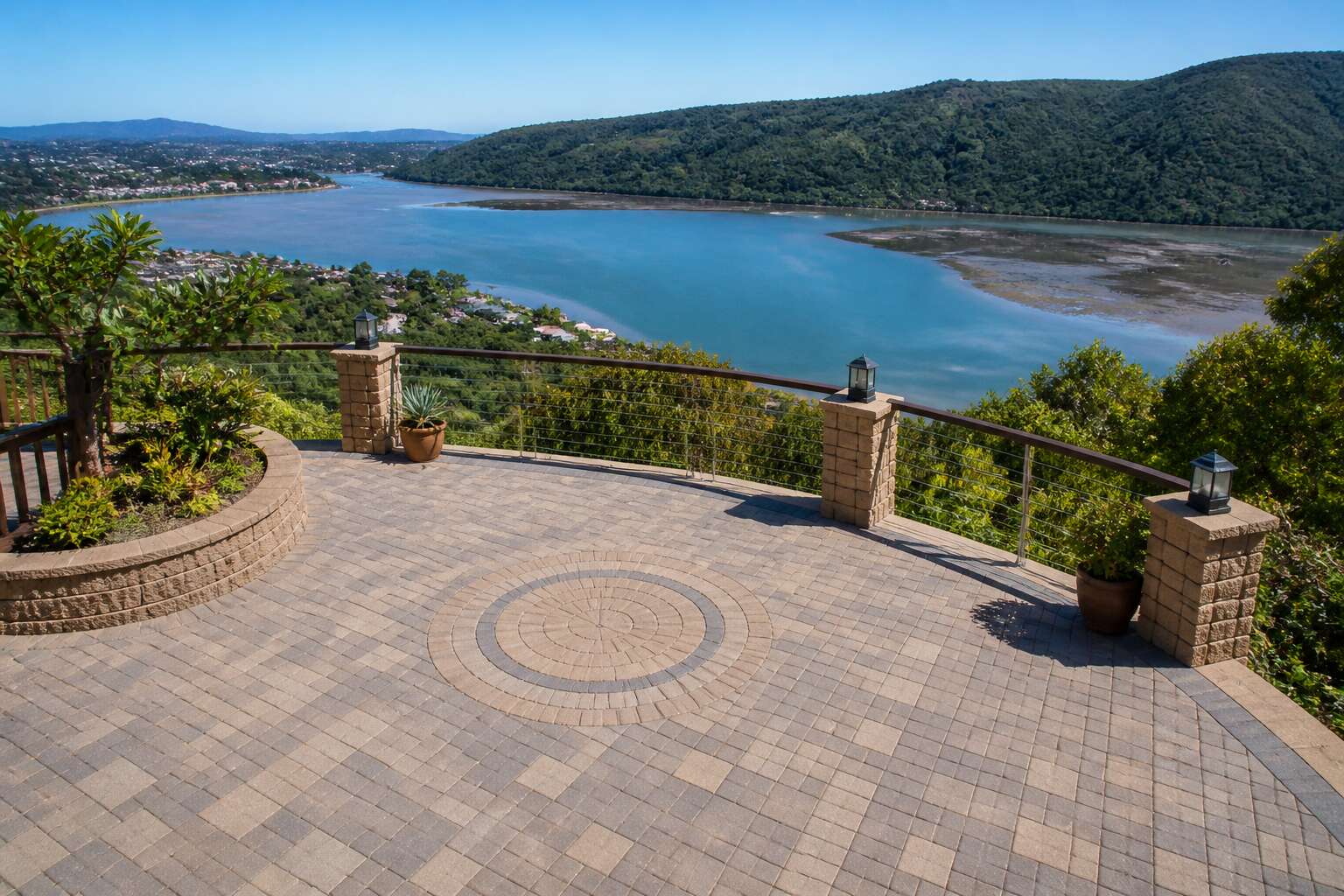
Local Landscape and Paving Requirements in the Garden Route
Navigating Knysna’s Coastal Climate and Weather Patterns
Knysna’s weather has a personality disorder, swinging between baking sun and biblical rain in the span of an afternoon. The salt-laden sea breeze doesn’t just rust your braai tongs; it slowly corrodes cheap paving. One day you’re admiring your new driveway, the next it looks like a cracker biscuit after a hailstorm.
The Garden Route’s notorious soil, a mix of clay and decomposed shale, expands when wet and contracts when dry. This movement shifts pavers, creating trips and wobbles. Local paving companies Knysna residents trust understand this geological tantrum. They specify permeable bases and jointing sand that can handle a 40mm downpour without washing away.
Consider these coastal factors before you lay a single brick:
- Salt spray accelerates efflorescence, leaving white chalky stains.
- UV rays fade pigmented concrete faster than inland areas.
- High humidity delays curing times, risking surface weakness.
Experienced paving companies Knysna homeowners recommend will adjust mixes and sealants accordingly. They also account for the region’s steep gradients, because water always finds the lowest point, usually your patio. Proper falls and drainage channels are non-negotiable. Without them, you’ll build a paddling pool, not a terrace.
Common Paving Surfaces for Estates and Lagoon-Front Properties
The Garden Route’s landscape varies sharply. Estates sit on hillsides of ferricrete and sandstone, while lagoon front properties sink into peat-rich silt. There is no universal paving solution. A driveway that holds on the upper slopes will shift and settle unevenly within a season. This is why local paving companies Knysna residents trust begin with a geotechnical survey, peeling back the topsoil to examine the ground.
For these environments, the surfaces themselves must match the ground’s composition. Common choices include interlocking concrete blocks, which tolerate minor movement, and natural slate, which beds well into sandy loam. Some estates favour permeable clay pavers, allowing water to seep through the joints. For lagoon fronts, reinforced grass grids reduce erosion while preserving views.
- Interlocking concrete blocks for driveways
- Natural slate for terraces
- Permeable clay pavers for pathways
Paving companies Knysna homeowners hire must know which material suits which slope.
Understanding Municipal Regulations and Building Plan Approvals
The Garden Route’s terrain is not uniform, and neither are its municipal rules. Knysna’s planning department evaluates every paving project against local landscape requirements. Steep slopes, wetland edges, and heritage zones each carry specific conditions. Homeowners often discover that a permeable surface is compulsory in certain catchment areas. This is where experienced paving companies Knysna residents trust make the difference. They read zoning maps and stormwater bylaws before a single paver is laid.
Building plan approvals require more than a sketch. Council officials examine drainage impact, boundary distances, and material reflectivity. A professional submission includes:
- Geotechnical findings
- Stormwater management details
- Site drainage diagrams
Paving companies Knysna contractors prepare these documents routinely. Their familiarity with council requirements saves weeks of back-and-forth. When the approval letter arrives, the real work begins with confidence.
Selecting Materials That Withstand the Region’s Rainfall
The geotechnical character of Knysna’s hillsides changes within metres, from decomposed shale to humic sands. Water moves freely through one slope and pools on the next. Material selection therefore begins with a soil probe, not a catalogue. This is the first rule for paving companies Knysna contractors apply near a seasonal vlei.
Winter runoff follows drainage lines that predate any erf boundary. Responsible paving companies Knysna homeowners commission specify open graded subbases for fluctuating water tables. Some materials fail within two seasons.
For steep east facing slopes or compacted clay, these specifications matter:
- Wet cast pavers with absorption below 5%
- Geotextile separation over reactive clays
- Acid resistant cements where fynbos roots shift pH
Read alongside the cadastral survey, these factors reveal how rainfall will behave on one property.
Evaluating Contractor Credentials and Project Portfolios
Verifying Accreditation, Insurance, and Industry Affiliations
Choosing a paver requires more than a friendly quote. A contractor’s credentials and portfolio reveal their reliability. Verify accreditation with recognised bodies and confirm insurance covers both workers and your property. Industry affiliations often signal ongoing training and accountability. For an informed decision, examine these elements:
- Current public liability insurance
- Proof of industry registration
- References from recent clients
- Photographic evidence of past work
Walking previous sites offers a clear view of their work. The most reputable paving companies Knysna maintain records of completed projects, including post-installation follow-ups. Their portfolios show how they handled drainage, edges, and load-bearing surfaces. That attention to detail distinguishes genuine professionals from short-lived operations.
Reviewing Local Installation Experience and Past Projects
A portfolio is a contractor’s biography, written in stone and concrete. For paving companies Knysna, the local landscape offers a unique canvas that reveals how well a team understands the terrain. When I examine past projects, I look for the subtle handling of water flow and the careful transitions between driveway and street. The best installers treat each plot as a live site, not a flat drawing.
Reviewing local installation experience means asking pointed questions about recent work in the area. A reputable company will gladly share addresses of completed projects for you to visit. Their record should demonstrate consistent quality across seasons, from the heavy winter rains to the dry summer months. When inspecting a site, consider the following:
– The alignment and spacing of joints
– The neatness of edge restraints
– The absence of standing water after a downpour
Local experience also translates into practical problem solving. Paving companies Knysna rely on that hard won knowledge to anticipate shifting soil and root growth. Their past work on lagoon front properties and steep estate driveways speaks louder than any glossy brochure. That familiarity with local conditions is precisely what separates a lasting installation from one that fails within a few years.
Requesting and Comparing Detailed Quotations
A one page quotation tells you almost nothing about the job ahead. Most paving companies Knysna provide something more substantial, but some hide behind vague line items like “supply and install.” Thorough ones detail every cubic metre of sub-base preparation and every edge restraint. That difference becomes obvious when comparing bids side by side.
Detailed quotations itemise materials, labour, compaction, and drainage provisions. The line items reveal the contractor’s approach:
- Paver type, thickness, and source
- Sub-base preparation depth and method
- Waste removal and site restoration costs
Portfolio evaluation pairs well with this paperwork. I trust contractors who speak openly about past project setbacks. Glossy galleries have their place, but the conversation around them carries more weight.
Checking References from Homeowners in Surrounding Areas
Paper credentials tell only half the story. The real measure of a contractor emerges when you drive past completed driveways and listen to the homeowners who live with the results. A well documented company profile matters, yet the physical evidence of workmanship, the straightness of a joint line, the drainage fall across a wet surface, speaks with greater authority.
I always ask for the names of clients in the immediate neighbourhood. References from homeowners in surrounding areas provide the most candid feedback. A contractor who hesitates to share these details raises a quiet alarm. When I phone those references, I ask about the contractor’s punctuality, their response to weather delays, and whether the crew left the site respectable. That conversation reveals more than any glossy brochure ever could.
Credential verification should cover registration with relevant industry bodies, valid public liability insurance, and a workmanship guarantee in writing. Beyond that paperwork, I value contractors who show me their current projects in progress. A half finished installation demonstrates their preparation methods and material handling in a way that finished photographs never can. The best paving companies Knysna homeowners recommend are those whose completed work invites inspection without hesitation. Their reputation rests on driveways that weather the coastal rain and remain level through the years. The references confirm what the eye observes.
Assessing Equipment Quality and Crew Expertise
A contractor’s yard says more than their pitch ever will. Rusted equipment with frayed hydraulic lines suggests a crew that cuts corners before the first paver lifts. Modern machinery, properly maintained, indicates a business reinvesting in its craft. The best paving companies Knysna employs understand that equipment quality directly translates into installation precision.
Watch a crew work for twenty minutes and patterns emerge. Experienced hands move with economy. Look for these markers during a site visit:
– Do they edge with purpose or haphazardly with guesswork?
– Is the crew using laser-guided screeds for level bedding?
– Do team members coordinate delivery and spreading without shouting matches?
– Are their cutting tools sharp and dust-controlled?
Expertise shows in the quiet competence of a crew that knows the aggregate’s behaviour before it hits the ground. That mastery of materials and machine is what separates a driveway that survives Knysna’s showers from one that erodes into a pothole memorial. Equipment reveals the contractor’s relationship with their trade, their customers, and the ground beneath their feet.
Confirming Compliance with Occupational Health and Safety Standards
Most people skim certificates. I read them with suspicion. Paving companies Knysna residents rely on must show current credentials, not dog eared copies. A portfolio reveals real work: driveways, pathways, commercial yards. Study the edges, the drainage lines, the way pavers meet. That tells you more than any brochure.
Safety compliance protects you. The Occupational Health and Safety Act demands a written safety file. Verify it on site. Ask for proof of daily toolbox talks and equipment inspections. A single missing medical certificate can halt a project for days. Check these documents:
- Risk assessments
- Incident reports
- First aid certifications
If the file has gaps, walk away. Reputable contractors produce these without hesitation.
Choosing the Right Paving Material for Your Knysna Property
Clay Pavers Versus Concrete Blocks in Coastal Environments
Salt crystals do not negotiate. In Knysna’s coastal air, every paving surface faces repeated moisture exposure. Clay pavers have a dense ceramic body that absorbs far less moisture than concrete blocks. That difference matters when seawater reaches your driveway during high tide.
The choice depends on how water behaves under the surface. Concrete blocks often develop a white mineral crust called efflorescence after repeated soaking and drying. Clay pavers, fired at high temperatures, resist this degradation. For lagoon-front properties, I have seen clay outlast concrete by decades.
- Examine the paver’s slip resistance.
- Consider base layer drainage.
- Verify thermal mass for hot summers.
Local paving companies Knysna often suggest clay for heritage homes and concrete for modern patios. When you consult paving companies Knysna, ask for samples from the exact batch. Neither choice is wrong, but one will age with more grace.
Natural Stone Options for a Garden Route Aesthetic
Natural stone performs differently from manufactured pavers. The Garden Route offers several distinct choices:
- Sandstone, with its warm earth tones and fynbos affinity
- Slate, darker and more formal in character
- Quartzite, durable with a subtle shimmer
Each behaves differently under foot and in the wet. The stone’s origin matters. Locally sourced Garden Route stone has already proven itself in this environment.
Surface finish changes the stone’s character. A honed finish feels smooth. A flamed finish adds grip. For heritage homes, natural stone preserves original character. For modern designs, it adds warmth. Many homeowners combine stone with other materials to manage costs.
Homeowners across the Garden Route rely on paving companies Knysna for guidance on natural stone selection. The conversation should cover absorption rates and slip ratings. Samples from the actual quarry reveal how the stone will perform in a specific garden.
Permeable Paving Solutions for Effective Stormwater Management
Rain does not disappear when it meets a hard surface. It moves. On a typical Knysna property, that means a stormwater drain, a neighbour’s boundary, or the lagoon receives the runoff. In our experience, the paving material you choose decides which.
Permeable paving changes the outcome. Water filters through open joints or porous blocks and returns slowly to the soil, while runoff volume drops and pollutants stay trapped in the base layers. This matters in a town where short, intense downpours routinely overwhelm conventional drainage.
Permeability is not the only variable. Soil conditions, load bearing, and depth to the water table influence the specification. Modern permeable pavers convincingly replicate stone, clay, and concrete finishes, so stormwater management does not demand a visual compromise. Paving companies Knysna evaluate these factors for every site. A specification from experienced paving companies Knysna accounts for the ground itself, where performance is actually determined.
Driveway and Pathway Design Considerations
A driveway is a working surface. It carries vehicles, hosts deliveries, and withstands constant tyre wear. The paving material must match that reality. In Knysna, the base layer matters more than the surface finish, since clay soils shift differently than sandy ground.
Paving companies Knysna will test the subgrade before recommending a paver thickness. Trust us, this test decides how long the driveway survives. A standard 50 mm block suits a pathway, while a driveway often requires 60 mm or 80 mm units.
Pathway design follows different rules:
– Edging constraints must keep pavers locked under foot traffic
– Joint widths affect how the surface feels underfoot
– Gradients beyond 1:20 need a slip-resistant texture
The transition between driveway and pathway requires careful detailing. A seamless change in material prevents tripping hazards and keeps the surface visually coherent. Experienced paving companies Knysna will show you where one surface ends and the next begins.
Evaluating Durability, Slip Resistance, and Load-Bearing Capacity
Choosing a paving material is an act of commitment. In Knysna, the ground rarely forgives a poor decision. Durability is the measurable gap between a surface that survives a decade of winter rain and one that crumbles by the third season. Load-bearing capacity follows the same logic. A driveway that carries a sedan today may host a bakkie tomorrow, and the pavers must anticipate that weight.
Slip resistance complicates the equation. The smooth finish that looks elegant in a brochure becomes a hazard when the Knysna mist settles on the stone. Honest paving companies Knysna will ask how the surface will be used before recommending anything. They know a beautiful paver is useless if it cannot grip a wet shoe.
- Assess daily traffic load, not the occasional visitor
- Test the finish with water before you commit
- Ask for technical data, not just the sample board
I have watched homeowners fixate on a texture while ignoring the numbers behind it. The numbers always win in the end, and I have the cracked driveways to prove it!
The Installation Process From Site Preparation to Final Sealing
Conducting Site Assessments and Soil Stability Tests
Knysna’s soil is a story of extremes, a narrative written in clay and decomposed shale that shifts with every property. The installation process begins long before a single paver is placed, with a geotechnical survey that reads the land’s capacity to bear weight. Without this assessment, a driveway can settle unevenly within a year, creating trip hazards and drainage nightmares. This is where paving companies Knysna rely on proven procedures, testing for load-bearing strength and moisture content to ensure the subgrade will support the paving system through the region’s intense weather cycles.
Understanding the soil’s composition dictates everything that follows. A stable base often requires layers of compacted crushed stone, each one locked into place with a vibrating roller to eliminate air pockets that could later collapse. The sequence is deliberate.
– Excavation to the required depth, removing topsoil and organic matter.
– Compaction of the native soil to achieve a specific density rating.
– Installation of a geotextile fabric, if needed, to prevent fine particles from migrating upward.
– Laying and compacting the sub-base and base layers.
The final sealing application remains a critical step for homeowners, though the perception of its purpose often misses the mark. Sealing is not purely aesthetic; it is the primary defense against oil spills, UV degradation, and the erosive action of the lagoon’s salt-laden air. A high-quality sealer bonds with the paver to create a barrier that reduces water ingress, protecting the joint sand from being washed away during the heavy rains. The process demands dry conditions and a specific temperature window, a detail that professional paving companies Knysna monitor closely to avoid trapping moisture beneath the sealant film.
Excavation, Leveling, and Laying the Sub-Base
Every paver laid in Knysna rests on a foundation finished in a single day. If that day goes wrong, the surface fails within months. Excavation demands a steady hand. Depth must match the design. Cut too shallow and the base will flex. Cut too deep and you waste money on backfill.
Leveling follows. A rotating laser sets the datum across the footprint. The sub-base is placed in layers, each screeded and compacted before the next. Reliable paving companies Knysna use the same sequence:
- Compact the native soil to density.
- Install geotextile fabric to stop migration.
- Spread crushed stone in even lifts.
- Water and roll each lift.
The base layer gets identical attention. Roller pass joints are staggered to avoid weak lines. A straight edge checks every square meter. Once the base course is locked in, the installation moves to bedding sand and pavers. The sub-base carries the entire load.
Edge Restraint Installation and Geotextile Placement
Most paving failures begin at the edges. The installation process in Knysna starts with a survey of the boundary lines, and the soil is stripped to expose a stable bearing surface. Reliable paving companies Knysna treat edge restraint as a structural necessity, not a finishing touch. Without concrete haunching or anchored steel edging, the paver field drifts under seasonal pressure.
Geotextile placement follows the preparation, and it must happen before any aggregate arrives. The fabric separates the soil from the sub-base, preventing the slow migration of fine particles. A common sequence for this stage:
- Lay the membrane flat, allowing a 300 mm overlap between rolls.
- Secure overlaps with galvanised pins.
- Turn the fabric upward along edges to cradle the base layers.
Final sealing occurs after the bedding sand is swept into the joints. A polymer-modified sand is wetted to create a hardened bond, yet the pavement remains permeable. The sealant must not trap moisture beneath the surface.
Laying Patterns, Cutting, and Alignment Techniques
The moment of laying transforms preparation into permanence. Paving companies Knysna rely on a taut string line and a straight edge to keep every course true. A running bond pattern suits driveways, while a herringbone layout locks units against lateral movement, a critical detail in coastal gardens.
Cutting pavers demands a diamond blade wet saw. Dry cutting creates dust that clogs joints and compromises the bond. Alignment checks happen every third row, not after the full field is laid. Adjustments cost minutes. Ripping out finished work costs hours. The sequence stays consistent:
- verify the string line remains true
- tap each paver flush with a rubber mallet
- check the level across six units at once
Sealant application completes the process, but the primer must cure fully before the polymer sand is swept and wetted. The surface seals at the top while vapor escapes below, keeping the base stable through Knysna’s humid months.
Joint Filling, Compaction, and Final Surface Cleaning
Repaving a driveway or patio is a race against the sun, but the real battle is won underground. The sub-base that was compacted days earlier acts as the backbone of the installation. If the foundation settles unevenly, every paver on top follows suit, which is why professional paving companies Knysna will never rush this stage. The true test happens after the first rainfall when the ground reveals where it was poorly packed.
Joint filling is the quiet insurance policy of the entire project. A bag of polymer sand might look unassuming, but it locks the entire surface together. Contractors sweep the material deep into the gaps, then use a plate compactor to vibrate it down into the seams. This step is repeated until the joints are completely full. Skipping this extra pass is a common error that leads to shifting pavers within the first few months, especially under the weight of a bakkie or caravan.
The final washdown is more than a cosmetic cleanup. Residual dust and debris left on the surface can wash into the joints and block the polymers from activating. A proper rinse clears the surface without disturbing the sand below.
– Final compaction run with a rubber pad to avoid chipping edges
– Sweep additional joint sand into all voids
– Light misting to activate the binding agents
– Second sweep once the surface begins to dry
Sealing the edges with a flexible sealant finishes the job, but the workmanship shows best when the weather turns. After a storm, a well-installed pavement drains properly and stays level. The best paving companies Knysna measure their success by how the surface performs years later, not just how it looks on handover day.
Sealing Options and Post-Installation Care
The first coat of sealant marks the transition from construction to ownership. Many homeowners believe the installation ends when the last paver is swept, but the final few days determine long-term colour retention and stain resistance. A quality sealer acts as a barrier against oil drips, moss growth, and the constant moisture that defines the Garden Route climate.
Sealing options vary depending on the surface material and expected traffic. Solvent-based products deliver a wet-look finish that deepens natural tones, while water-based alternatives offer a matte appearance with easier cleanup. For driveways that handle heavy vehicles, a high-build polyurethane sealant provides superior abrasion resistance. Clay pavers require breathable sealers to release trapped moisture, whereas concrete blocks accept a wider range of products.
Post-installation care begins immediately after handover. The surface should remain untouched for at least 48 hours to allow the sealant to cure fully. Light foot traffic is acceptable after this period, but vehicles must wait a full week. During the first month, avoid dragging heavy objects across the surface and keep sharp tools away from the edges. A gentle wash with a garden hose removes dust without chemical cleaners that can degrade the protective layer.
The specialists involved in this stage understand the local conditions better than any national franchise. They know that sudden Knysna downpours can work against fresh sealants, which is why proper scheduling matters. The best paving companies Knysna coordinate sealing around weather forecasts and advise clients on upkeep routines specific to their installation. That attention to detail separates a pavement that looks new for years from one that fades within a single summer.
Cost Estimation, Timelines, and Budget Planning
Factors Influencing Project Costs in the Region
Unexpected soil conditions can push a simple paving job over budget by nearly a third, say local contractors. Timelines in Knysna are equally fluid, with rainfall significantly affecting progress. Cost estimation for a residential driveway demands a thorough site assessment.
Paving companies Knysna often base quotes on per-square-metre rates, but the true figure emerges from excavation depth, drainage planning, and material transport. For instance, a modest 40 square metre path might need five working days, while a bordered courtyard with curves could stretch to two weeks. Factors that influence project costs include:
- Bulk earthmoving and spoil removal
- Geotextile fabric and edge restraints
- Compaction and final sealing layers
A prudent budget always reserves a 10% contingency. Timelines also depend on crew availability during the holiday influx. Reliable estimates come only after a physical inspection, never from a voice note.
Breakdown of Material, Labor, and Equipment Expenses
“Quotes are just the opening bid in a negotiation with the ground itself,” a local contractor once told me, and he wasn’t joking. That 40 square metre driveway you priced online could morph into a major earthmoving operation once the digger hits a buried stump or a patch of clay. The polite numbers on a proposal rarely survive contact with Knysna’s soil.
A typical quote breaks down into a few sorted categories. Materials often account for the largest slice, but labour rates for skilled pavers are not cheap. Equipment hire, from plate compactors to mixers, adds a daily charge that ticks up while the crew waits out a shower. Site access also plays a role; if the truck can’t tip the pavers directly, expect to pay for manual handling.
The usual breakdown looks like this:
– Material supply, including pavers, sand, and cement.
– Labour for laying, cutting, and compaction.
– Plant hire and transport costs.
– Geotextile and edging consumables.
A wise budget adds a ten percent buffer for the inevitable surprise. The real divergence in quotes comes from what is behind the labour cost. One company might quote for two men, while another budgets for a crew of six, and that difference shows up in speed and finish quality. As for timelines, they are a weather forecast more than a promise, so plan for flexibility.
Seasonal Variations and Avoiding Construction Delays
Cost estimation is a forecast, not a fixed truth. The final figure depends on when you book and how the weather behaves. Paving companies Knysna typically adjust quotes for the rainy season, when labour slows and materials cost more to protect.
Timelines stretch in winter. A week of clear skies can vanish behind a front, turning a two day job into five. Budget planning must hold a cushion for that delay, plus a separate line for site surprises that appear after the first cut.
- Spring bookings secure drier ground and shorter wait times.
- Summer rates peak, but crews work longer days.
- Autumn offers balance, though mornings stay wet.
Avoiding construction delays starts with honest scheduling. Ask your contractor what they see in the forecast, and build a buffer into your own expectations. That same conversation helps paving companies Knysna align their quotes with your timeline, so both sides plan for the real cost of the season.
Managing Unexpected Expenses Such as Root Removal or Drainage
Cost estimation without a site inspection is guesswork. Timelines stretch when the ground reveals surprises, and budget planning must set aside funds for unseen conditions. Paving companies Knysna commonly encounter root systems and poor drainage once the topsoil is stripped.
- Root removal requiring a stump grinder or excavator
- Drainage re-routing around the paving area
- Extra sub-base material for unstable soil
Each item carries its own labour and material cost. A contractor who flags these possibilities during the quotation phase helps you avoid a stalled project and a larger final invoice.
Payment Structures, Deposits, and Written Warranties
A paving project is a financial commitment that deserves the same scrutiny as the material choice itself. For paving companies Knysna homeowners trust, the payment structure reveals how the business operates. A reasonable deposit, typically between ten and thirty percent, allows the contractor to secure materials without leaving you exposed. Demands for half the total before any work begins should raise concerns.
Timelines and budget planning belong in the written agreement before excavation starts. Progress payments tied to completed stages, such as sub-base preparation or final compaction, protect both parties and keep the project moving.
- Scope of work and material specifications
- Start date, completion date, and penalty clauses
- Warranty terms covering workmanship and materials
A written warranty from reputable paving companies Knysna provides recourse if cracks appear or drainage fails within the first year. Read the exclusions carefully. A clear contract separates a smooth renovation from a costly dispute.
Maintaining Your Pavement for Longevity and Curb Appeal
Routine Cleaning and Stain Removal Techniques
Your pavement may be the most durable surface on your property, yet it receives constant punishment. Salt-laden air, torrential downpours, and the relentless UV index of the Garden Route create a perfect storm. Neglect here is a slow sabotage. A proactive approach protects your investment and preserves the aesthetic value that defines upmarket Knysna properties. The unseen damage from trapped moisture often surfaces only after the structural integrity is compromised.
Routine cleaning is less about vanity and more about survival. A simple regimen prevents the buildup of organic matter that etches stains into the surface. Use a stiff broom or a pressure washer on a low setting to dislodge grit from joints. For stubborn blemishes, the technique matters more than the chemical. Oil drips from vehicles demand an immediate absorbent, while algae requires a targeted biocide. Casual maintenance habits differ significantly between homeowners, and this is where the expertise of paving companies Knysna becomes invaluable for long-term planning.
Consider these essential practices to protect your surfaces:
– Sweep weekly to prevent abrasive particles from wearing down the surface.
– Treat moss and lichen growth quarterly with a suitable algaecide.
– Rinse with clean water after any chemical application.
– Inspect joint sand levels after severe storms and replenish as needed.
The chemical composition of cleaning agents warrants careful thought. Harsh acids can bleach coloured pavers or degrade the binder in natural stone. Always test any solution on a discreet area first. Also, be mindful of your landscaping; runoff containing cleaning chemicals can harm indigenous plants. A thorough rinse after washing ensures no residue remains, which is critical for maintaining slip resistance on pathways and steps. The long-term savings from diligent upkeep far outweigh the cost of remedial work, a fact well known to established paving companies Knysna.
Managing Moss, Algae, and Weed Growth in Shaded Areas
Shade creates conditions that many homeowners underestimate. The persistent humidity beneath mature trees and along south facing walls produces a microclimate where algae and moss flourish. These organisms are not content to stain the surface. Their root-like structures, rhizoids, penetrate microcracks and force joints open when they expand and contract. Water then lingers deeper, eroding the bedding layer beneath.
The visual decay follows the physical damage. A green tint on pavers near the lagoon front signals neglect, and curb appeal suffers accordingly. Common culprits include: moss, liverwort, black algae, and shallow rooted weeds. Each requires a different response, yet the underlying problem remains the same: drainage and airflow around the shaded area are insufficient.
Experienced paving companies Knysna recognize these patterns as early warnings. Their site evaluations often reveal organic accumulation in shaded drainage channels that property owners never inspect. Addressing the moisture source, not just the growth, is the only real remedy. For paving companies Knysna, this distinction between surface treatment and structural correction defines their value.
Repairing Cracks, Settling, and Chipped Pavers
Nothing accelerates a property’s decline quite like the quiet resignation of its owner. That hairline crack you stepped over for six months? It is now a yawning chasm collecting leaf litter and small children’s toys. The chipped paver near the braai? It has become a tripping hazard with a talent for stealing stiletto heels. Many homeowners treat these blemishes as cosmetic inconveniences, but the Garden Route’s persistent moisture turns every imperfection into a hydraulic pump. Water seeps beneath the surface, carrying fine sand away and leaving your once-proud driveway hollow. The bedding layer erodes, and suddenly your paver patio resembles a badly fitted jigsaw puzzle.
The distinction between a spot repair and a structural intervention is crucial. Resin-based fillers and quick-setting cement are fine for superficial chips. However, when multiple pavers exhibit cracking or the surface begins to dip noticeably, the sub-base has likely compromised. Removing the affected section entirely, re-compacting the foundation, and reinstalling the blocks is the only method that endures Knysna’s swelling clay soils and winter downpours. Hiring reputable paving companies Knysna for this task ensures the proper equipment and geotextile fabric are used to prevent future settlement. The cost feels painful until you witness your neighbour’s DIY patch job shift two centimetres after the first hard rain.
Prioritize your inspection routine and address these indicators promptly:
– A fine, powdery residue between joints indicating sand loss
– Pavers that rock underfoot when pressure is applied to their edges
– A noticeable step-down from the driveway to the adjacent lawn where the base is compacting
Cracks also invite ant colonies that excavate the sand base relentlessly. You are not merely fixing a stone; you are closing a thoroughfare for biological erosion agents. When chipped pavers plague a prominent pathway, consider replacing them with a slightly thicker unit to equalize height with the surrounding matrix. It is a pragmatic fix that spares you the misery of a sudden ankle twist during a twilight braai. Reliable paving companies Knysna will evaluate the drainage gradient while they are on site, because a failing slope, not the paver itself, is often the true saboteur of your curb appeal.
Applying Sealants to Protect Against Weather and Stains
Sealing your pavement is not a cosmetic indulgence; it is a defensive ritual against Knysna’s persistent moisture and the acids dropped by yellowwood trees. A quality penetrating sealer bonds with the paver’s pores, repelling oil from the braai and preventing water from attacking the joint sand below. Without that barrier, algae spores settle into the micro-porosity of the stone, leaving a slick green film that undermines grip and dignity in equal measure.
Reapply the sealer every two to three years, depending on sun exposure and how often the driveway hosts weekend traffic. Reputable paving companies Knysna will recommend a breathable product that allows trapped vapour to escape, rather than a film former that peels like sunburnt plastic. Consistency matters more than frequency. A thin, even coat outperforms a thick one every time.
- Test water beading on an inconspicuous corner first.
- Clean the surface thoroughly and allow 48 hours of dry weather before application.
- Use a roller with an extension pole to keep the coating uniform.
This routine turns a porous liability into a sealed asset. The pavement stays presentable through winter downpours, and a quick rinse restores its colour. You are not pampering the stone; you are simply refusing to let the environment win.
Redoing Joint Sand and Leveling Uneven Surfaces Over Time
Joint sand holds a paved surface together. In Knysna, relentless downpours and daily use gradually strip it from the gaps between pavers. Once the sand washes away, the stones start rocking, edges chip, and the entire driveway loses its crisp alignment.
Replacing the sand is a straightforward but precise task. You need to sweep fresh kiln-dried sand into all joints, then compact it thoroughly. On larger driveways, paving companies Knysna often recommend polymeric sand. This variant hardens after being misted with water, forming a resilient bond that resists future washout.
Uneven surfaces demand equal attention. A sunken paver becomes a trip hazard and a trap for rainwater, which accelerates base erosion. Remove the affected pavers, level the bedding layer beneath them, and refit them carefully. Compact the area to restore a flush, stable finish.
- Sand disappearing after storms
- Movement or squeaking underfoot
- Visible undulations in the pavement
Tending to these repairs promptly keeps your pavement level and inviting, preserving its appearance for decades.
Sustainable and Eco-Friendly Paving Alternatives
Recycled Aggregate and Environmentally Conscious Materials
Recycled aggregate transforms old concrete and brick into a reliable sub-base for driveways and paths. In the Knysna area, where construction waste often travels far to dumps, reclaimed material cuts carbon output and project costs. A properly screened and compacted aggregate can match the strength of quarry stone beneath paving layers.
Environmentally conscious options extend to the surface. Permeable pavers return stormwater to the soil, easing pressure on municipal drains. Some local suppliers stock pavers made from recycled plastic and stone dust, and these resist coastal humidity remarkably well.
- Crushed concrete for base layers
- Recycled glass in decorative toppings
- Fly ash blended into concrete pavers
This approach requires a team that understands local soil and rainfall patterns. Reliable paving companies Knysna will inspect your site, recommend certified recycled materials, and show past installations that have weathered the seasons.
Grass Pavers for Parking Areas and Footpaths
Green materials have limits. Grass pavers push the concept. They solve a uniquely modern problem: how to park a bakkie on a lawn without turning the lawn into a mud pit. The grids spread the vehicle’s weight, so grass roots survive the encounter.
In Knysna, footpaths and overflow parking appreciate the relief in winter. Reliable paving companies Knysna often recommend these systems to clients who want hardstanding utility without the glare of concrete. The grids are typically recycled polypropylene. They lock together to create a stable base for occasional vehicles.
Driving on grass feels strange the first few times! I have watched homeowners flinch at the feeling. The tyres leave a faint impression, then the grass springs back. Local paving companies Knysna will tell you the secret lies in the sub-base and the grass seed mix. Get that wrong, and you are paying for a fancy grid that just sits in the mud.
Gravel Driveways and Hybrid Solutions
A gravel driveway is an ancient solution that feels surprisingly modern. The “Garden Route gravel” from local quarries compacts into a surface that drains instantly during a Knysna downpour. It is a paradigm shift from the impermeable slabs that send water racing toward the lagoon. The stone’s angular edges lock together over time, creating a firm bed that shifts slightly underfoot. This movement, however, is a feature, not a flaw. The surface moves to absorb the weight of a vehicle without cracking or breaking. The material cost is often lower, and the installation time is shorter. For homeowners seeking a low-impact footprint, consider these benefits of a gravel approach:
– Superior stormwater absorption during peak rainfall
– A natural, muted aesthetic that blends with the fynbos
– Simpler repair methods after extreme weather events
– A forgiving surface that contours to the existing topography
The hybrid solution blends the best of both worlds. A paved strip for the tyre tracks, with a grassed or gravel centre. This technique uses far less concrete while maintaining a crisp, defined edge for the driveway. It keeps the structure without the cost of a full surface. The paving companies Knysna locals trust will often suggest this pattern to balance budget and drainage. The result is a driveway that feels rooted in the landscape, offering the stability of a hard surface where you need it, and the absorbency of the earth where you don’t. The combination reduces the heat island effect and softens the visual noise of a large paved area. The quiet crunch of gravel beneath the bakkie replaces the harsh slap of rain on concrete. It is a practical, thoughtful approach to the region’s unique climate.
Light-Colored and Reflective Surfaces to Combat Heat Absorption
Dark paving absorbs heat, then releases it slowly through the night. Light coloured and reflective surfaces offer a practical alternative. They redirect solar radiation instead of holding it, keeping driveways noticeably cooler during the hottest Knysna afternoons. The temperature difference is measurable.
This matters beyond mere comfort. Less heat means less expansion stress in the material, so the surface survives more seasonal cycles without cracking. Homeowners who ask paving companies Knysna to specify pale aggregates or light toned concrete blends often find the installation lasts longer, especially on exposed western edges.
Several reflective options work well in this region:
- Light concrete mixes using white cement
- Exposed aggregate with pale quartz or sandstone
- Light permeable pavers that reflect heat and drain rainwater
Each choice reduces the urban heat effect around the home. The surface stays pleasant under bare feet in summer, and the paving itself faces fewer thermal shocks. It is a small material decision with a lasting impact on both comfort and durability.
Rainwater Harvesting Integration with Permeable Drives
Permeable drives do more than absorb runoff. When paving companies Knysna install porous surfaces, they create a direct route for rainfall into storage tanks. I’ve seen homeowners capture thousands of litres each season by pairing a permeable base with an underground cistern.
- Grass pavers over a gravel reservoir
- Porous concrete with a pipe to a tank
- Interlocking permeable blocks with a sloped sub-base
Water filters through the layers, settles in the cistern, and remains ready for garden irrigation. Your driveway becomes a water source rather than only a flat surface. That’s an upgrade with tangible returns!

0 Comments