Smart Paving Layouts for Compact Spaces
Visual Tricks to Make a Small Yard Feel Larger
The diagonal lay of pavers draws the eye toward the longest sightline in the garden. In a Johannesburg courtyard, this simple rotation can add a metre of perceived depth. Instead of squaring off against the fence, run the joints at a 45 degree angle. The eye follows the lines, not the boundaries.
Consider a single material in one continuous tone. Many paving ideas for small yards fracture the visual field with busy joints and clashing textures. A uniform surface lets the lawn and planters carry the detail. When the paving itself stays quiet, the space feels larger. I have seen this trick turn a narrow townhouse garden into something generous.
- Use large format slabs to reduce the number of joints.
- Keep the mortar flush with the surface for a seamless sweep.
Light colour reflects the Highveld sun. For paving ideas for small yards, a pale clay paver or a washed concrete slab bounces light into shaded corners. That reflection does more work than any border detail ever could!
Using Diagonal Patterns to Extend Sightlines
Diagonal layouts do more than please the eye. They solve a practical problem in compact spaces: how to move through a yard without feeling squeezed. In a small Johannesburg plot, I set the pattern from the main doorway outward. That simple decision anchored the design.
- The longest usable line determines the diagonal angle.
- A fixed point near the door anchors the pattern.
- Extra cuts at the edges are part of the plan.
When the diagonal runs past drains or steps, the yard opens up. Planning the layout around movement changes the feel entirely. For paving ideas for small yards, this approach turns a tight footprint into a workable route.
Curved Pathways That Soften Hard Edges
A straight line in a small yard only highlights the boundary fence. It shortens the view and leaves no room for surprise. A curved pathway interrupts that blunt statement. It guides the eye sideways, slows the stride, and softens hard edges around the garden.
I once set a winding path of clinker pavers in a Rosebank garden. The curve followed the route people actually walked, not a geometric ideal. That choice turned a cramped strip into a measured stroll.
- Base the inner radius on a wheelbarrow’s turning circle
- Use flexible edging to keep the curve honest
Smart paving layouts for compact spaces solve real constraints. When it comes to paving ideas for small yards, a purposeful curve beats a straight line every time.
Zoning with Different Paving Materials
Different paving materials create zones in a compact yard without erecting a single wall. A concrete slab under the braai area separates cooking from seating. Loose gravel around a garden bed adds texture while draining rainwater. This zoning technique gives each function its own footing.
Smart paving layouts for compact spaces rely on contrast. I once paired large sandstone slabs with fine pebbles in a Durban courtyard. The slabs anchored the dining set; the pebbles softened the path to the herb garden. That material shift told visitors where to walk and where to stand.
- Large format tiles for the main terrace
- Crushed granite for secondary paths
- Timber decking for a quiet corner
The grout lines and grain directions add visual rhythm. For paving ideas for small yards, zoning with materials is a quiet form of architecture.
Multi-Functional Surfaces for Seating and Storage
In a compact yard, every surface has a job. Paving can do more than carry foot traffic. A raised concrete plinth around the braai becomes a bench when topped with timber. Hollow paving blocks, fitted with removable caps, conceal storage for firewood and garden tools. These are paving ideas for small yards that treat surfaces as furniture.
Spec materials that tolerate dual duty. Dense clay pavers hold up under weight without cracking. Stone slabs with a brushed finish grip better than polished ones when used as seating. Even the main terrace can host a table and chairs without showing wear, provided you choose a paver thickness rated for the load.
- Concrete sleepers as both retaining wall and seat
- Recycled rubber pavers for cushioned kneeling pads near beds
- Interlocking blocks with hollow cores to hide irrigation lines
Multi-functional paving reduces the need for separate structures, which is the point of paving ideas for small yards.
Material Choices That Maximize Visual Impact
Large-Format Porcelain Tiles for Seamless Flow
Small spaces demand decisions of consequence. When the footprint is tight, every element carries disproportionate weight, and the surface beneath your feet becomes the defining gesture of the entire exterior composition. The choice of paver here is not merely practical, it is the canvas upon which light, shadow, and proportion play their daily drama. For the South African garden, often framed by high walls for privacy, this becomes even more critical.
Large-format porcelain tiles have emerged as a leading solution within the realm of paving ideas for small yards. Their expansive surface area cleverly reduces the number of joints and grout lines, creating a continuous, unbroken plane that reads as a single, unified expanse. This visual continuity is the chief weapon against the fragmented, busy look that can shrink an already constrained area. The eye glides over the surface without interruption, allowing the boundary of the garden to recede rather than feel trapped by its own paving.
The aesthetic benefits are matched by practical virtues that speak to the local climate. Large panels require less grout, which means fewer crevices for weeds to take root or for dust to accumulate. This low-maintenance aspect is a quiet luxury for those who prefer to spend their weekends enjoying the garden rather than maintaining it.
Here are a few specific advantages to consider:
– The rectified edges allow for a hairline joint, creating a near-monolithic appearance.
– The large surface reflects light more evenly, which helps to brighten shaded corners common in suburban plots.
– The density of the porcelain makes it highly resistant to the thermal cracking that can affect thinner concrete pavers.
Furthermore, the sheer scale of these tiles can be a dramatic foil for delicate planting. A generous slab of textured porcelain provides a serene stage for the fine foliage of a Japanese maple or the sculptural form of an aloe. This juxtaposition of industrial precision and organic growth adds a layer of sophistication that busy, small-scale paving often lacks. In the confined geometry of a small yard, this simplicity is not a compromise; it is a strategic elevation of the entire space.
Permeable Pavers for Efficient Drainage
Your small yard should not double as a reflecting pool after a Cape storm. Yet it often does. Permeable pavers offer a remedy that is both practical and handsome. They allow water to vanish into the ground, sparing your patio from becoming a mosquito breeding station.
Material choices matter. Resin-bound gravel delivers a smooth, modern finish, while open-cell concrete blocks support weight and encourage grass growth. Both drain efficiently, and they look intentional rather than utilitarian.
- Gravel grids offer stability without the concrete jungle effect.
- Pervious brick complements older homes in Cape Dutch or Victorian styles.
In my experience, permeable pavers are among the most sensible paving ideas for small yards. They drain, they endure, and they stop your garden from staging an unwanted water show.
Gravel and Aggregate Combinations for Texture
Paving ideas for small yards often overlook the role of texture. Material choices can maximize visual impact without adding clutter. Gravel and aggregate combinations, in particular, offer a natural variety. Pair pea gravel with decomposed granite for a muted, coastal feel. Add crushed quartz for subtle brightness. Use larger river stones sparingly to anchor corners. A good mix includes:
- Pea gravel for soft crunch
- Decomposed granite for compaction
- Crushed slate for angular texture
- River stone for rounded contrast
Blend these in layers rather than tossing them together. The result is a surface that changes with the light and weather. I have seen a small Cape Town courtyard transform with just a handful of stones. Texture provides the visual interest, so your yard feels curated, not chaotic. These paving ideas for small yards show that material choices carry real weight.
Natural Stone Stepping Pads for Organic Charm
A single slab of slate can change the entire character of a small yard. Natural stone stepping pads create a path that feels settled, as if it has always been there. They ask you to slow down and notice the spaces between.
Choose irregular pieces of quartzite or sandstone instead of perfect rounds. Leave generous gaps for moss or a low-growing ground cover. The plants will soften the hard edges and give the path a lived-in quality.
- Sandstone pads for warm, earthy tones
- Quartzite for subtle sparkle in low light
- Slate for a dark, quiet surface
These paving ideas for small yards depend on placement rather than quantity. Let the stones follow a gentle rhythm, never a strict line. Their uneven shapes add visual weight without crowding the space.
Decorative Concrete Finishes for a Custom Look
Concrete often gets overlooked when exploring paving ideas for small yards. Yet a well executed decorative concrete finish can turn a dull passage into a deliberate feature. I’ve seen homeowners pick stamped concrete to echo the texture of local stone.
Popular techniques include:
- Acid staining for warm, earthy tones
- Exposed aggregate for a rugged, slip resistant surface
- Polished concrete for a smooth, reflective finish
Each option changes how light moves across the ground. Stamped patterns add rhythm, while stained surfaces bring a muted depth that suits a compact garden. These paving ideas for small yards rely on the finish’s character rather than the amount of material used.
Reclaimed Brick for Timeless Character
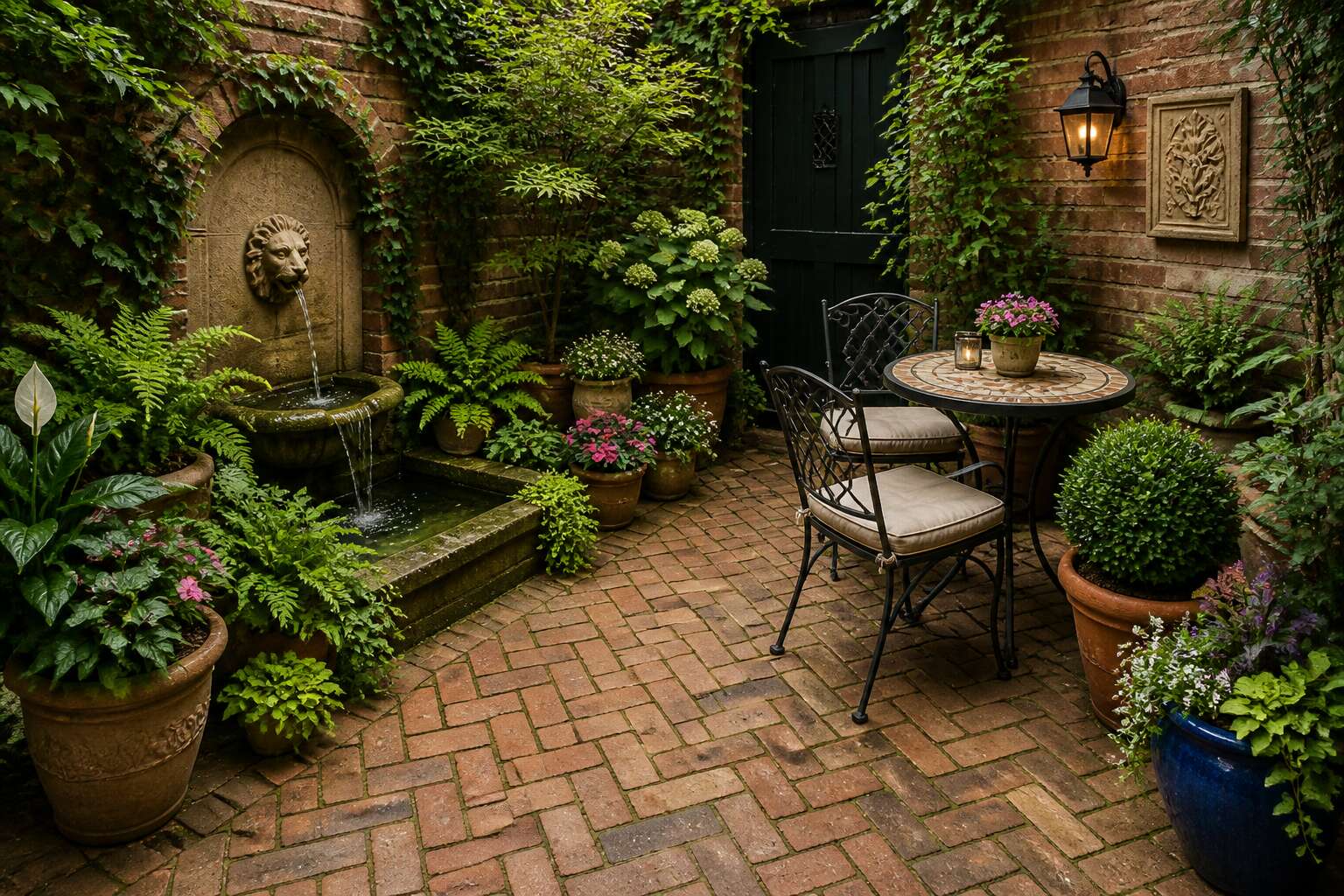
Some materials arrive with a story already pressed into their surface. Reclaimed brick carries that narrative in every chip and faded edge. When sourced from old buildings in South Africa, these bricks bring a weathered patina that new pavers cannot replicate. The warm terracotta tones contrast beautifully with indigenous plants, creating a grounded, earthy palette. For smaller spaces, the modest size of brick allows for intricate herringbone or basket weave layouts that draw the eye inward.
The charm of reclaimed brick is its imperfection. Slight variations in colour and texture add depth without feeling busy. These paving ideas for small yards rely on the material’s inherent character to create a sense of permanence. A small courtyard, paved with aged brick, feels like a secret garden discovered rather than a modern construction. Each brick holds a history, and together they form a quiet, enduring foundation for your outdoor retreat.
Patterns and Layouts to Enhance Proportion
Herringbone Weave for a Tight, Structured Feel
Herringbone weave is a masterclass in proportion. Its interlocking angles draw the eye along a deliberate path, making a small yard feel intentional rather than cramped. I have seen this pattern transform awkward spaces into ordered retreats. The key is scale. Smaller pavers in a herringbone layout create a tighter grid, which visually expands the ground plane. Conversely, larger units can overwhelm a compact area.
When exploring paving ideas for small yards, this weave offers structure and rhythm. The repeated V shapes anchor corners and define zones without adding physical barriers. For a cohesive look, choose a single material, or alternate two tones for subtle depth. This pattern demands precision, so hire a skilled installer or use pre-set panels.
Basketweave Design for Visual Interest
Basketweave design offers a distinct pattern that herringbone cannot. The alternating horizontal and vertical rectangles create a balanced grid, which suits small spaces where symmetry matters. I have found that this pattern looks calm and orderly, perfect for patios or narrow strips.
For paving ideas for small yards, basketweave works best with pavers in a 2:1 ratio. The interlocking effect feels substantial but not heavy. Consider these layout options:
- Pairing two colours to highlight the weave effect
- Using a border to contain the pattern and define the area
- Turning the entire pattern at 45 degrees for a dynamic twist
The repetitive geometry can guide the eye across the ground instead of up the walls. This keeps the yard grounded and cohesive.
Running Bond for Low-Cost Simplicity
Running bond is the quiet workhorse of paving. Each paver rests in a straight course, with the next row offset by half its length. For paving ideas for small yards, this is often the most economical route, because the geometry requires almost no special cuts.
Installers waste less material and finish faster, which matters when your budget is tight. The pattern itself recedes, allowing the paver texture to carry the aesthetic. I find this especially useful in compact gardens where busy patterns can feel claustrophobic.
The cost advantages are straightforward:
– Minimal cutting reduces material waste
– Faster installation keeps labour hours low
– Straight courses simplify later repairs or replacements
A running bond does not read as plain. The staggered joints produce a quiet rhythm, and that subtle motion gives a small yard a sense of flow without shouting for attention.
Mixed-Slab Randomized Patterns for Modern Appeal
Mixed slab layouts bring a different energy to small outdoor spaces. Instead of uniform gridwork, these paving ideas for small yards rely on rectangles of varying widths laid in a staggered, almost aleatoric arrangement. The result is a surface that feels curated, like a gallery floor, rather than mass produced. The eye reads the variation as deliberate, which adds a layer of visual sophistication to a compact area.
What makes this approach effective is the reduction of long, continuous joints. In a small yard, those lines can draw the eye to the boundary and emphasise the lack of space. A randomized pattern interrupts that sightline. It creates a subtle, almost subliminal rhythm that keeps the gaze moving across the ground plane. This makes the paving ideas for small yards feel more expansive without relying on diagonal tricks.
The interplay of slab sizes provides a sense of motion and texture. Consider how the layout generates interest:
– Varying paver dimensions break up the visual mass
– The offset joints create a natural, organic flow
– Narrower slabs add linear accents that lengthen perception
For a truly cohesive look, stick to one material and one colour family. Mixing different stone types can easily tip into chaos. Instead, let the variation in slab size do the heavy lifting. A single material in a randomized pattern offers textural depth while maintaining a calm, monolithic quality. This balance is the key. The paved area feels alive, yet it never overwhelms the limited space, proving that paving ideas for small yards can be both bold and restrained.
Edging, Borders, and Transitions
Metal Edging for a Sleek, Minimalist Look
A two millimetre thick strip of steel can define an entire garden. Metal edging delivers a clean boundary between paving and planting. The thin profile occupies almost no visual space, which is what a compact yard requires. Steel strips conform to curves or hold rigid lines. Corten steel develops a rusted patina over time. Powder coated aluminium offers a lighter alternative that resists corrosion.
These strips suit many paving ideas for small yards because the frame recedes, letting the surface material speak. In my experience, installation depth matters more than brand.
Consider what metal edging contains:
- Concrete pavers stay locked in place along straight runs
- Gravel and aggregate remain neatly contained
- Lawn edges hold a crisp definition after heavy rain
Transitions between zones benefit too. A metal strip links a paved patio to a gravel path without a clumsy step. It keeps materials from migrating and simplifies maintenance all year.
Deck Board Transition Strips Between Zones
Most garden design guides focus on the surface you stand on. The transition between zones, however, dictates the flow. A deck board transition strip is the humble workhorse of this connection. It solves the abrupt change in height between a timber deck and a paved terrace. These strips are often a simple rubber or aluminium profile. They bridge the gap with a subtle slope that takes the trip hazard out of the equation. For example, on a Johannesburg koppie where the ground shifts with the seasons, a flexible strip absorbs that movement. It allows a wooden deck and a concrete patio to coexist without cracking. It is a functional seam, not a decorative flourish.
The best approach is to look for a strip with a bullnose edge. This rounded profile eases the transition underfoot. It also protects the vulnerable end grain of the decking boards from moisture. When you are researching paving ideas for small yards, you will see that every millimetre counts. A proper strip uses that space to create a continuous surface. It does not interrupt the sightline.
Here is what a well-fitted transition strip manages:
– It securely covers the expansion gap between materials.
– It protects the edges of the decking from chipping.
– It provides a clean, level surface for foot traffic.
– It prevents dirt and debris from collecting in the joint.
You can use a simple metal L-shaped profile to connect a raised timber step to a paved landing. This creates a crisp visual line. The transition strip is the quiet detail that turns two competing surfaces into one cohesive outdoor room.
Planting Strips to Break Up Large Paved Areas
Planting strips are the quiet rebels of paving ideas for small yards. They slice through a monolithic concrete expanse with a ribbon of green, turning one large terrace into distinct compartments. Instead of relying on a hard edge, you let low growing ground covers or ornamental grasses colonise the seam between pavers. This living border absorbs heat, filters dust, and gives the eye a place to rest.
A well placed strip does more than decorate. It manages water runoff and prevents the paved surface from feeling like a parking apron. In a small yard, a 200mm wide swath of compact succulents can replace an entire retaining wall. As the plants spill over the boundary, they soften the transition without losing the clean line of the paving.
Raised Borders That Double as Seating
In a small outdoor space, the perimeter often does nothing. A raised border changes that. It marks the boundary of the terrace and gives friends a place to sit. A single course of brick, capped with timber, supports several people.
This approach pairs well with paving ideas for small yards. The border aligns with the paving edge, preserving visual flow. A height of 450 millimetres matches standard chair seats. The top, finished in smooth aggregate or cut stone, prevents splinters.
- Hollow blocks filled with concrete provide stability
- A slight backward slope directs rainwater away
- Matching colours keep the eye moving across the yard
The raised border also directs foot traffic. People naturally sit on the edge, leaving the centre open. This is more useful than a fence because it maintains sightlines. In a compact yard, the border is the edge and the seating.
Low-Growing Ground Cover Between Pavers
Nothing softens a hard paved surface like a sliver of green between the stones. In a small yard, that gap becomes more than decoration. It manages drainage, cools the air, and blurs the boundary between pavement and garden. For paving ideas for small yards, low-growing ground cover between pavers offers a transitional element that does not steal visual space.
Choose plants that tolerate foot traffic. Several species cope well with South African sun and sporadic watering:
- Dichondra repens, a creeping perennial
- Thymus serpyllum for a fragrant step
- Pratia pedunculata with tiny blue flowers
Press them into the joints with a soil mix. They will knit together over time. One caveat: keep the gaps narrow. Wide joints invite weeds and uneven stepping. A gap of 10 millimetres is enough.
Stepped Transitions for Sloped Yards
A sloped yard doesn’t have to lose its walkable charm. Stepped transitions turn a gradient into a series of deliberate platforms. This is where paving ideas for small yards meet practical grade changes. Each step requires careful measurement of tread depth and rise height. I prefer using the same paver material as the main surface, creating a seamless visual line.
Consider these elements for a stepped transition:
- Use a consistent paver width to avoid visual fragmentation.
- Add a subtle lip or recessed edge for safety and drainage.
- Anchor the transition with a solid base to prevent shifting.
The final step matters most! It meets the lower garden with a stable base, creating a smooth boundary between hardscape and soil.
Small Yard Paving Features That Add Function
Integrated Fire Pit Surrounds for Cozy Gatherings
A single fire pit can transform a compact yard into a gathering point, but the surrounding surface matters. Integrated fire pit surrounds use the same paving material to create a seamless transition from seating to flame. These paving ideas for small yards save space and keep the design cohesive.
In South Africa, braai culture makes this feature practical. You can extend a paved apron around the pit, allowing chairs to sit level and stable. Add a recessed ledge for drinks or plates. The result is a functional zone for cozy evening entertaining.
Typical functional additions for such a surround include:
- Heat resistant pavers that won’t crack or discolor
- A narrow border to define the seating area
- Recessed lighting for safe movement after dark
These paving ideas for small yards maximize every square metre. A well designed fire pit surround becomes the central feature of the garden, without consuming floor space.
Inset Lighting to Highlight the Paved Surface
Inset lighting quietly alters the perceived size of a paved area, a detail often missing from paving ideas for small yards. By embedding slim LED strips flush with the paver surface, you create a subtle boundary that guides the eye without clutter. The light catches the texture of the stone, turning a functional floor into a visual feature. I have seen this work beautifully in Johannesburg gardens where security concerns demand visibility, but harsh floods overpower the space.
Placement matters more than brightness. Consider these points:
- Recessed step lights to mark level changes
- Border strips along edges to define the paved zone
- Accent lights at key junctions like a braai area
These small additions make paving ideas for small yards feel deliberate and safe. The glow itself becomes the decoration, softly highlighting the surface without demanding attention. Properly installed inset lighting withstands weather and foot traffic, so the effect lasts.
Pergola Footings That Anchor Outdoor Rooms
Pergola footings do more than hold posts. They tie a paved surface to the structure above. In a small yard, every element needs a purpose, and footings anchor the outdoor room without wasting space. I often see homeowners forget that the paving beneath a pergola must accommodate both load and sightline. The footing base should align with the paving pattern, not fight it.
Consider these practical points:
- Set footings below the paver level to keep the surface flush
- Use galvanised brackets for longevity in Highveld weather
- Coordinate footing positions with paving joints for a clean grid
This is where paving ideas for small yards gain real purpose. The pergola acts as the ceiling, the paving as the floor, and the footings as the structural connection.
Sunken Patio Areas for Defined Lounging
A sunken patio changes how a small yard feels. Dropping the paving level by just a few centimetres creates a distinct lounging zone without building a single wall. The height difference does all the work!
In my experience, this is one of the most effective paving ideas for small yards. The recessed area becomes a natural gathering spot. You step down into it, which makes the space feel deliberate rather than accidental.
Consider the practical side:
– Excavate 15 to 20 centimetres below the surrounding surface
– Install proper drainage to prevent water pooling after Highveld thunderstorms
– Use the cut edge as a clean transition between paving levels
The sunken effect adds depth without consuming square metres. You get a clear separation between zones while keeping the yard visually open.
Narrow Walkways with Hidden Storage
A narrow walkway can carry more than foot traffic. Beneath the paving stones, there is an unused void that most homeowners ignore. In South African yards, where every square metre is accounted for, that void becomes valuable.
I have installed walkways where individual concrete slabs lift on concealed hinges, revealing weatherproof compartments below. These cavities store garden tools, pool chemicals, or firewood. The surface reads as a standard paved path, but the storage is invisible.
- Use a galvanised steel frame to support the liftable slab section
- Fit a rubber gasket to keep moisture out of the cavity
- Keep the slab size manageable, no larger than 60 by 60 centimetres
This approach ranks among the smarter paving ideas for small yards. You lose no floor area to cupboards or sheds. The storage simply sits underfoot, ready when needed. That is the kind of efficiency that changes how a small yard functions!
Budget-Friendly Paving Hacks for Petite Gardens
DIY Stepping Stone Molds for Custom Shapes
The true economy of a garden lies not in what you spend, but in what you imprint upon the land. When considering paving ideas for small yards, the option of DIY molds offers a profound kind of agency. It is a slow, deliberate act that replaces the sterile convenience of a showroom with the tangible satisfaction of creation. You are not just filling a square; you are designing a cornerstone for the space.
To begin, select a flexible plastic mold that suits your spatial scale. Mix a high-strength concrete, and consider adding a pigment to harmonise with your home’s exterior. The process itself is a meditation:
1. Prepare the base by digging a shallow recess.
2. Work the concrete into the mold, eliminating air pockets.
3. Cure for a full 48 hours before peeling the plastic away.
There is a quiet dignity in a path shaped by your own hand. These custom shapes carry an authenticity that mass-produced slabs lack, and they allow you to fit awkward corners with precision. This approach turns the constraint of a petite plot into a canvas, proving that the most effective paving ideas for small yards are often those you build yourself. The result is a surface with a soul, a subtle narrative of your time and attention that adds immeasurable value to the landscape.
Mixing Pea Gravel with Scrap Pavers
There is a certain breed of thrift that feels less like penny pinching and more like a quiet rebellion. When the budget for paving ideas for small yards is modest, the combination of pea gravel and leftover pavers creates a surface with distinct personality. Scrap pavers, those irregular orphans from a neighbour’s renovation, become the anchors. The gravel becomes the forgiving mortar between them.
This is not a method for the perfectionist. It is, however, a practical solution for the homeowner who values texture over uniformity. The sharp edges of broken concrete are softened by the roundness of the stone, creating a pleasingly haphazard mosaic that suits a cottage garden or a modern indigenous planting scheme.
A gravel base drains beautifully, which is a blessing during a Highveld thunderstorm. The pavers provide stable footing for a bistro table or a braai stand, preventing the stones from shifting underfoot. To get the proportions right, consider the ratio of filler to solid ground:
– Start with a compacted layer of crushed stone for a stable foundation.
– Lay the scrap pavers with a gap of at least fifty millimetres between them.
– Sweep the pea gravel over the top, filling the gaps completely.
– Water the area to settle the gravel, then top up where necessary.
The result is a surface that feels established, as if it has weathered a few seasons already. The small patches of moss and stray grass that emerge in the gravel do not look like neglect; they look like character. For those seeking paving ideas for small yards that offer both economy and a sense of organic charm, this approach is difficult to beat. The cost is minimal, the drainage is excellent, and the aesthetic is entirely your own.
Used Paver Salvage from Local Suppliers
The hunt for materials often dictates the soul of a small garden. Salvaged pavers from local suppliers carry the memory of older structures, a provenance that new concrete simply cannot fake. This is budget-friendly paving, but it offers more than cost savings. It offers texture, history, and a weathered patina that immediately anchors a petite yard to its environment. Sourcing these pieces locally reduces the carbon footprint and supports the circular economy, a quiet win for the conscientious homeowner.
For paving ideas for small yards, the charm lies in the irregularity. A pallet of reclaimed pavers might include a mix of slate, clay brick, or granite setts, each with subtle variations in thickness and tone. Working with these materials requires patience, but the reward is a surface no showroom can replicate. To ensure a stable finish, focus on the sub-base first, then let the uneven character of the stones shine.
Where to find the good stuff:
– Architectural salvage yards, which often hold stock from demolished warehouses or Victorian terraces.
– Online marketplaces where renovators offload excess material for a fraction of the retail price.
– Local demolition sites, with permission, to reclaim the pavers before the rubble is hauled away.
The key is to sort your haul by thickness once you get it home. This simple step will save you hours of frustration during installation. When laid in a random pattern, these salvaged remnants create a patchwork that feels intentional. It turns a budget constraint into a design feature, proving that the most compelling paving ideas for small yards often come from what others have left behind.
Stenciled Concrete to Mimic Expensive Stone
Nothing whispers “old money” quite like a patio that costs more than the car parked on it. For the rest of us, stenciled concrete delivers the same gravitas for a fraction of the price. Concrete accepts a stencil the way a budget accepts a surprise invoice, reluctantly but workably. With sharp blades and quality oxide pigment, you can mimic slate, flagstone, or cobblestone.
This ranks among the smartest paving ideas for small yards because it avoids heavy slabs and deep excavation. The finished surface is seamless, so weeds struggle to find a foothold and the eye travels unimpeded across a petite plot. No trip hazards either, for roughly the cost of a decent dinner out.
Stencil options to try:
- Ashlar for a formal, dressed stone look.
- Random rectangular blocks to disguise inevitable stains.
Thin Overlay Pavers to Refinish Existing Concrete
Old concrete does not require removal. Thin overlay pavers, as slim as 12mm, bond directly to the existing surface, eliminating demolition cost. This works well in small yards where space constraints make heavy equipment awkward. I have refinished a Cape Town patio this way in a single morning, no jackhammer needed!
The key is surface preparation. Clean with a pressure washer, repair cracks, apply a bonding agent, then set the pavers. Use a polymer-modified adhesive for flexibility. The result is a seamless patio that looks freshly installed, but with far less expense.
Consider these overlay favourites:
- Porcelain tiles for a sleek, indoor-outdoor feel.
- Natural slate for organic texture.
- Concrete slabs with a brushed finish for durability.
Each option keeps the existing base, so drainage and levels remain unchanged. For South African homes, these methods rank among the most practical paving ideas for small yards.


0 Comments