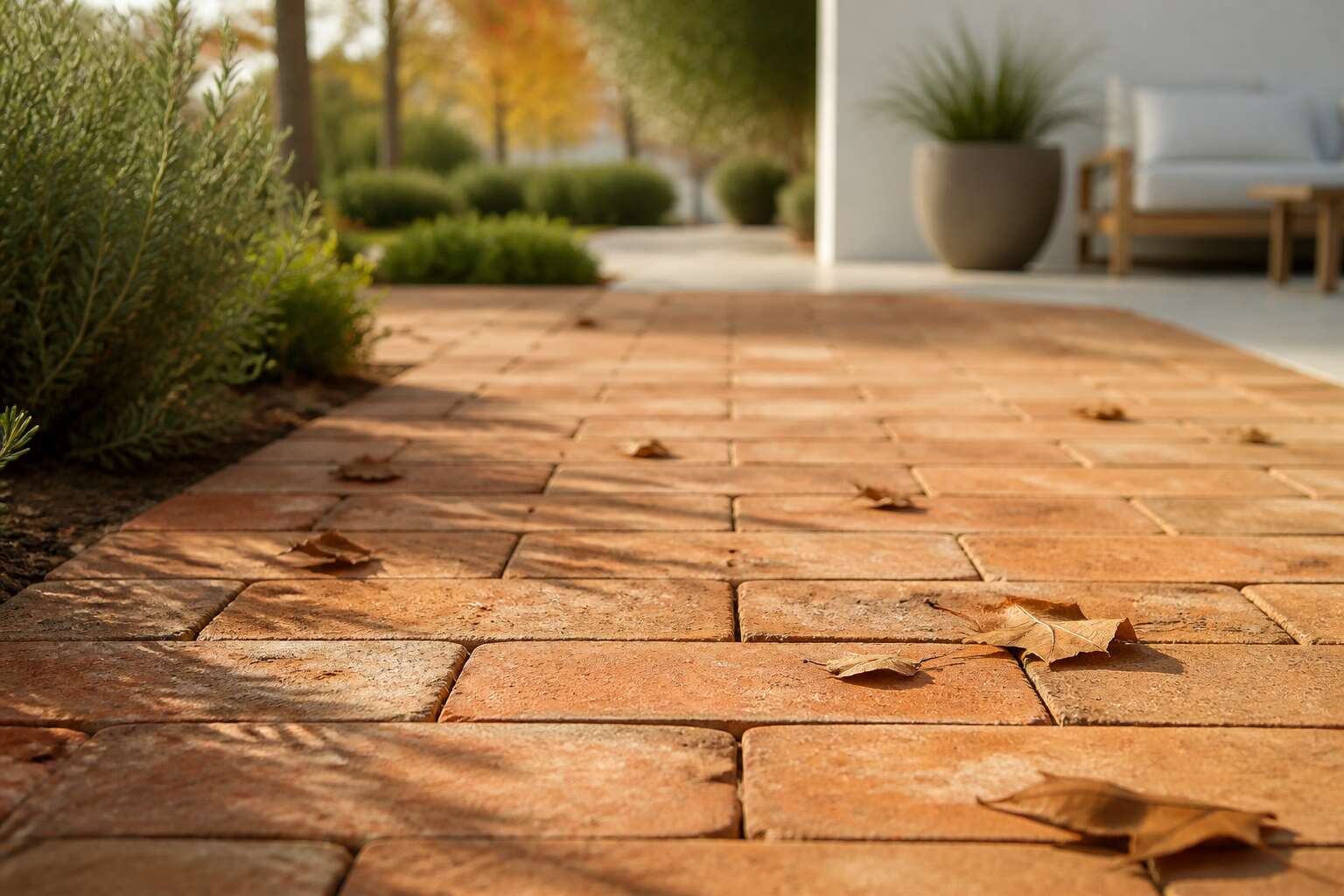
Environmental Benefits of Natural Clay Pavers
Sustainable Sourcing of Raw Materials
Every tonne of terracotta paving bricks produced in South Africa consumes roughly a third of the energy required for concrete alternatives. Natural clay pavers come from open quarries, and responsible operators restore those sites after extraction. The material itself is inert, so it releases no volatile compounds into the soil or groundwater. I have seen quarry sites in the Karoo returned to grazing land within a decade.
Sustainable sourcing starts with proximity. Local clay fields near Cape Town and Gauteng reduce transport emissions significantly. Extraction practices vary, though, so buyers should verify rehabilitation plans before ordering.
Consider what a clay paver avoids:
- No kiln additives beyond water
- No plastic spacers or sealants required
- Full recyclability at end of life
Terracotta paving bricks also sequester nothing, but they outlast many synthetic options, which lowers replacement frequency.
Recyclability and Lifecycle Impact
Here is a satisfying thought: a terracotta paving brick can be lifted, cleaned, and relaid decades after installation. It will not biodegrade, flake, or release microplastics. When a patio finally outlives its design, the bricks are not rubbish. They become fill material, garden edges, or paving for a new path.
I have watched Cape Town homeowners reuse the same bricks through three garden renovations. The colour deepens with age, and small chips only add texture. For builders, this durability translates to lower replacement frequency. A concrete paver’s lifecycle often ends in landfill. Terracotta paving bricks offer a more graceful exit.
Consider the full lifecycle:
- No sealants or coatings required over time
- Crushed clay pavers serve as aggregate for new mixes
- Whole bricks are easily traded or donated
Permeability and Stormwater Management
Urban hydrology is unforgiving. Where asphalt and concrete seal the ground, stormwater becomes a problem to be piped away. Terracotta paving bricks allow infiltration. The fired clay material, laid with open joints, lets rainfall percolate directly into the soil beneath, recharging the aquifer instead of flooding the curb.
I have watched a Johannesburg garden absorb a full summer downpour through a terracotta path, while the lawn beside it shed water into the street. The difference is joint design and the natural porosity of the units themselves.
- Reduced surface runoff lowers erosion risk.
- Natural filtration removes suspended solids before water reaches the groundwater.
- Less strain on municipal stormwater infrastructure.
For Cape Town, a city acquainted with drought and water restrictions, this is not a small thing. The permeability of terracotta paving bricks turns a patio into a stormwater asset.
Thermal Mass for Energy Efficiency
The midday sun hits a Durban courtyard and heats every exposed surface. Terracotta paving bricks absorb that energy and hold it. As the air cools in the evening, the stored heat releases slowly, turning the patio into a radiant source of warmth.
This is thermal mass in action. Dense clay units buffer temperature swings. A house with a terracotta terrace against its north wall gets a natural heat bank in winter, and in summer, the same mass can be shaded to keep interiors cool. The effect is real, and it reduces the work demanded from electric heaters and air conditioners.
The practical gains matter:
- More stable indoor temperatures throughout the day.
- Lower electricity use for heating and cooling.
- A more usable outdoor space after sunset.
For South African towns, where load shedding makes every kilowatt count, thermal mass is a quiet ally.
Aesthetic Versatility and Design Applications
Earth Tone Variations and Surface Textures
No two terracotta paving bricks share the exact same face. Fired in batches, each unit records the temperature of its kiln and the mineral content of its clay. That individuality lends a pathway its quiet depth, a quality absent from uniform concrete.
Earth tones range from pale ochre to deep umber. In the highveld sun, these surfaces shift hue across the day, appearing almost gold at noon and settling into deep browns as the shadows lengthen. Surface texture matters as much as colour in terracotta paving bricks. Tumbled edges create worn, softened lines. Wire-cut faces leave fine striations across the clay. I have yet to find a concrete paver that carries this kind of presence!
Consider how the finishes interact:
- Burnt sienna bricks with pale mortar joints
- Rust-toned pavers among indigenous aloe and restio
- Sanded finishes for pool surrounds and wet areas
Classic Patterns and Laying Styles
Terracotta paving bricks are not limited to a single look. The laying pattern changes the entire character of a space. Herringbone locks units against shifting loads, making it a sound choice for driveways. A stretcher bond runs long lines that pull the eye forward along a path. Basket weave gives courtyards a formal, measured rhythm. Each pattern is a tool, not a decoration.
In South African gardens, these patterns pair well with local stone and planted borders. The brickwork carries the structure, so surrounding plants can stay wild and unstructured. I have seen a simple running bond do more for a passageway than any ornamental edging. That is the strength of terracotta paving bricks: they respond to how you lay them, not what you pile on top.
- Herringbone for driveways and high-traffic areas
- Stretcher bond for straight pathways
- Basket weave for terraces and courtyards
- Running bond for narrow passages between buildings
Light behaves differently across each pattern. Terracotta paving bricks create shadows that shift with the sun, and the joints hold that interplay in place. Designers use this to define zones without adding walls or railings. The pattern does the work.
Complementing Traditional and Contemporary Architecture
The oldest Cape Dutch farmhouses and the newest Sandton glass boxes share one material sensibility. Terracotta paving bricks hold their ground. Their muted ochre reads as heritage against whitewashed gables, yet the same surface sharpens a minimalist facade.
I have watched architects pair them with raw steel, board-formed concrete and timber cladding. The brick softens hard geometry and warms cool surfaces. Against gravel or local stone, it produces a seamless transition from architecture to garden. In older houses, it bridges the gap between interior clay floors and the outside ground. In new builds, it gives a warm counterpoint to polished concrete. Synthetic pavers cannot do this. They duplicate a look, while terracotta carries character.
The architectural fit matters.
- Cape Dutch restorations
- Glass-and-steel villas
- Warehouse conversions
Terracotta paving bricks work because they ask nothing of the design around them. They simply belong.
Transitioning Indoor to Outdoor Spaces
A doorway is no longer a hard stop. With terracotta paving bricks, the same surface continues from a living room into a sheltered patio, and the eye travels without a seam. The material keeps its tactile quality underfoot inside, then meets the garden with the same quiet texture. It is a subtle effect, but it changes how a space feels.
- Transitional verandas that link kitchen gardens
- Indoor courtyards open to the sky
- Sunken lounges that step down to a pool deck
Choose them for a passage that leads to a glass door, or a bathroom floor that opens onto an outdoor shower. The brick does not announce a change; it simply continues the same surface without disruption. That versatility is what makes the transition feel natural.
Landscaping and Garden Integration
Terracotta paving bricks carry a history in South Africa that few building materials can claim, visible in Cape Dutch homesteads and Karoo towns alike. In a garden setting, their value extends beyond durability. The bricks absorb heat during the day and release it into the evening air, which makes outdoor seating areas more comfortable. I have seen how well they complement planting schemes without competing with them!
Their versatility shows in small details:
- Forming low edge restraints that keep gravel from migrating into flowerbeds
- Stepping stones placed through indigenous groundcover, spaced for natural stride
- Dry-stacked risers that hold back soil while allowing water to drain
In coastal gardens near Cape Town, terracotta paving bricks resist salt air better than many alternatives. Their color deepens with exposure, which suits the weathered look of established landscapes.
Installation Methods for Clay Pavers
Site Preparation and Sub-Base Requirements
A well-laid terrace begins underground. In South Africa, where expansive soils shift with seasonal downpours, the sub-base determines whether terracotta paving bricks last decades or crack within months. We start by excavating to a depth of at least 150 mm for pedestrian areas, more for vehicular traffic.
The foundation requires three layers. First, a compacted fill of crushed stone, typically G5 or G6 material, spread in 100 mm lifts. Second, a 25 mm bedding course of river sand, screeded level. Finally, the pavers themselves, set with 2 to 3 mm joints.
- Slope the base at 1 to 2 percent for drainage
- Compact each layer with a plate compactor
- Keep the bedding sand dry before laying
A final pass with a vibrating compactor locks everything into place. The quality of your sub-base directly controls the lifespan of terracotta paving bricks across the Highveld and coastal regions alike.
Choosing Between Mortar and Sand Set Installation
Most cracked terracotta paving bricks are not a material failure. They are a laying failure. Mortar bedding fixes each paver rigidly in place. Sand set installation lets the surface flex. In South African conditions, expansive soils move constantly. A rigid surface cracks. A flexible one absorbs the shift.
Choose your method based on traffic and purpose.
- Mortar set: permanent and strong, suited to steps, edges and heavy point loads.
- Sand set: permeable and fast to lay, with simple replacement of damaged units.
We use sand set for patios and driveways. Mortar is reserved for borders where the line must lock. Both methods still demand a compacted base and a sloping screed. The real difference is resilience. Sand set terracotta paving bricks settle and find their own level. Mortar holds firm and transfers stress to the foundation. Match the method to the ground beneath you.
Edge Restraints and Bedding Layers
The perimeter of any clay paver project tells the truth about the workmanship beneath it. Without a proper edge restraint, terracotta paving bricks will wander. Heavy vehicles push outward, and the outer rows drift centimetres over a season. That movement travels inward, opening joints and tripping feet. We have seen ten year old installations fail at the border while the centre remains perfect.
Bedding layers deserve equal attention. We use a 30mm screeded layer of washed river sand over a compacted sub-base. No shortcuts with dumped sand. For driveways, a dry mix of 3:1 cement and sand creates a semi rigid bed that holds firm under point loads.
The edge restraint itself should be a concrete haunch cast against the outer bricks, at least 100mm wide.
A few steps matter:
1. Dig a trench around the installation edge.
2. Cast the concrete against the pavers, not around them.
3. Leave it to cure for 48 hours.
4. Backfill only after the haunch has hardened.
Terracotta paving bricks rely on this hidden framework. The visible surface is only as stable as the boundary that contains it.
Joint Filling and Compaction Techniques
Once the terracotta paving bricks are laid and the edge restraint has cured, the joints demand attention. We brush dried kiln sand across the surface, forcing it into every crevice with a stiff broom. This initial sweep is only the beginning. The sand must be vibrated into place, not simply sprinkled over the top.
Compaction uses a plate compactor fitted with a rubber mat to protect the clay faces. One pass is never sufficient. We make two passes in opposite directions, then top up the joints again. A light mist settles the dust and activates the sand’s natural grip.
A simple sequence ensures consistent results:
- Sweep sand into joints in two directions.
- Compact with a rubber mat plate.
- Reapply sand and compact once more.
- Leave the surface to settle for a day.
The difference between a durable terrace and a drifting one lies in the consistency of this process. Properly filled joints transfer load between terracotta paving bricks, turning individual units into a single, stable plane.
Cutting and Shaping Tools for Accurate Fits
Cutting clay pavers is unavoidable. Edges of a terrace may meet walls, curves, or existing structures, and every one of those intersections demands a clean fit. For terracotta paving bricks, the best method is a wet saw fitted with a diamond blade. It cuts through the clay without overheating the material. An angle grinder works well for smaller trimming tasks, though it produces more dust. The essential tools for accurate fits are:
- Wet saw with a diamond blade for straight lines
- Angle grinder for trimming
- Masonry chisel and hammer for nibbling
- Rubbing stone for smoothing edges
Always mark the cut line with chalk, then slice with steady pressure. After cutting, use the rubbing stone to clean up any rough faces. A clean cut preserves the paver’s structural integrity and keeps the pattern tight.
Sealing and Protective Treatments
Sealing is a decision that shapes how terracotta paving bricks age. The clay’s porous structure accepts moisture and releases it slowly. A sealer that blocks this exchange entirely can trap soluble salts, leading to discoloration over time.
Penetrating sealers offer a sensible middle ground. They soak into the surface and repel oil or grime while leaving the pores open for vapour. For different environments, choose a treatment suited to the exposure:
- A breathable penetrating sealer for general patios
- A natural wax finish for interior floors
- A slip-resistant additive for pool surrounds
The right treatment works quietly, protecting the clay without masking its natural character.
Durability and Performance Characteristics
Freeze-Thaw Resistance and Weather Resilience
When water freezes inside a clay body, it expands by roughly nine percent. That expansion is the difference between a brick that lasts generations and one that crumbles within a few years. Terracotta paving bricks survive or fail based on how manufacturers handle this physical fact. A porous brick absorbs moisture, then spalls, cracks, and loses its surface. A brick fired to the correct temperature undergoes vitrification. Silica fuses and closes the pore network. Water cannot enter, so ice cannot form.
Freeze-thaw resistance is a structural necessity, not an aesthetic consideration. For South African climates, where cold snaps arrive suddenly and UV radiation is relentless, the brick must withstand thermal shock without delaminating. The best terracotta paving bricks absorb minimal moisture, shed heat efficiently, and hold their integrity across decades of seasonal change. These terracotta paving bricks endure the cycle, day after day, without surrendering to the weather.
Load Bearing Capacity and Structural Integrity
Compressive strength is the key measure. Terracotta paving bricks, fired to vitrification, bear loads that many clients underestimate. I have seen a properly laid section hold up under a delivery van’s wheels, no cracks, no shifting.
Structural integrity is not about thickness alone. The clay body must be homogenous, free of internal voids that concentrate stress. A crack in one brick travels to its neighbours if the load path is interrupted.
For South African properties, consider the daily reality:
- Cars turning on a driveway
- Garden tractors crossing a walkway
- Heavy planters or furniture sitting static
Each scenario applies pressure to the same terracotta paving bricks. If they hold without spalling or shifting, the installation lasts.
Slip Resistance and Pedestrian Safety
The coefficient of friction on a terracotta paver is rarely quoted, yet it dictates pedestrian safety. Terracotta paving bricks offer a tactile grip that smooth concrete cannot match. The fired clay creates a micro-profile that dissipates water and disperses foot pressure. I have walked on these surfaces after a Highveld thunderstorm, and the traction held firm! Consider the daily hazards in South Africa:
- Rain-slicked pathways around a braai area.
- Morning dew on a garden path.
- Chlorinated water near a pool deck.
Each condition challenges the surface. A well-fired brick develops a fine rumbled texture, not a polished glaze. This texture provides consistent grip without being abrasive to bare feet. Durability here means the slip resistance is embedded within the clay body, not applied as a coating. It will not wear away with scuffing or cleaning agents. These terracotta paving bricks offer a performance characteristic that protects your household year after year.
Cost, Maintenance, and Lifecycle Value
Initial Installation Costs vs Long-Term Investment
The upfront price of terracotta paving bricks often makes homeowners pause. Yet the initial quote rarely reveals the true cost per year. Over three decades, a well-laid terrace can outlast cheaper alternatives by twenty years or more. In South Africa’s climate, the real cost emerges through maintenance cycles.
Initial installation demands proper sub-base work, which adds expense. But this investment reduces future repairs. Unlike concrete pavers that fade or crack, terracotta paving bricks mellow gracefully. Routine care involves occasional brushing and rinsing. No sealants required unless you prefer a glossy finish. Mortar joints may need attention every decade, though that is minor.
- Replacement costs after ten years for low-grade paving
- Water damage and weed pressure in poorly compacted bases
Lifecycle value becomes evident when comparing total ownership. My clients who chose terracotta paving bricks spent less on repairs over twenty years than those who bought cheaper materials twice. That is the long term payoff.
Routine Maintenance and Cleaning Practices
I tell clients that a five minute sweep each week is the true cost of ownership for terracotta paving bricks. In South Africa’s dry winters, dust settles into the joints. A quick brushing prevents that grit from wearing the surface underfoot. When summer rains arrive, a gentle hose rinse clears the surface without eroding the bed. No sealants are necessary, which trims the annual expense.
Routine care demands a few simple habits:
- Use a stiff bristle broom, never a metal wire brush.
- Rinse with plain water; skip chemical detergents that strip the natural clay.
- Blot oil spills immediately with an absorbent cloth.
This modest regimen directly drives the lifecycle value. Terracotta paving bricks develop a patina that hides daily wear, so you avoid the replacement cycles common with concrete. Keeping the surface free of debris means no standing water and no algae pressure near shaded walls. The result is a terrace that costs a few minutes weekly, yet survives decades of Highveld sun and coastal rain. This is how smart owners spend less over time.
Repair and Replacement Options
Even a well laid terrace occasionally demands attention. A single cracked unit need not trigger a full overhaul. With terracotta paving bricks, I find the repair process refreshingly simple. Lift the damaged piece, scrape the bed, and set a new one in its place. The colour variation natural to the clay means the replacement blends without fuss. This is where the true economics emerge. Keeping a small stock of spare bricks at installation time secures your investment. The alternative, replacing an entire section, multiplies the cost several times over. A few practical points guide this work:
- Always store spare bricks in a dry, shaded spot.
- Match the joint width when resetting a unit.
The lifecycle value improves because each repair costs a fraction of a new installation. Most terraces need only a handful of such interventions over decades. This repairability, combined with the low routine upkeep, makes terracotta paving bricks a financially sound choice for South African homes.
Resale Value and Curb Appeal Impact
Kerb appeal is judged in seconds, and terracotta paving bricks carry a visual weight other materials cannot copy. In South African suburbs, the terrace becomes a selling point. Buyers recognise a surface that stays cool underfoot and warms the eye. The maintenance is straightforward, but the real payoff comes at resale. Homes with these bricks attract offers faster and for higher amounts. The lifecycle value is about how the material holds its face over decades. Consider these points:
- Natural colour variation hides scuffs and stains, keeping the terrace tidy for sale photos.
- The classic appearance works with modern and older homes, broadening the buyer pool.
- Repairable nature means no unsightly patches.
That combination translates into a measurable return. A terrace laid in terracotta paving bricks speaks for itself at the open day!

0 Comments