The Value of Professional Paving Services
Why Quality Paving Matters for Property Value
When a home is listed for sale in Bellville, the driveway often speaks before the estate agent does. Cracks, uneven slabs and faded surfaces signal neglect to potential buyers. Quality paving, by contrast, communicates care and permanence. It is the quiet infrastructure that underpins a property’s perceived worth.
Professional paving specialists Bellville bring precision to this overlooked surface. I have seen how they assess soil conditions, drainage and load requirements before laying a single brick. Their work endures Cape winters and summer heat without shifting.
– Proper base preparation prevents future sinking
– Correct materials match the local climate
– Skilled installation ensures a level, durable finish
Buyers notice these details. A well-paved entrance can tip a valuation in the seller’s favour, often justifying the initial investment.
Common Mistakes When Attempting DIY Paving
The charm of a do it yourself project often fades with the first misplaced brick. Many homeowners in Bellville underestimate the labour involved, only to find the result resembles a jigsaw puzzle solved by a tired child. The soil here has a mind of its own, and a hurried installation will bow to its demands within a single season. Rainwater finds the low spots, stones shift, and the edges crumble with a tragic predictability.
The most common errors surface long before the first car rolls over the new surface. An inadequate base layer is the chief culprit, creating a foundation akin to building on a marsh. Drainage is ignored, and the subsequent pooling erodes the subgrade. Then there is the matter of material selection. Purchasing cheap, inconsistent pavers leads to uneven wear and a patchwork appearance that screams of penny pinching.
1. Skipping the geotechnical assessment, which leads to incorrect base depth.
2. Laying pavers without a proper edge restraint, allowing lateral movement.
3. Using a plate compactor incorrectly, leaving the surface undulating.
These blunders transform a simple driveway into a perpetual maintenance burden. A botched project costs double in the long run, accounting for demolition and reinstallation fees. This is why the intervention of paving specialists Bellville is not a luxury, but a prudence. They arrive with laser levels and a keen eye for fall, ensuring every drop of water flows away from your foundations. Their expertise lies in the unseen geometry, the meticulous compaction that guarantees a steadfast surface. You pay for certainty, saving yourself from the heartache of watching your handiwork fracture under the Cape sun. A professionally managed site is a quiet operation, yielding a driveway that remains level and true for decades. The true measure of their worth is the absence of drama, the simple, solid ground beneath your tyres.
Long-Term Cost Savings with Expert Installation
The true cost of a driveway reveals itself over decades, not at the point of payment. Professional installation by paving specialists Bellville delivers measurable savings through precise site preparation and material longevity. A correctly compacted base distributes vehicle weight evenly, preventing the depressions that force premature replacement.
Consider the hidden expenses of a poorly executed surface. Water ingress, cracked edges, and sunken sections each demand attention. The cumulative repair bill often exceeds the original quote. Expert pavers calculate fall angles to the millimetre and select materials suited to the Cape climate, extending the surface’s serviceable life by years.
The arithmetic is simple. Engaging paving specialists Bellville might cost more upfront. It avoids the repeated outlay of patch repairs, the inconvenience of unusable sections, and the diminished resale value of a flawed installation. Property owners who commit to proper installation receive a surface engineered for permanence.
Types of Paving Projects for Bellville Properties
Driveways and Walkways: Curb Appeal and Safety
The path to your front door is a daily negotiation between form and function. Driveways carry vehicles and expectations. Walkways guide family through moments of transition. For Bellville properties, these surfaces define curb appeal and safety.
Each project type demands distinct engineering. Driveways need base compaction for heavy loads. Walkways need smooth gradients and slip resistant finishes. Paving specialists Bellville evaluate these variables with precision.
- Interlocking pavers for flexible strength
- Asphalt for economic coverage
- Concrete for clean lines
The human element remains central. A stable path reduces anxiety. A well laid driveway projects order. Professional paving converts uncertainty into everyday confidence.
Parking Lots and Commercial Spaces
Parking lots for Bellville commercial sites contend with a different class of abuse. Delivery vehicles, forklifts, and daily commuter traffic create distinct wear bands that residential surfaces never face. The subgrade must be engineered with geotextile separation and proper compaction, or the surface will fail within two seasons.
Accessibility compliance, stormwater attenuation, and bay line marking each influence the specification. paving specialists Bellville regularly install these systems with an eye on drainage gradients and turning radii. The surfacing choice depends on load frequency:
- Asphalt for economical high traffic coverage
- Reinforced concrete for heavy stationary loads
- Interlocking pavers for ease of utility access
Commercial owners should also weigh the cost of lane closures against material longevity. A well executed paving contract keeps businesses operational while work proceeds.
Patios and Outdoor Living Areas
Your patio is the only floor that must survive the Cape summer sun, the winter rain, and a braai that drips grease into every joint. That makes the surface specification more about endurance than colour.
Paving specialists Bellville regularly replace porous pavers that looked magnificent at the shop but crumbled once the weather turned. The base layer determines whether your entertainment area lasts a decade or two seasons.
The typical residential patio project follows a sequence:
- Removing the old, failing surface and soft bedding
- Installing a compacted crushed stone subbase
- Setting pavers or slabs with proper jointing sand
- Sealing to resist oil stains and weed growth
Transition heights around sliding doors also receive attention. A 20 millimetre difference can become a genuine hazard for barefoot guests.
Road and Municipal Paving Requirements
Every Bellville property tells a story through its paved surfaces. Pool surrounds, courtyard paths, and boundary aprons each carry different demands, from slip resistance to drainage fall.
Road and municipal projects operate under stricter rules. Paving specialists Bellville working on council contracts must meet compaction tests, layer thicknesses, and material certifications that residential work rarely touches.
- Residential: interlocking pavers, precast slabs, permeable blocks
- Municipal: asphalt overlays, concrete sidewalks, kerb and channel repairs
The City of Cape Town enforces these standards through site inspections. Fail them and the whole section gets ripped up and redone.
Selecting the Right Paving Specialist in Bellville
Credentials, Licensing, and Insurance
The cheapest quote can become the most expensive decision when a paving project goes wrong. In Bellville, where seasonal rains test every surface, proper credentials are the difference between a long lasting investment and a costly repair. Many property owners only discover the importance of verification after a dispute arises. A contractor without the right paperwork leaves you vulnerable to shoddy workmanship and potential legal battles.
Credentials separate established paving specialists Bellville from casual operators. A reputable company invests in staff training and industry affiliations. These markers demonstrate a commitment to standards that informal crews simply cannot match. When you review a contractor, ask for proof of their qualifications and professional memberships. This documentation provides tangible evidence of their capability and accountability.
Licensing and insurance serve as your financial safety net. Public liability coverage protects you if a worker damages your property or if an accident occurs on site. Without it, you could face claims that fall on your shoulders. Similarly, the correct licenses prove the business operates within municipal regulations. Consider the verification process as a series of checks.
– Confirm the company registration number and physical address
– Request copies of public liability and workmen’s compensation insurance
– Verify their COIDA letter for employee safety compliance
– Contact recent clients for references on their work ethic
A specialist with proper insurance demonstrates foresight and professionalism. They understand their responsibility to their workers, their clients, and the community. The verification process also reveals how a company communicates. A professional firm responds promptly and transparently to your questions about their documentation. This level of openness signals how they will handle the rest of the project. Ultimately, this due diligence provides peace of mind that the foundation of your property is in capable and compliant hands.
Portfolio and Client References
A contractor’s portfolio is a raw account of their labour, not a glossy promise. When you examine the work of paving specialists Bellville, look for the seams, corners, and drainage gradients in the photographs. A perfect photograph can hide a flawed base layer. If the site visits are possible, stand on the surface itself. Feel the transitions between materials. This direct engagement reveals whether the crew respects the land they build upon.
Client references act as the moral ledger of the business. A confident specialist will offer a list of previous clients without hesitation. When you call, shift the conversation away from cost and ask about the unforeseen challenges. Enquire about how the crew handled rain delays or ground water. The emotional memory of a project often lingers in how problems were solved, not in the final polish. Pay attention to the pauses in their responses.
Consider the depth of the portfolio you are shown.
– Look for projects that match your specific terrain and soil type.
– Check the age of the installations shown to assess long term stability.
– Ask for a site visit to a completed job that is at least one year old.
– Observe if the contractor asks you questions about your own property’s history.
A specialist who showcases only new work may be hiding seasonal failures. The quiet confidence of a paving specialist in Bellville is often visible in the older, weathered projects they still stand behind. The owner who shows you a driveway that has endured three winters without cracking offers more security than any warranty document. Their willingness to expose past work to scrutiny marks a professional who measures their success not in contracts signed, but in surfaces that remain true.
Warranty and Guarantee Options
A warranty is only as sound as the company that stands behind it. When you compare offers from paving specialists Bellville, you will find that the fine print tells a story of its own. Scrutinise the terms for what they exclude, not just for what they promise. Many contracts will cover surface flaws but remain silent on base layer failures, which is where the structural heart of your pavement actually lies.
Ask pointed questions about the duration of coverage and what triggers a claim. Does the warranty transfer if you sell the property? Is there a maintenance clause that voids the agreement if you fail to reseal within a specified period? A reputable specialist will provide a clear, written guarantee without hesitation. It is the vague, verbal assurances that should raise a red flag.
Consider these points when reviewing your warranty offer:
– The exact length of the guarantee period for both materials and workmanship.
– The specific conditions that would nullify the warranty, such as heavy vehicle loads or chemical spills.
– The process for reporting a defect and the timeframe for rectification.
In the Western Cape’s climate, where the soil can shift with winter rains, a robust warranty offers more than peace of mind. It serves as a tangible measure of how the contractor views their own craftsmanship. A longer guarantee often signals a deeper confidence in the installation methods, particularly the preparation of the sub-base that is so critical in this region.
Local Experience with Bellville’s Soil and Climate
Bellville’s soils are not forgiving. The region’s clay-rich earth expands when saturated by winter rains and contracts in the dry summer months, a movement that destroys pavements laid by contractors who ignore it. Paving specialists Bellville who work here daily understand that the real challenge begins below the surface. They test the ground, adjust the base layer composition, and plan drainage before a single paver is placed.
Ask a candidate how they handle Bellville’s specific conditions and listen for specifics. Do they dig deeper where the clay is unstable? Do they account for the water table that rises in July? The best paving specialists Bellville offer a mental map of the area’s problem zones, streets where pavements buckle and others that hold firm. That knowledge is not theoretical. It is earned through years of watching this particular ground move beneath their work.
Transparent Pricing and Detailed Quotes
Pricing transparency can feel rare in the paving industry. A vague estimate leaves you guessing about materials, labour, and the surprises buried underground. Paving specialists Bellville earn their reputation by putting every cost on the table before work begins.
A detailed quote should break down each element of the project. You want to see excavation, base layers, paving units, and finishing work as separate line items. Some contractors include geotextile fabric or drainage solutions, others forget them until the rain arrives.
- The exact square metre rate for materials
- Labour costs broken down by phase
- Delivery and equipment charges
- Clear payment milestones
When you receive multiple quotes, compare the level of detail as much as the final number. Vague pricing often hides the corners that get cut later. The right paving specialists Bellville provide a document you can question, one that accounts for the shifting clay and winter water table without burying those costs in confusing terms.
The Paving Process: From Consultation to Completion
Site Assessment and Preparation
Every great paving project begins with a conversation, not a shovel. We start by walking the site, listening to your needs, and figuring out what your ground actually requires. That initial consultation saves real headaches later, because Bellville’s soil can be surprisingly temperamental!
Site assessment matters most. We check drainage, existing base layers, and any hidden surprises beneath the surface. Then comes preparation: clearing, levelling, and compacting the area so the new surface has something solid to grip.
- Testing soil stability
- Mapping utility lines
- Measuring gradients for water flow
Only after this groundwork do we move toward installation. It sounds methodical, but skipping these steps creates potholes. Paving specialists Bellville trust this sequence because it works. You get a surface that behaves.
Material Selection: Asphalt, Concrete, or Pavers
The transition from bare ground to a finished surface is where the vision becomes tangible, yet it is also where the true character of the workmanship reveals itself. Material selection is the first significant fork in the road, and it is a decision that deserves careful thought. Asphalt offers a smooth, resilient surface that handles the weight of vehicles and the shifting of the earth with quiet competence, though it can soften in the summer heat. Concrete stands firm and pale, ready for a lifetime of service, but it offers little forgiveness if the ground beneath it moves. Pavers, by contrast, allow for drainage and individual replacement, which is a practical advantage when Bellville’s clay soil decides to swell or settle with the seasons.
Here, in the suburbs and estates of the Cape, the choice often comes down to aesthetics and tolerance for future maintenance. Paving specialists Bellville know that a cobblestone pattern can elevate a driveway from a mere parking space to a statement of arrival. The installation itself is a symphony of logistics and precision. The base must be layered and compacted to a level that is almost obsessively flat, and the edge restraints must be set with the kind of care a picture framer gives to a masterpiece.
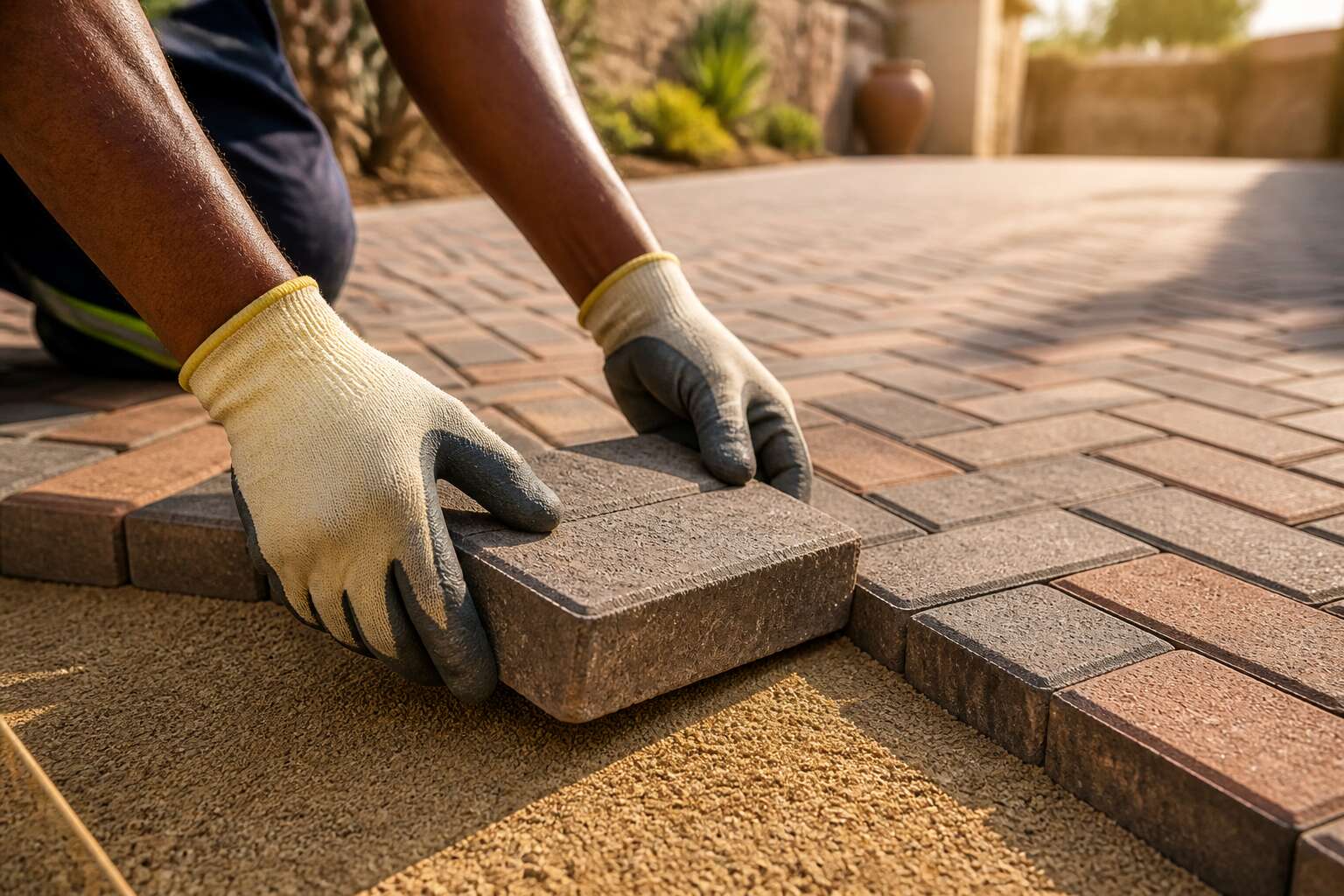
The actual laying process is a rhythm of placement and levelling. For pavers, the pattern is guided by string lines and rubber mallets. Every piece is tapped into place, checked with a spirit level, and adjusted for the correct joint gap. The sand is swept into the crevices, and the vibration plate makes its rounds to lock everything into a cohesive whole.
– The first phase is laying the edge restraints to hold the pattern firm.
– The second phase involves screeding the sand bed to the correct depth and slope.
– The final phase is the compaction and the washing of the joint sand into place.
With asphalt, the process is faster, but it demands a different kind of timing. The mix arrives hot from the plant, and there is a window of opportunity before it cools. Spreading and rolling it out requires a steady hand and a relentless pace. Concrete requires formwork and a careful eye for curing times, often waiting days before the truck can cross its own shadow. No matter the material, the goal is the same: a surface that drains properly, feels stable underfoot, and will not crack under the pressure of daily life. That silent satisfaction of a job done right is the quiet reward for the hours of preparation.
Installation Techniques and Best Practices
A paving project is decided in the consultation. That is when the paving specialists Bellville measure your space, ask about drainage, and check for tree roots. The installation techniques that follow are only as good as that first assessment.
Edge restraints are set first, then the sand bed is screeded to a fall. Pavers go down in a pattern, tapped and levelled continuously. Compaction is the final act, and it must wait until every joint is filled.
– Lay a straight edge across every tenth row to catch minor shifts.
– Mist the pavers before compaction to help the sand settle deeper.
– Never cut a paver on the installed surface; cut it off to the side.
Speed fails here. A slow, deliberate rhythm produces a driveway that survives the Cape’s wet winters without a hollow spot.
Curing, Sealing, and Finishing Touches
Curing is an overlooked alchemy in paving. After the pavers are locked in place, the real work begins beneath the surface. Moisture moves through the joints, and the base slowly settles into its final form. This period demands patience. The paving specialists Bellville know that rushing this phase invites movement later, so they schedule the sealing only after the bedding sand has fully stabilised.
Sealing serves a dual purpose: it locks the colour and shields the surface from oil stains and moss. A penetrating sealer works best for driveways, while a film-forming option suits patios. The finish matters too.
– A satin sheen flatters natural stone.
– A glossy coat intensifies colour but can become slippery when wet.
– Unsealed concrete pavers weather to a silvery patina.
The final walk-around happens on a clear morning. Joint sand is topped up, edges are trimmed, and the surface is washed down. Your new paving is handed over with a guarantee, ready for the first rain.
Final Inspection and Handover Procedures
The pre paving buzz always settles into a strange silence before handover. That quiet is the first signal the job is winding down. For paving specialists Bellville, the final inspection is less a formality and more a forensic sweep. They walk the grid with a level and a critical eye, tracing every joint and edge for signs of settlement or shifting. This is the moment where the details either pass or fail. A broom is run across the surface to reveal low spots, and a string line is pulled tight to confirm the perimeter remains crisp.
Once the physical checks clear, the procedural paperwork takes over. You receive a clear breakdown of the work completed, material guarantees, and the recommended maintenance schedule. The paving specialists Bellville also walk you through the first weeks of ownership, noting what is normal as the base settles and what warrants a call back. The handover concludes with a documented sign off. Your responsibility begins now, but their accountability remains anchored to that guarantee. For the client, this structured closing means the pavement arrives with a complete history and a clear future. It removes guesswork and replaces it with an explicit contract of care. This is how a professional relationship ends, with a signature and a mutual understanding of what comes next.
Post-Installation Care Instructions
Consultations begin with questions that catch you off guard. How many visitors park on a Tuesday? Does the delivery truck reverse in every morning? Paving specialists Bellville listen to these answers with a serious expression. The process from consultation to completion is a series of small negotiations. You want smoothness; they want drainage. You want colour; they want compaction.
The installation is a noisy interlude that ends with a strange quiet. Then come the post-installation care instructions, delivered in a tone that is polite yet firm. I have watched clients nod at these instructions, then promptly forget every word. You are told about sweeping, about avoiding sharp objects, about the first few weeks when the surface looks done but is secretly still settling. The specialists vanish, leaving you alone with your pavement and a list of responsibilities that feel both obvious and profound!
Maintaining and Extending the Life of Your Pavement
Routine Cleaning and Debris Management
Every autumn, Bellville’s oak trees scatter leaves and acorns across driveways. Left to linger, this organic debris holds moisture against the pavement surface. The result is slow but steady degradation. Routine cleaning is not complicated. It simply requires attention to what accumulates.
Grit and gravel grind into the surface under vehicle tyres. A weekly sweep removes these abrasive particles before they wear down the protective layer. For commercial lots, a monthly pressure wash prevents oil and fuel from seeping into porous concrete.
- Leaves and pine needles
- Sand and loose stones
- Moss or algae in shaded areas
Debris management also means clearing storm drains and gutters near paved edges. Standing water softens the base layer over time. Paving specialists Bellville understand local rainfall patterns. They emphasise that consistent care costs far less than repairs!
Crack Repair and Preventive Sealing
Cracks are where pavement starts to fail. Water finds these openings and works down to the base layer. Once that base softens, bigger problems follow. Patching a hairline crack takes an hour. Rebuilding a base takes days. That is a trade worth making!
Preventive sealing adds a protective barrier against Bellville’s harsh summer sun and winter rain. The sealant fills microscopic pores where moisture and oil penetrate. It also restores the surface, giving old asphalt a clean, dark finish.
Paving specialists Bellville recommend inspecting your pavement twice a year. Look for:
- Hairline cracks wider than a matchstick
- Alligatoring patterns near edges
- Grey or faded areas where sealer has worn away
Addressing these signs early prevents expensive structural repairs. Regular sealing every two to three years extends pavement life significantly.
Sealcoating and Resurfacing Schedules
Sealcoating is a scheduled intervention, not a one-time event. For most Bellville driveways and parking lots, the protective layer lasts two to three years before UV rays and tyre friction wear it thin. Timing determines whether a surface needs a simple coating or a full resurfacing, and that is where professional judgement matters.
Resurfacing becomes necessary when the existing asphalt remains structurally sound but the surface has deteriorated beyond what sealcoating can restore. This typically emerges after ten to fifteen years of service. A new overlay adds another decade of functional life at a fraction of replacement cost.
- Inspect sealant thickness after heavy rainfall
- Schedule resealing before winter rains arrive
- Monitor high-traffic zones for premature wear
Paving specialists Bellville recommend keeping a maintenance log with dates, product types, and observed wear patterns. These records predict future needs with accuracy. A surface that receives sealcoating on schedule rarely requires early resurfacing.

0 Comments