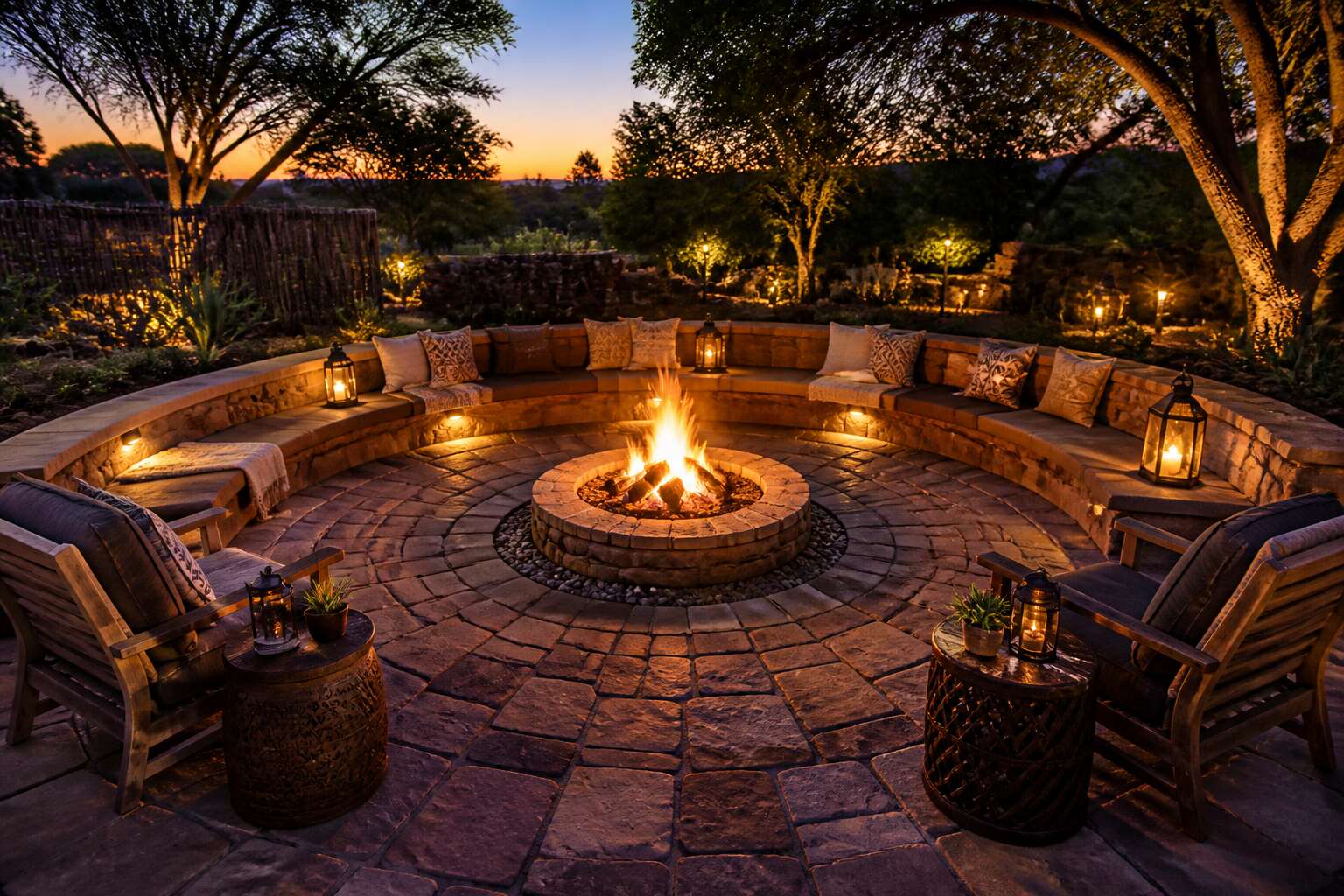
Design Considerations for a Circular Fire Pit Patio
A boma without a fire is just a ring of stones. A boma without proper paving is a trip hazard waiting for dusk. The circular layout forces pavers into radial cuts, and those cuts need a fire-resistant material. Clay pavers or slate handle the heat without crumbling.
Drainage is the quiet problem with boma fire pit paving. Water pools in the centre if the slope angles wrong. A gentle fall of 1.5% away from the flame keeps the space dry.
- Keep a 30cm clearance between the fire bowl and the paved edge.
- Lay larger pavers to reduce joints where ash and debris collect.
- Compact the base thoroughly to stop movement underfoot.
In my experience, get those details right and your boma fire pit paving will last a decade of braais. Get them wrong, and you will be relaying stones by winter.
Paver Material Options for Outdoor Fire Features
The paver material you select for boma fire pit paving shapes the entire experience, from heat retention to how the space feels underfoot. I have seen granite cobbles outperform softer options under intense heat, while slate adds a subtle shimmer when flames illuminate its surface. Each stone behaves differently.
Consider these popular paver choices:
- Natural stone offers durability and timeless character
- Concrete pavers provide uniform shapes and affordable versatility
- Clay brick retains heat well and ages gracefully
Sandstone demands caution! Its porous nature absorbs moisture and can spall when exposed to extreme temperature swings. The Karoo’s harsh sun and Highveld thunderstorms require materials that can endure both. Your boma becomes the central gathering point for cold winter evenings and long conversations.
Preparing the Base and Sub-Base for a Fire Pit Ring
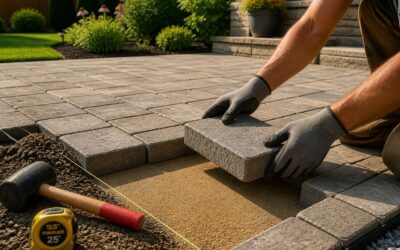
A boma fire pit paving project succeeds or fails during excavation, long before the first flame. South African soil shifts with the seasons, and I have watched bomas tilt within a year of hasty paving. Excavate to a depth that accommodates both sub-base and paving layers, roughly 150 to 200 millimetres deep.
Compact the sub-base in stages. Use a plate compactor and add crushed stone in thin lifts. Then lay bedding sand and screed it level. This foundation carries the weight of every gathering, every braai, every quiet evening.
- Drainage away from the fire pit ring
- Compaction of every 50 millimetre layer
- Edge restraints to stop lateral movement
Getting this right means your boma fire pit paving remains level through Highveld thunderstorms and Karoo droughts. The work is unglamorous, but it is the difference between a gathering place that endures and one that quietly fails.
Installation Techniques for a Seamless Circular Layout
The boma is the main gathering spot on any South African property. When it comes to boma fire pit paving, the circular layout must be seamless, or every braai feels off balance. I have seen too many jobs where the circle wobbles because the installer rushed the setting out.
Anchor a steel peg at the exact centre. Use a length of rope as a radius arm, and walk it around to mark the outer edge. This simple act, repeated with patience, gives you a true circumference. The base must be compacted in layers, then levelled with a screed rail.
- Set the centre peg and radius.
- Mark the full circle with builder’s sand.
- Compact and level the base.
- Lay pavers from the centre outward.
Butt the pavers tightly to keep the arcs honest, and cut the outer edge against a guide. The final sweep of fine sand locks everything in place, producing boma fire pit paving that truly feels whole.
Maintenance and Long-Term Care for Your Fire Pit Patio
A well maintained fire pit patio rewards you with decades of use. The boma fire pit paving endures plenty of heat, ash, and rain, yet it asks for very little in return. A stiff broom and warm soapy water handle the weekly routine.
For a deeper seasonal clean, focus on a few key tasks:
- Clear ash and soot from the joint lines
- Scrub with a mild detergent and a soft brush
- Inspect for cracked or loose pavers
Granite and slate respond well to a gentle rinse, while cobbles need more attention around their joints. Blow or sweep away leaves and debris before they stain. Sealing the surface once a year protects against oil splatters and keeps the colour rich. Pull weeds early, before their roots take hold.

0 Comments