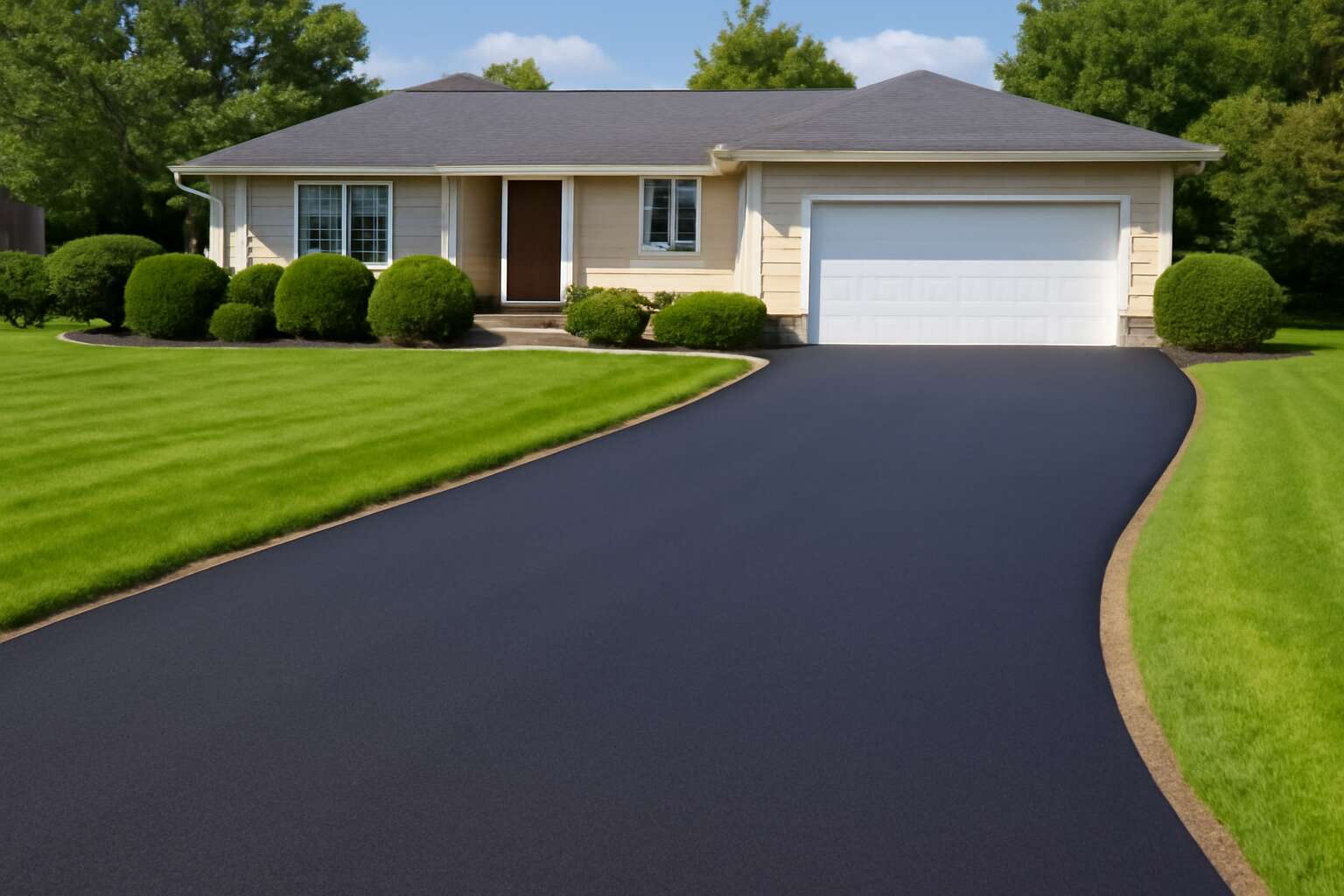
Materials and Design Options for Residential Driveways
Common driveway paving materials
Entrance to a home reveals more than a path; it reveals character. More than 60% of curb appeal hinges on the driveway, they say—the threshold where shade and light trade secrets with rain. For South African homes, residential driveway paving must endure heat, dust, and the random roar of vehicles while aging gracefully!
Common materials set the mood and the weathered fate of a driveway. The right choice balances cost, longevity, and look. Consider:
- Asphalt
- Concrete
- Interlocking concrete pavers
- Clay brick pavers
- Natural stone
- Resin-bound gravel
Design options shape the surface: interlocking patterns, colour palettes, and edging that tames landscape whispers. Dark tones reduce glare; lighter bands brighten the sun. Drainage matters—permeable surfaces and gentle slopes keep water from haunting the threshold. A balanced approach merges maintenance ease with dramatic character, letting residential driveway paving stand as a quiet sentinel at the gate.
Durability and maintenance considerations
A driveway’s life is written in stone, not sentiment. In South Africa, where summer heat meets roaming traffic, residential driveway paving must endure and age gracefully. The surface you choose speaks volumes about durability, curb appeal, and the quiet confidence guarding your gate.
Design options shape more than first impressions. Think patterns, colour palettes, and edging that calm landscape whispers—while drainage and slope keep water from haunting the threshold. For residential driveway paving, permeable surfaces and thoughtful grading reduce strain on foundations, making maintenance less of a hush and more of a steady, unspoken promise.
- Pattern and texture choices to manage glare and wear
- Colour palettes and edging that frame the site
- Drainage concepts, including slopes and permeable options
- Material behavior under SA climate and long-term maintenance narratives
Aesthetic patterns and curb appeal
South Africa’s sun-drenched mornings turn driveways into a stage for home drama and welcome. With residential driveway paving, patterns rise and textures invite a pause as tires settle into the surface. The choice signals more than function—it speaks of curb appeal and a quiet, enduring confidence that greets every visitor at the gate. Each line of design becomes a small sculpture on the street!
Pattern and texture choices to manage glare and wear subtly shape the experience. For curb appeal, pattern options offer motion and memory:
- Herringbone lay for dynamic flow
- Basket weave for warmth and stability
- Ashlar patchwork for timeless refinement
Colour palettes and edging frame the site, guiding the eye and harmonising with surrounding landscapes. Edging defines the threshold, while slopes and permeable options balance drainage with drama, letting residential driveway paving feel both elegant and practical.
Sustainable and eco-friendly options
Smart, sustainable choices reshape residential driveway paving across South Africa. Permeable designs can reduce runoff by up to 50% in heavy rains, a win for property drainage and neighbourhood resilience. In this space, eco-friendly options don’t ask you to compromise on style or durability; they invite a practical elegance that ages with the home.
- Permeable interlocking pavers or porous concrete to let water seep through
- Recycled or locally sourced aggregates that cut embodied energy
- Grass- or gravel-filled stabilised cores for a soft, drought-tolerant edge
Local materials and measured edging translate into quieter maintenance, lower heat, and a more vibrant streetscape. When thoughtfully paired with colour and texture, sustainable options in residential driveway paving become an invitation to elevate curb appeal without emptying the wallet.
Budgeting for materials and features
A well-planned driveway can lift a home’s street presence by up to 15%, a quiet magic that begins with numbers. In residential driveway paving, budgeting for materials and features shapes character as much as color and texture. I picture local tones, enduring textures, and the way shade travels along the edge, catching the eye without shouting. The right balance of durability and elegance rises to meet South Africa’s climate with grace!
- Upfront material costs
- Lifetime maintenance and replacement cycles
- Local sourcing and installation complexity
Let design and cost dance together, revealing a palette of possibilities—from earthy hues to refined finishes—while keeping the project within reach. In this realm, budget-conscious choices become practical poetry, and the driveway becomes a welcoming frame for the home’s story.
Preparation and Installation Process
Site assessment and permitting requirements
A solid driveway begins with quiet data whispered by soil; a permit can set the tempo, I tell my crew. “Measure twice, lay once,” a foreman once murmured, and that caution guides every slab of residential driveway paving we undertake. The hush of preparation meets the hammer of purpose here.
Site assessment and preparation are the unseen backbone: soil bearing, slope, drainage, and the location of hidden utilities. We map access for equipment, assess shade and freeze-thaw risk, and plan edging that holds in the future.
- Soil and drainage evaluation
- Utility locating
- Access and staging planning
Permitting requirements and the installation process: municipal approvals, drainage plans, and setback rules must be navigated before the first shovel. Once gates swing open, the sub-base is compacted, edging set, and surface laid to weather the next storm. This is how residential driveway paving becomes a quiet guardian of your home.
Site preparation and base construction
The quiet base is the unsung hero of residential driveway paving. I tell my crew that the base is where magic meets matter, whispered into the earth long before a blade touches soil. A robust sub-base anchors every inch of pavement, bending with heat and rain rather than cracking under them.
In our South African landscapes, site preparation is a ceremony—I’ve learned to treat alignment with contours, careful edging that recalls the horizon, and a layer that drains with the sky’s moods. We keep the pace calm, letting machinery sing a low, purposeful hum rather than a roar.
Once permits have cleared, and gates swing open, the surface is laid with restraint and respect. I watch the plan unfold, a driveway that endures, a quiet guardian of the home and a cornerstone of residential driveway paving.
Paving methods and compaction techniques
In the quiet heat of a South African afternoon, the preparation and installation process begins long before a blade meets soil. ‘A strong base is the half-finished poem of every driveway,’ a veteran masonsman reminds us. A calm, measured rhythm guides the work—sub-base density, proper edging, and a weather-eyed mind on surface moisture. The paving method must respect the land’s breath: gradual layers, precise compaction, and timing that honors curing windows.
Paving methods and compaction techniques unfold in measured stages:
- Sub-base performance through density and drainage considerations.
- Binder course behavior across temperatures and the role of rollers in density realization.
- Finish layer and joint sealing, signs of proper curing and weather resistance.
Moisture management and patience guide the crew toward a surface that remains even as seasons shift. In South Africa, this discipline is the quiet art of residential driveway paving.
Drainage planning and slope design
In the still heat of a South African afternoon, preparation and installation begin long before the first trowel touches soil. For residential driveway paving, the true act is reading the land’s breath: where water will gather, where shade will creep, and how the base will bear the weight of weather. Drainage planning and slope design are not afterthoughts—they are the hinges that keep the surface honest through dry spells and thunderous rains.
- Assess microtopography and existing drainage points
- Design a consistent slope away from structures
- Integrate curb and trench drains to channel water safely
As I listen to the soil, the base settles, moisture finds balance, and the finished surface answers the sky. This is the quiet art of residential driveway paving in South Africa.
Quality control, curing times, and scheduling
Curing times are the quietest negotiators in the heat of South Africa’s afternoon—one patient week now saves a lifetime of pothole poetry later. For residential driveway paving, quality control begins the moment the first wheel meets the site and ends only when the surface finally stops whispering back to the sky.
Quality-control steps and scheduling principles, when done with a steady hand, keep drama out of a driveway and into the coffee shop. Consider:
- Pre-pour moisture check and sub-base moisture content
- Binder and mix temperature verification at pour
- Edge alignment, joint spacing, and compaction pass timing
- Curing window management and weather contingency planning
Final sign-off happens when timing aligns with the forecast and the compaction density refuses to quiver—your surface ready to meet everyday traffic with confidence.
Longevity, Maintenance, and Repairs
Routine maintenance and cleaning
A slick, sunlit path can outlast fashion and weather—there’s a story in longevity that begins with the surface and ends in steadfast maintenance, a quiet, almost supernatural patience that resists time. In the realm of residential driveway paving, longevity is born from a calm cadence of care that withstands South Africa’s climate quirks.
Maintenance keeps that story alive. The routine is not glamorous, but it works. Regular attention to surface conditions helps catch wear before it deepens.
Repairs, when needed, should be timely and precise. Filling cracks, patching defects, and resealing worn areas defend against water intrusion and freeze-thaw cycles, preserving surface integrity without intrusive upheaval.
Common driveway issues and timely repairs
Longevity in residential driveway paving is a quiet achievement. In South Africa’s hot sun and sudden rains, a well-tended surface holds firm where others crack. For residential driveway paving, longevity starts with calm, patient care—clear joints, a solid base, and timely sealing that breathes with the climate.
Maintenance keeps that story alive. Routine care isn’t glamorous, but it works. Regular sweeping, weed control, and prompt crack filling slow the march of wear and help a surface drink the rains rather than let them undermine it.
Repairs, when needed, should be timely and precise. Common driveway issues—cracks, potholes, and edge movement—respond to early intervention. In SA’s climate quirks, a quick fill or patch preserves surface integrity and prevents water intrusion from taking hold.
Sealing, coatings, and protective treatments
“Longevity is patience dressed in sealant,” a foreman likes to say. In South Africa, the sun hammers asphalt and sudden rains cut like knives—yet attentive sealing keeps residential driveway paving standing firm, breathing with the climate and aging with quiet dignity. I’ve seen it endure.
Maintenance is quiet, steady work: timely re-sealing, light cleaning, and avoiding harsh cleaners that dull the surface. For residential driveway paving, when attended to, the old charm stays intact and the surface drinks storms rather than letting water batter its core.
Repairs, sealing, coatings, and protective treatments share one creed—react early and finish with care. Small cracks corrected, then a protective layer applied to deter moisture and UV fade helps extend life.
- UV-stable sealers that resist fading
- Breathable, moisture-venting formulations
- Water-repellent finishes to channel moisture away
Winter care and climate considerations
Longevity on a driveway feels like a quiet vow kept through the seasons. In South Africa, the sun can turn pavement to a mirror by noon; surfaces age with dignity when they rest on solid bases and binders tuned to heat, rain, and the rhythm of daily life.
Maintenance is a patient, quiet craft: routine cleaning, gentle washdowns, and timely re-sealing as the climate dictates. When storms arrive, a resilient surface breathes, channels moisture away, and withstands the sun’s blister and sudden downpours that would dull a weaker finish.
Repairs, sealing, coatings, and protective treatments share one creed—address small cracks early, then finish with a breathable shield. Winter care and climate considerations mean planning for cooler spells and heavy rains, so the surface keeps its character and function—residential driveway paving.
When to repair versus replace
Sun-scorched, a South African driveway should look sharp for years. Longevity rests on a solid base and a binder tuned to heat and rain—so residential driveway paving ages with quiet dignity. A local stat: maintenance timing can add years.
Maintenance is a patient ritual: routine cleaning, gentle washdowns, and timely resealing aligned to the climate. In heat and sudden downpours, a well-kept surface breathes, sheds moisture, and resists wear that dulls a weaker finish.
Repairs and protective coatings share one creed—address small cracks early, then finish with a breathable shield. When to repair versus replace hinges on crack size, traffic load, and substrate integrity for your residential driveway paving project.
- Minor cracks signal professional assessment, not a quick fix.
- Visible movement or delamination invites consideration of patching or resurfacing as advised by an expert.
- Extensive cracking or base failure points to a larger intervention.
Cost, Value, and Contractor Selection
Estimating project costs and budgeting
Smart budgeting turns driveway dreams into durable realities. For residential driveway paving, a clear cost picture upfront prevents nasty surprises when the project begins. In South Africa, good estimates often translate into faster approvals and smoother scheduling—saving time and keeping the project on track from first wheel mark to final seal.
Value comes from longevity and finish, not just the lowest price. Prioritize a plan that balances material quality, proper base work, and thorough compaction, because a small premium today yields decades of fewer repairs and less maintenance. A seasoned contractor will illuminate future savings without inflating the bill.
- Transparent, itemized bids with clear scope
- Licensed, insured professionals and proven track record
- Written warranties and a defined maintenance plan
When approached with care, residential driveway paving becomes a budget-friendly upgrade that delivers value for years to come.
Material vs labor costs breakdown
In South Africa, a well-executed residential driveway paving project pays back with calm reliability—the kind that prevents squeaky surprises down the line. As one veteran contractor puts it, “quality saves money over decades, not days.”
Cost isn’t a single figure; it’s a mix of material and labour that shapes value. Choosing durable surface materials and solid base work now reduces future repairs and maintenance, letting a small premium today translate into decades of smoother service.
- Material costs: long-lasting surfaces, binders, drainage-ready components
- Labour costs: skilled compaction, proper base preparation, finishing
- Lifecycle value: reduced repairs and lower maintenance needs over time
For contractor selection, aim for transparency and accountability. A qualified team will provide written scope, proof of licensing and insurance, and a maintenance warranty that clarifies expectations long after the last wheel mark.
Choosing the right contractor
Cost isn’t a single figure; it’s a blend of materials and labour that shapes value on the ground. For residential driveway paving, the right balance delivers predictable results and fewer nasty surprises. A smart budget aligns quality with practicality, turning upfront investment into long-term steadiness under foot and weather.
Value comes from durability and proper preparation. Durable surfaces and well-compacted bases slash future maintenance, turning a modest premium today into decades of smoother service. For the project scope, residential driveway paving quality translates into lower upkeep.
Contractor selection matters. Clarity wins: a team that provides a written scope, proof of licensing and insurance, and a maintenance warranty that remains meaningful long after the last wheel mark. Open communication keeps schedules and costs aligned.
- Written scope of work
- Proof of licensing and insurance
- Maintenance warranty details
Warranties, insurance, and permits
Some numbers grab you: a well-planned driveway can add tangible value to a home and slash future repair bills. In residential driveway paving, cost isn’t a single figure; it’s a blend of materials and labour that shapes value on the ground. The right balance delivers predictable results and fewer surprises!
Value comes from durability and proper preparation. We see that durability pays off. Durable surfaces and well-compacted bases slash future maintenance, turning a modest premium today into decades of smoother service. For the project scope, quality translates into lower upkeep.
Contractor selection matters. Warranties, insurance, and permits aren’t afterthoughts—they are the backbone of risk management and compliance with local by-laws. A clear written scope and verifiable licensing protect you long after the wheel marks fade.
- Written scope of work
- Proof of licensing and insurance
- Maintenance warranty details
Return on investment and property value impact
Across South Africa, a well-planned residential driveway paving project can lift a home’s perceived value by up to 8% while trimming future repair costs. Cost isn’t a single figure; it’s a dance between materials and labour, each choice shaping what the ground can sustain for decades. From the field, I’ve witnessed a solid base and patient surface transform a drive into a quiet engine of value!
Value is born from durability and proper preparation. Durable surfaces and well-compacted bases turn modest premiums into decades of smoother service, reducing upkeep and guarding against the whims of weather. The right project scope translates into lower maintenance and better long-term returns for your property.
Choosing the right contractor heralds the ROI of residential driveway paving, ensuring the craft on the driveway aligns with market realities as the wheel marks fade and value endures!
Sustainability and Local Considerations
Permeable paving options and drainage benefits
Rains hammer soft gravel and leave streets slick—South Africa’s weather keeps homeowners vigilant. In residential driveway paving, sustainability isn’t an afterthought; it’s the backbone. Permeable surfaces invite rain to linger where it should—on the ground, not the pavement—reducing runoff, easing drainage, and nurturing the microhabitats at the curb.
Local considerations—soil, shade, and storm patterns—shape the best permeable options for your property. Here are resilient choices that blend drainage benefits with curb appeal:
- Porous concrete or permeable asphalt that absorbs water through its matrix
- Permeable interlocking pavers with open joints for rapid infiltration
These surfaces slow runoff, reduce puddling, and extend the life of the base, while thriving in SA climates. This is a cornerstone of residential driveway paving and sustainable landscape design.
Recycled materials and eco-friendly choices
South Africa’s storm profile demands more than looks; a heavy downpour can yield runoff that overwhelms impervious driveways — a reality that makes residential driveway paving the backbone of sustainable landscapes.
Local considerations—soil type, shading, and storm frequency—shape the best eco-friendly choices. A driveway on clay behaves differently from one on sandy ground, and shaded areas linger moisture, influencing infiltration and maintenance dynamics.
Consider these eco-forward options:
- Recycled aggregates (crushed concrete, RAP) cut new material use and transport emissions
- Locally sourced stone and timber to reduce long-haul impact
- Low-energy curing methods and low-VOC sealants to minimize ongoing footprint
These approaches align with sustainable residential driveway paving ambitions, preserving curb appeal while respecting SA’s climate realities.
Local codes, zoning, and weather considerations
Storms don’t knock— they flood. In South Africa, local codes and zoning are not mere paperwork; they sculpt how you pave and how it behaves under pressure. For residential driveway paving, the wrong choice can turn a quiet pathway into a runoff channel after the first heavy downpour.
Key local considerations include:
- Local codes and zoning dictate setback, width, and drainage requirements that shape material choices.
- Weather patterns—rainfall intensity, drought cycles, and sun exposure—drive drainage planning and long-term maintenance.
- Permitting timelines and neighborhood covenants can influence scheduling and access during construction.
Smart layout and materials respect soil type, shading, and seasonal winds, turning climate realities into an ally rather than an antagonist. The result is a driveway that stays stylish while staying sensible—a curb-appeal asset that endures the SA weather.
Maintenance implications for the environment
Heat is a silent co-designer of curb appeal, shaping how a driveway looks and ages under SA skies. South Africa’s climate rewards decisions that respect water, shade, and sun exposure. For residential driveway paving, sustainability isn’t a trend—it’s a practical pact with the land, guarding soil health and local streams against heavy rain and quiet runoff.
Smart layout respects soil type, existing vegetation, and seasonal winds, turning climate realities into an ally rather than an antagonist. Materials that resist cracking and fading mean fewer replacements and less waste—a quiet victory that echoes through street appeal and the budget. Maintenance implications for the environment include steadier water use, preserved moisture in the beds beside the drive, and a neighborhood ecosystem that stays healthier year after year.
Life-cycle assessment and long-term planning
Resilience begins with the ground you lay. In South Africa, life-cycle assessment turns residential driveway paving from a single project into a stewardship practice that spans decades, tracing embodied energy from quarry to curb. Thoughtful planning honours soil health, water use, and the rhythms of SA weather, where shade and sun compete for influence. This approach balances durability, local materials, and end-of-life options to ensure a driveway ages gracefully in our climate and neighborhoods.
Long-term planning anchors decisions to local realities—soil type, seasonal shifts, and nearby drainage patterns that quietly shape how water moves across a property. When the lifecycle is considered, materials chosen for longevity reduce the frequency of replacement and the waste it generates, aligning curb appeal with responsible stewardship for the driveway’s long life.

0 Comments