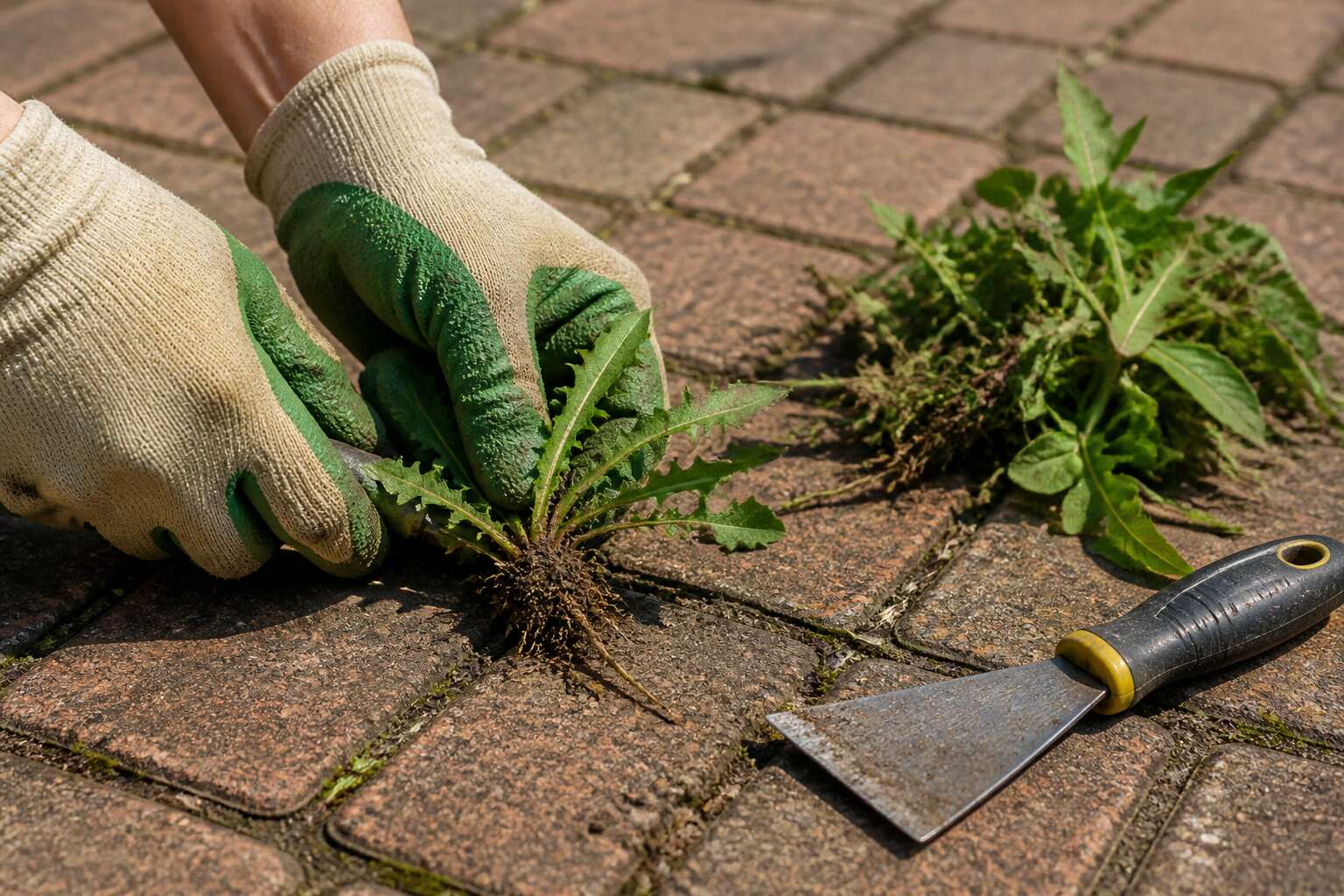
Why Unwanted Growth Thrives in Brick Joints
How Seeds Accumulate in Cracks and Crevices
A brick patio is a mosaic of tiny, hidden ecosystems. Unwanted growth thrives in brick joints because these narrow gaps mimic the protective crevices of nature. I’ve seen seeds accumulate in cracks and crevices through wind, runoff, and foot traffic, where they settle into a bed of sand and organic matter. Each footstep presses them deeper, creating a perfect nursery. Consider the common culprits:
- Windborne seeds from nearby gardens
- Rainwater carrying particles and spores
- Loose sand and dust trapping moisture
These conditions give roots a foothold! When tackling removing weeds from brick paving, understand that the joints are the problem, not the bricks. The constant moisture and shade in those gaps allow germination to occur unseen, which is why the weeds return with such persistence.
The Role of Moisture and Drainage
Water is the quiet enabler behind every stubborn weed problem. When rain hits a brick patio, the joints act like a sponge, holding moisture long after the brick surface dries. This trapped dampness softens the sand below and creates the exact conditions roots need to push through. Poor drainage makes it worse. If water pools near the house or along the edges, those low spots become permanent nurseries.
The real issue is the contrast between the brick and the joint. Bricks heat up and dry quickly, but the sand beneath stays cool and wet. That uneven moisture lets roots survive even during a dry Highveld spell. The longer water lingers, the deeper it seeps, and the harder the job becomes. That is why removing weeds from brick paving is not about pulling what you see. It is about breaking the moisture cycle itself.
Soil and Sand as Growing Mediums
Brick joints are not passive gaps. They are narrow traps for every stray seed and speck of soil. Wind, shoes, and rain carry mineral dust and organic bits into the crevices. Once there, the sand and soil form a layered medium that holds enough moisture and nutrients for germination. This is why unwanted growth thrives in brick joints. The joint becomes a miniature container, isolated from the harsh sun that dries the brick surface.
Soil and sand as growing mediums behave differently here than in a garden bed. They are compressed, often alkaline, and low in organic matter. Yet certain weeds prefer exactly that. They germinate quickly in the shallow film of dirt that settles between the bricks. The lack of cultivation means roots face little disturbance. A few dry days do not kill them, because the sand retains humidity below the surface.
Removing weeds from brick paving requires understanding this medium. Pulling the top growth leaves the root system intact. For anyone removing weeds from brick paving, the real target is the joint’s soil. The soil stays in place, ready for the next seed. The key is to recognize that the joint is not broken concrete; it is a living seedbed in miniature.
Natural and Eco-Friendly Removal Techniques
Boiling Water and Salt Applications
Boiling water is the bluntest instrument in the gardener’s shed. It scalds the weed’s root system on contact, collapsing cell walls and halting photosynthesis immediately. The paving itself remains unharmed, since fired clay or concrete handles the heat without cracking. Pour it directly onto the crown of the weed, and the wilting is visible within hours.
Salt operates on a different principle. It draws moisture from plant tissue and disrupts the osmotic balance in the soil. A sprinkle of coarse salt into the cracks after boiling can suppress regrowth for weeks. Yet this method demands restraint, because salt accumulates in the ground and heavy rains can carry it into adjacent flower beds.
- Use coarse salt to control the spread
- Boiling water works best on young weeds
- Reapply after heavy rainfall
Consistent effort matters when removing weeds from brick paving without chemicals. Neither technique offers a permanent cure, but together they reduce reliance on herbicides and keep the courtyard safe for children and pets. Removing weeds from brick paving becomes a routine task rather than a chemical intervention.
Vinegar and Dish Soap Solutions
Vinegar and dish soap work together to break down weed foliage. The acetic acid in household vinegar burns leaf tissue on contact. A drop of dish soap removes the waxy cuticle that protects the leaf surface, allowing the vinegar to penetrate with greater effect. Spray the mixture onto the leaves during a dry spell. The plant will wilt within a few hours.
This technique suits spot treatment along driveways and between pavers. It provides a quick, visible response for removing weeds from brick paving. Some perennial weeds may require a second application, since their taproots store energy beyond the reach of the spray. Vinegar breaks down rapidly in the soil, leaving no persistent residue. Nearby garden plants can suffer from spray drift, so keep the mist low and direct.
Baking Soda Paste for Stubborn Spots
Some weeds laugh at sprays. Their roots grip the mortar joints with stubborn intent, and a quick drench simply wets their appetite. For these entrenched survivors, a baking soda paste is the quiet answer. Combine three parts bicarbonate of soda with one part water to form a thick sludge. Paint it over the leaves and crown, coating every exposed surface. The alkaline mixture draws moisture from the plant cells, causing the foliage to dehydrate over a few days.
The paste clings precisely to the weed, so nearby ornamentals remain untouched. Rain will dilute its power, so apply during a dry spell. Watch for regrowth within a week; a second application usually finishes the job. This measured, low toxicity method is a dependable option for removing weeds from brick paving without disturbing the soil structure or surrounding plant life.
Weeding Torches and Flame Weeding
The hiss of a weeding torch signals the end of another weed. Flame weeding applies heat directly to the plants. The torch sweeps over the brick, and the weed’s cells rupture with a soft pop. It is not about charring the plant to ash. One flash raises the tissue temperature enough to burst the cell walls. Within hours the leaves droop. Within days the plant collapses.
This technique works best on young seedlings. Established weeds may need a second pass after a week. The brick absorbs the warmth, and the mortar is unharmed.
The torch is not picky about species:
- dandelions with their long taproots
- crabgrass threading through the joints
- moss creeping across the brick face
A calm, dry morning offers the best conditions. Dry weeds respond faster. The method leaves no chemical residue, making it a trusted option for removing weeds from brick paving.
When to Use Chemical Herbicides
Selecting the Right Type of Herbicide
Chemical herbicides are the last resort for removing weeds from brick paving. When boiling water and vinegar fail, you need a stronger approach. Use them when weeds have deep root systems or when the entire patio is overrun.
Selecting the right type matters. Choose a systemic herbicide that kills roots rather than merely scorching leaves. For effective weed control on brick paving, a non-selective spray is often sufficient. Avoid overkill; a simple product works.
Here is what to consider:
- Pre-emergent herbicides prevent seeds from germinating.
- Post-emergent killers target active weeds.
- Non-selective types kill any plant they touch.
Choose based on your weed stage. Always read the label. Brick is porous, so some chemicals can stain. Test a small corner first.
Application Methods for Patios and Walkways
The right moment to reach for herbicide is not when the first green sprout appears. Weeds must be actively growing, with soil slightly moist but the forecast dry for a full day. Spraying before rain invites dilution; spraying during drought makes weeds dormant and unresponsive. For removing weeds from brick paving, target young weeds before they seed.
Application methods for patios and walkways avoid broadcast spraying. A low-pressure pump sprayer set to a coarse droplet, aimed directly at the weed, prevents overspray onto surrounding brick. The foam from a pump sprayer clings and saturates leaf surfaces rather than running off. For walkway cracks, a squirt bottle with a narrow nozzle offers precision. Work on a windless day, and rinse the sprayer thoroughly after each pass.
- Spot-spray each weed individually, keeping the nozzle close to foliage.
- Use a wick applicator forweeds growing next to desired plants near the patio edge.
- For deep taproots, saturate the crack opening according to label ratios.
Timing for Maximum Effectiveness
A single weed can cast thousands of seeds into the wind, yet the moment to poison it is not when it blooms. For removing weeds from brick paving, the timing of herbicide application is as critical as the chemical itself.
In South Africa, the seasons dictate the weed’s vulnerability. Early spring, when the first rains bring green shoots from the cracks, is one such window. The weeds are young, leaves soft,and the roots still shallow. Autumn offers another: as the heat retreats, weeds draw nourishment downward, carrying the herbicide into their taproots.
I have found that late afternoon works best. The sun no longer scorches, the dew has dried,and the plant’s stomata remain open. A light wind can carry the spray astray, so wait for stillness.
Preventive Strategies to Keep Joints Clean
Polymeric Sand as a Barrier
A weed seed landing in a brick joint will germinate if it finds soil and moisture. Polymeric sand removes both. The sand contains a binding agent that activates when wet, locking particles together into a firm, porous mass. This blocks the tiny gaps where soil accumulates and roots take hold.
The material resists the expansion and contraction of South African heat cycles, keeping joints stable for years. For homeowners tired of the weekly chore, this reduces the need for removing weeds from brick paving almost entirely.
Here is what polymeric sand offers:
– A hard barrier that prevents seeds from reaching the soil beneath.
– A stable base that resists ant activity.
– A clean finish without loose sand washing away.
Once the joint is sealed, debris cannot settle. Less moisture is retained, and germination slows dramatically.
Sealants and Their Protective Role
Weeds do not break through brick; they slip into it through gaps you can barely see. Sealants close those gaps permanently! A quality sealer bonds to the joint edges and forms a flexible skin that resists rain and temperature shifts. This stops organic debris from lodging between pavers, which removes the material that supports germination.
Prevention reduces the effort of removing weeds from brick paving to near zero. In my experience, applying a penetrating sealer every two years is enough for most South African patios. The protective role is simple: a sealed joint denies seeds access to soil and moisture.
- Acrylic sealers give a glossy finish and resist UV discolouration.
- Polyurethane sealers handle high foot traffic without cracking.
- Penetrating sealers preserve the natural brick look while blocking water.
Proper Edge Restraints and Joint Structure
Sweeping the surface every week costs minutes, while removing weeds from brick paving costs hours. The work starts with keeping joints free of loose grit, since buried debris compresses into a dense layer that traps moisture. Use a stiff broom regularly, and chase stubborn particles from the gaps with a thin scraper.
Edge restraints are just as critical. They lock boundary pavers in place, which stops the sand bed from shifting outward. A weakened edge lets joints widen, inviting soil in. To avoid this, maintain these elements:
- Concrete haunching along perimeter edges
- Rail system secured with stakes
- Granular base compacted to spec
I recommend checking edge restraints each spring, and fix any loose edge before it shows up as extra weed pressure. Joint structure itself needs attention too. Replenish joint sand annually, particularly after heavy rain. Tamp it firm,anda stable base eliminates the need for emergency repairs!
Routine Inspection and Quick Fixes
Weeds are easiest to remove in the first two weeks after germination, yet most people wait until roots have locked into the sand bed. By then, the plants have displaced joint sand and widened gaps. Catching seedlings early reduces the effort of removing weeds from brick paving by an order of magnitude. I carry a narrow-bladed weeder on routine walks and pry out any green intrusion immediately.
Preventive strategies hinge on observation. Walk paved areas after a summer thunderstorm, since moisture exposes early growth. Check the zones where sand washed out previously, as these spots collect debris first.
- Use a stiff brush to flick out tiny seedlings before they root
- Blast stubborn grit from joints with a high-pressure nozzle
- Patch washed-out joints with fresh sand immediately
A ten minute inspection each month prevents the slow accumulation that turns minor gaps into full invasions. Stable joints leave weed seeds nowhere to root, making removing weeds from brick paving a rare event!
Maintaining a Polished Brick Surface After Weeding
Safe Disposal of Plant Debris
After removing weeds from brick paving, the brick surface often looks scuffed. Gritty soil, squashed leaves,and dried sap leave a dull film across the paving. I use a stiff bristle brush with plain water in small circles, then a damp mop to restore the polished brick surface. Skip the pressure washer,as it can strip out the joint sand.
Safe disposal of plant debris matters as much as removing weeds from brick paving. Laying pulled weeds on a compost heap often leads to new growth,as many species regenerate from fragments or seed heads. Collect everything into a sealed black bag and leave it in direct sun for three days. Alternatively,
- Send bagged weeds with municipal green waste collection
- Burn dried plants in a controlled incinerator where permitted
- Submerge them in a bucket of water for a week before discarding
These methods stop seeds spreading back into the joints.
Deep Cleaning Schedules
After the last weed is levered from the joints, the polished brick surface still demands attention. It shows every displaced grain of sand, every crushed leaf, every dried sap droplet. In South African summers, the sun bakes those residues into a film. Removing weeds from brick paving requires equal attention to the surface it protects.
I set a deep cleaning schedule that respects paver fragility. Weekly, I sweep loose debris witha stiff broom. Monthly, I sponge down without forcing water into the cracks. Twice a year, I use mild detergent diluted in warm water and scrub with a soft bristle brush.
Seasonal changes dictate tasks.
- Clear fallen leaves before they stain in autumn.
- Inspect for moss growth in shaded corners each spring.
These routines preserve polished finish while keeping weed seeds from settling back inton the joints.
When to Call a Professional
The last weed is gone, but the polished brick surface often shows the damage. Fine scratches from trowel tips and stiff brushes collect dust, and the South African sun bakes these particles into a dull film. Removing weeds from brick paving is only the first step. Protecting the finish requires you to switch from extraction to restoration. Use a paver-safe polish with a soft cloth, working in circular motions on the affected area. This lifts the film without scraping new marks inton the surface.
You can handle most maintenance, but certain failures demand qualified help. Call a professional when you see:
- White efflorescence returning within weeks andafter cleaning
- Cracked or spalling bricks caused by trapped moisture
- Sunken or uneven joints that indicate underlying drainage problems
A professional who specializes in removing weeds from brick paving understands the difference between surface stains and structural wear. That expertise repairs the root cause, saving you from repeat cycles of damage and re-finishing.

0 Comments