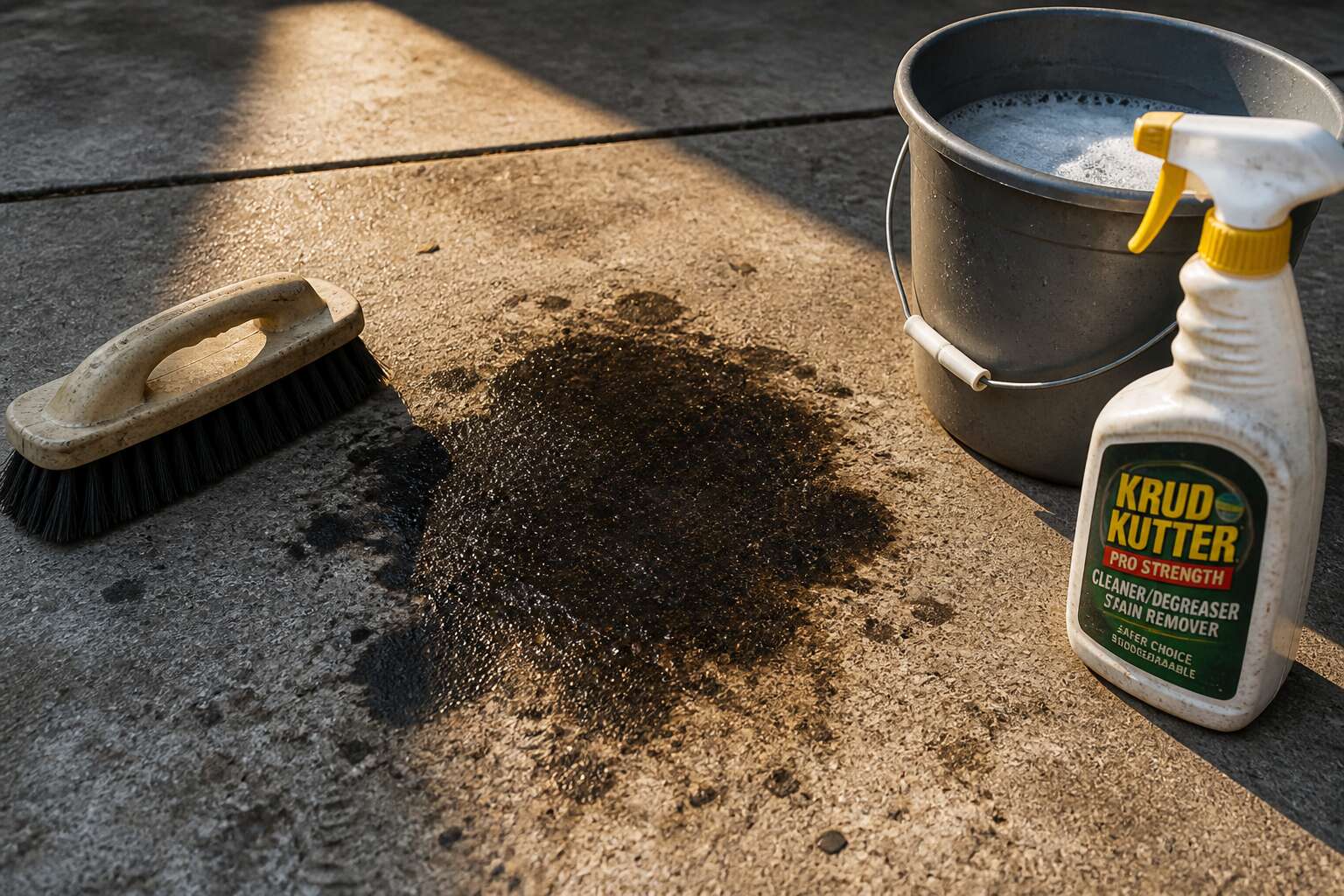
Understanding Oil Stains on Paving
Why Paving Acts Like a Sponge for Oil
Oil never simply stains paving; it invades it. The moment a drop touches the surface, gravity and capillary action pull it into microscopic voids. Concrete and brick are porous by design, accepting water and oil with equal willingness. This is why how to remove oil stains from paving is rarely a simple wipe.
Heat accelerates this process! I see it happen on South African driveways constantly. The sun thins the oil, lowering its viscosity. This allows the fluid to travel deeper. Once inside, the oil clings to mineral surfaces, becoming fixed.
Consider the primary mechanisms at play:
- Capillary suction drawing liquid into narrow gaps.
- Gravity acting on the denser fluid.
- Evaporation of lighter compounds leaving residue.
This understanding changes expectations. The stain is a subsurface condition. The longer it sits, the deeper it penetrates. Realising this is the first step to a lasting fix.
Common Sources of Oil Stains: Cars, Grills, and Machinery
I see the same pattern on South African driveways. A car leaks a few drops of engine oil after every long trip. The weekend braai sends fat splattering across the paving. The gardener’s lawnmower drips old fuel near the edge. These sources are so familiar that their stains become unremarkable.
Each source leaves a distinct signature. Fresh transmission fluid spreads quickly and darkens the surface. Grill grease congeals into a waxy residue that resists water. Machinery oil penetrates deeper due to pressure from the equipment above. The origin of the stain shapes the approach you will need when researching how to remove oil stains from paving. Common offenders:
- Leaking sumps and gearboxes
- Braai marinades and cooking oil
- Hydraulic fluid from machinery
- Old fuel from garden tools
Identifying the source narrows your options. A stain from a car’s sump behaves differently from one caused by a grill, and that distinction matters when you search for how to remove oil stains from paving.
Paving Materials and Their Stain Absorption Rates
Concrete, clay, and stone absorb oil at different rates. Porosity dictates how deeply the liquid travels before settling. Dense granite keeps oil near the surface, while softer clay brick pulls it inward. This variance explains why the same spill looks trivial on one driveway, catastrophic on another. When you research how to remove oil stains from paving, the material underfoot changes the answer.
Consider South African options:
- Concrete pavers offer moderate absorption, so oil lingers on the surface before seeping into microscopic gaps.
- Clay bricks absorb quickly, drawing oil deep into their structure.
- Natural stone varies widely, with dense slate resisting and porous sandstone soaking up oil.
Weathered surfaces develop micro-cracks that increase absorption rates. Paving has fewer entry points, sealant breaks down over time. Absorption rates change with weather and traffic. The search for how to remove oil stains from paving must start with observation, not action!
Immediate Action and Quick Fixes
Blotting Up Fresh Oil Before It Sets
The moment oil hits your paving, you have a narrow window before it sets. In the South African sun, that dark slick can bake in hours, turning a spill into a permanent stain. I have watched homeowners grab a rag and rub, pushing the oil deeper into the pores. Blotting, not rubbing, is the first rule!
Grab newspapers, paper towels, or cat litter. Lay them over the spill and press down firmly. Let the absorbent material sit to draw the oil out of the paving. Repeat until the blotting paper comes up clean.
- Use a heavy object to weigh down the absorbent material.
- Change the paper or litter as soon as it looks saturated.
- Keep blotting until no new oil transfers to the surface.
This immediate response is the most effective step in how to remove oil stains from paving, because it stops the oil from settling into the substrate where it becomes stubborn. For anyone learning how to remove oil stains from paving, this first step matters most.
Using Cat Litter or Clay Absorbents
How to remove oil stains from paving rarely requires expensive chemistry. Sun-baked paving turns a dribble of oil into a dark scar within hours, but cat litter or clay absorbents are the fastest allies. These granular materials wick oil out of the slab, using their porous structure to lift the stain instead of letting it settle.
Here is how to deploy them:
- Cover the spill completely with a thick layer.
- Grind the litter lightly underfoot to increase surface contact.
- Let it rest for a few hours, or overnight if the spill is heavy.
The litter darkens as it pulls oil from the surface. Sweep away the saturated clumps and check the spot. A second application may be necessary for deep stains. This old mechanic’s trick remains a dependable method for how to remove oil stains from paving, at a price that suits any household budget.
Kitchen Cornstarch for Small Drips
Speed decides the outcome. When oil meets paving, the first five minutes matter more than any chemical treatment applied a day later. For small drips, kitchen cornstarch offers a quiet solution. Its fine particles reach into the microscopic texture of the concrete, pulling the oil upward before it can settle.
Apply a generous layer, press it gently into the stain, and let it rest for half an hour. The powder transforms as it works:
- It darkens where oil rises
- It clumps into soft pellets
- It releases from the surface with a light brush
This is how to remove oil stains from paving for the small accidents that occur in everyday life. South African heat accelerates the staining process, so immediate action is a necessity. Homeowners who ask how to remove oil stains from paving often overlook cornstarch, yet it sits in most kitchens already. Keep it within reach, and the driveway stays honest.
Deep Cleaning Techniques and Home Remedies
Baking Soda Paste for Stubborn Stains
Some stains resist absorbents and require deeper intervention. A baking soda paste works well for these stubborn marks. Mix baking soda with water until it forms a thick slurry. Spread the paste over the stained paving and let it sit for several hours. The alkaline nature of baking soda draws oil out of the pores.
For tougher deposits, you may need to repeat the process or apply heat. A heat gun or boiling water can help liquefy hardened oil before the paste goes on. Always test a small area first to avoid damaging the surface. If you are still searching for how to remove oil stains from paving, this household remedy often outperforms commercial degreasers on old stains. In my experience, knowing how to remove oil stains from paving comes down to patience. Let the paste sit long enough, then rinse with clean water and a stiff broom. You will see the difference!
Oxygen Bleach and Hot Water Soak
In Johannesburg, where paving bears the brunt of braais and storms, how to remove oil stains from paving call for deeper methods. Oxygen bleach, a compound releasing active oxygen, breaks down oil molecules within porous stone. Hot water soak liquefies the grease, making it flush away with ease.
p>
Start with boiling water over the stained area. Then mix oxygen bleach powder into a slurry and spread it over the spot. Let it sit for four hours, covering with plastic wrap to retain moisture. The oxygen bubbles lift the stain without eroding the paving’s finish.
This pairing excels on older marks, where oil has sunk deep into the material. In my Cape Town garden, it has rescued many a neglected corner, proving that knowing how to remove oil stains from paving demands only a kettle and some patience.
The WD-40 Trick: Breaking Down Oil
The stain, once a gleaming testament to mechanical life, now sits as a dried, dark memorial on the concrete. Deep cleaning is not about surface scrubbing; it is an excavation. When the oil has cooled and congealed into a waxy film, a stiff brush and a degreaser become your tools. The physical agitation breaks the molecular bond that keeps the residue anchored to the stone. Work the solution into the pores with a circular motion, forcing the solvent beneath the surface layer to lift the deposit from its bed. It is a slow, deliberate act, a patience test against the stain’s archaeology.
When commercial solvents fail, the home remedy of the WD-40 trick offers a surprising countermeasure. The solvent acts as a thinning agent, re-liquefying the hardened hydrocarbons that have fused with the paving matrix. Spray the affected zone liberally and allow the fluid to penetrate for several minutes. The oil softens, becoming a slurry that can be wiped away with a rag. This method is effective for stains that have been trodden upon, ground into the surface by foot traffic.
– Spray the WD-40 directly onto the dry stain.
– Wait ten minutes for the solvent to break down the viscosity.
– Wipe the area with a clean, absorbent cloth, pressing firmly.
The solvent does not erase the mark entirely; it lifts the oily residue so the porous surface can finally breathe. This trick works best on smooth, dense paving, not on rough, unsealed surfaces. In my experience, a mechanic’s driveway in Durban yielded its old ghosts to this very method. Knowing how to remove oil stains from paving often requires this odd, chemical alchemy, turning a lubricant into a cleansing agent. The results are immediate, a grey shadow fading into the surrounding stone.
Cola and Other Surprising Household Solvers
Matching the solvent to the stone ensures results. Granite resists acid, while concrete needs caution. Understanding these variables is central to learning how to remove oil stains from paving.
Using a Stiff Broom and Manual Scrubbing
The stain has had its moment, soiling the stone with an oily memory. Now comes the unglamorous reckoning, a patient ritual of bristle and grime. A stiff broom, the kind with coarse, unyielding fibres, becomes your primary instrument. Work the head in a circular motion, pressing firmly to lift the solvent and loosened residue from the paving’s pores. This is not a gentle sweep; it is a deliberate agitation that breaks the bond between oil and mineral.
After the initial pass, let the solution dwell. The stone needs time to relinquish its hold. Then, return with fresh water and scrub again, watching the suds turn a murky grey. This manual effort is the quiet, consistent labour behind learning how to remove oil stains from paving. For particularly stubborn patches, a stiff deck brush on a long handle provides more leverage, allowing you to lean into the work.
– Apply pressure in overlapping strokes to avoid missing spots.
– Rinse the brush frequently to prevent redepositing the oil.
– Work in small sections to maintain control.
Once the area is flushed clean, allow it to dry completely before assessing the results. A faint shadow may linger, a ghost of the spill, but the texture will be clean to the touch. This method, though demanding, restores the paving’s dignity without harsh chemicals. The sun will dry the surface, and the stone will once again face the elements, unburdened.
Trisodium Phosphate for Heavy-Duty Grime
Some oil stains are stubborn, resisting every household remedy you throw at them. For those, you need a heavier hand. Trisodium phosphate, commonly sold as TSP at hardware stores, is the workhorse for this job. It is a strong cleaning agent that cuts through grease and grime that soap and water cannot touch. This is not a gentle treatment; it is a deep clean for paving that has absorbed oil deep into its surface.
When tackling how to remove oil stains from paving with TSP, the process is straightforward but requires care. Mix the TSP powder with warm water according to the package directions. Apply the solution generously to the stained area and let it sit for ten to fifteen minutes. The chemical needs time to break down the oil molecules. After it has worked, scrub the area with a stiff brush, using the same circular motion you would for a lighter clean.
1. Wear rubber gloves and safety goggles to protect your skin and eyes.
2. Keep the paving wet while the TSP is working to prevent it from drying out.
3. Rinse the area thoroughly with clean water to remove all chemical residue.
TSP is effective, but it is a powerful alkali and should be used with respect. It is wise to test it on a small, hidden corner of the paving first. This ensures the solution will not damage or discolour the stone. For driveways or paths in Johannesburg or Durban that have seen years of oil drips, this method offers a deeper level of cleanliness. It breaks the bond between the oil and the mineral surface, leaving the stone ready to be rinsed and dried. It is the final, decisive step in learning how to remove oil stains from paving when gentler means have failed. Just remember to keep the area wet during the process and flush it well when you are finished. The effort is worth it when you see the true colour of the paving return.
Pressure Washing and Mechanical Methods
Choosing the Right PSI for Your Paving Type
The nozzle can be your greatest ally or your worst enemy when facing a driveway oil stain. On concrete, a 3000 PSI unit will blast away years of accumulated grime, but on softer clay pavers, the same pressure erodes the surface and actually pushes oil deeper into the pores. I always test an inconspicuous corner before committing. A wide fan tip works best for large areas. Here is a basic benchmark for South African paving materials:
– Concrete: 2500 to 3000 PSI
– Clay pavers: 1500 PSI
– Natural stone: 1200 PSI or less
Matching the PSI to your paving type is half the battle. This is a key part of how to remove oil stains from paving. You also need to consider water temperature. Hot water, around 60 degrees Celsius, breaks the oil’s surface tension and releases the stain without excessive force. Keep the nozzle moving, because even correct PSI can leave a permanent etch mark if you linger.
Hot Water vs. Cold Water Pressure Washing
Hot water pressure washing changes the game. Cold water merely pushes oil across the surface; hot water breaks the bond between the oil and the paving pores. Many homeowners in Johannesburg rent a pressure washer and expect cold water to solve everything. It will not. A 60 degree Celsius supply separates the stain from the stone without etching. The mechanical action of the nozzle does the lifting. For stubborn patches, switch to a rotary turbo nozzle after the initial hot water pass. That combination handles most residential driveways.
If you rely only on pressure, you miss the deeper deposits. Here is a basic order of operations:
- Flush the area with hot water at low pressure.
- Apply your chosen solvent and let it dwell.
- Pressure wash at 40 degrees Celsius with a fan nozzle.
- Repeat on any remaining shadow.
This sequence is part of how to remove oil stains from paving without causing permanent damage. Remember to keep the spray moving, always.
Setting Up a Containment Area to Avoid Spreading
Before any water meets the stone, think about where the runoff will travel. Oil that leaves the driveway ends up in storm drains or your neighbour’s property, which solves nothing. A sandbag berm or a length of rubber threshold across the downhill edge forms a simple barrier. Direct the pooled water toward a bucket or a low-lying collection point.
For larger areas, use a wet vac to lift the dirty water as you work. This mechanical step prevents the solvent, now loaded with dissolved oil, from re-soaking into cleaner sections of paving. Containment is the quiet half of how to remove oil stains from paving; it turns a messy job into a managed one.
Combining Degreasers with Pressure Washing
The high pressure of a jetter does not erase oil; it merely relocates it. Chemical action must precede the blast. A solvent degreaser breaks the hydrocarbon bonds, lifting the stain from the pores of the concrete or brick. Without this step, water alone drives the oil deeper into the substrate, a permanent mark of neglect.
Apply the degreaser to the dry surface and allow it to dwell. The duration matters. A short dwell time produces a superficial clean; a longer soak draws out the embedded grime. The chemical needs time to work its way into the stone’s capillary structure.
Here is the sequence that yields results:
1. Saturate the stained area with the degreaser, working it into the paving with a stiff brush.
2. Wait for the product to emulsify the oil, visible as a colour change on the surface.
3. Rinse with a pressure washer, keeping the nozzle at a low angle to sweep the residue away.
For South African paving, where UV and heat bake stains into the surface, the water temperature matters. Hot water softens the solidified oil, making it more receptive to the solvent. Cold water, while effective on fresh spills, struggles against older deposits. Use a machine with a heating element if the stain has aged. A 2000 PSI unit is often sufficient for residential driveways, but a higher flow rate ensures the dirty water is pushed off the paving, not back into it. The technique is the true solution for how to remove oil stains from paving, and it relies on patience and pressure, not magic.
Scrub Brushes vs. Rotary Surface Cleaners
Mechanical action separates a clean driveway from a cosmetic illusion! In my experience, a rotary surface cleaner spins high-pressure water in a contained pattern, avoiding the streaks a handheld wand leaves. It suits large areas but struggles along edges and uneven brick joints.
A scrub brush targets the exact spot where oil has soaked deepest. Paired with a degreaser, it physically disrupts the bond, drawing the chemical into the paving. Manual but effective for small, stubborn stains.
- Use a rotary cleaner for broad patches.
- Reach for a scrub brush near walls.
- Keep brush strokes deliberate, not hurried.
Understanding how to remove oil stains from paving requires this balance of force and precision. Choose based on surface area, stain age, and patience.
Sanding and Re-Coating After a Deep Clean
Pressure washing and mechanical methods form the second stage of restoration. Water at the right pressure forces down into the pores where oil has retreated. Move the nozzle in overlapping passes rather than sweeping across the surface. This prevents the stain from spreading beyond its original boundary. For paving that has been scrubbed and pressure washed, sanding and re-coating complete the work.
Sanding breaks down the top layer where oil residue remains locked. A clean surface dries fully before sanding begins. Re-coating with a sealant then locks the clean substrate against future absorption. Understanding how to remove oil stains from paving means respecting this sequence. Pressure washing lifts the deep oil. Sanding refines the surface. Re-coating protects it. The result holds when preparation is thorough.
- Pressure washing reaches the lower paving layers.
- Mechanical sanding removes the surface stain that remains.
- Re-coating seals the clean substrate.
Oil never bonds as deeply again.
Commercial Solutions and Professional Intervention
Poultice Cleaners That Draw Out Oil
Some stains resist every home remedy. A poultice cleaner pulls oil from deep within concrete or brick, a commercial solution that professionals turn to when surface scrubbing fails. In South Africa’s climate, hot sun and hard rain bake oil deeper with each season.
A true poultice combines a solvent with an absorbent powder. Applied thick, it sits for 24 to 48 hours, drawing oil upward. When it dries, you sweep it away, and the difference is immediate! Professionals follow a careful routine:
- Match the poultice to the paving material.
- Keep the paste moist under plastic sheeting.
- Repeat the application if a shadow remains.
Low-pressure rinsing follows, so the oil is not driven deeper. Learning how to remove oil stains from paving requires knowing that poultices are the most reliable option for deep contamination. This method often succeeds where degreasers alone struggle.
Solvent-Based Degreasers vs. Eco-Friendly Options
Solvent-based degreasers are the blunt instruments of stain removal. They cut through years of accumulated oil in minutes, but they come with trade-offs. Their fumes demand ventilation, and runoff can harm lawns and drainage systems. Eco-friendly alternatives, such as citrus or enzyme cleaners, work slower yet offer a gentler path for sensitive paving and surrounding soil.
In South Africa, where municipal water restrictions and environmental awareness collide, many homeowners now request green products first. Professionals often match the product to the stain’s depth and the paving’s porosity. A solvent might be necessary for a garage floor soaked over decades, while a driveway with light surface oil responds well to enzymes.
- Read the safety data sheet before use
- Protect nearby plants with plastic sheeting
- Allow sufficient dwell time, even for solvents
Learning how to remove oil stains from paving involves this balancing act. Speed and power versus safety and sustainability. A skilled contractor knows when to reach for each, and sometimes sequences both to achieve a clean result without collateral damage.
When to Call a Professional Paving Cleaner
Some oil stains defy every household remedy, no matter how patient you are with absorbents or pastes. At that point, the decision shifts from technique to investment. The question is no longer which product works best, but whether your time and effort justify the result. In South Africa, professional paving cleaners bring industrial-grade equipment and experience that most homeowners simply do not possess.
Professional intervention often makes sense when the stain has penetrated deeply into porous surfaces like clay pavers or unsealed concrete. A contractor will assess the paving type, the age of the stain, and the surrounding environment before choosing a method. This diagnosis matters because the wrong approach can push oil deeper or etch the surface permanently.
– Evaluate whether the stain reappears after cleaning, indicating deep penetration.
– Check if the paving is old or brittle, where pressure washing risks damage.
– Consider the total stained area, since large zones require consistent treatment.
The best contractors also manage wastewater properly, preventing contaminated runoff from entering storm drains or gardens. This compliance matters under local regulations and protects your property. When you hire a professional, you pay for their judgment, not just their machines. That judgment often saves you from costly repaving later. Knowing how to remove oil stains from paving includes recognizing when your own efforts have reached their limit.
Sealing Paving After Stain Removal
After the last trace of oil surrenders, the paving remains vulnerable. Commercial sealants close the pores that once invited the stain. A penetrating sealer from a reputable supplier works best on concrete, while a solvent-based acrylic suits clay pavers. Professional intervention ensures even coverage and proper curing. Some contractors offer a sealing service immediately after deep cleaning. That step matters because oil leaves a residue that attracts dust and weakens the surface. Use a breathable sealer to let moisture escape. Reapply every two years, depending on foot traffic and weather. For large driveways, a contractor with a sprayer system beats a roller. The true test of how to remove oil stains from paving is a surface that stays clean after sealing.
Consider these factors before applying:
- porosity of the paver
- local UV exposure
- sealer compatibility
Ongoing Maintenance to Prevent Recurring Stains
Commercial properties in South Africa face a persistent problem with oil staining. Professional maintenance contracts offer scheduled inspections that catch residue before it bonds to the paving surface. A reputable contractor applies industrial strength cleaners on a rotating cycle, documenting each zone’s condition.
From my own site visits, I notice that facility managers often underestimate consistent upkeep. A professional intervention typically includes:
- Weekly sweeping to remove gritty debris that traps oil.
- Inspection of parking bays for fresh drips after busy hours.
- Spot treatment of any new stain within 24 hours using commercial absorbents.
Professional intervention establishes a rhythm of monitoring and treatment. For anyone researching how to remove oil stains from paving, scheduled visits reduce the need for emergency action. The lasting answer to how to remove oil stains from paving lies in regular care that prevents the oil from ever settling.

0 Comments