Breaking Down Paver Material Costs
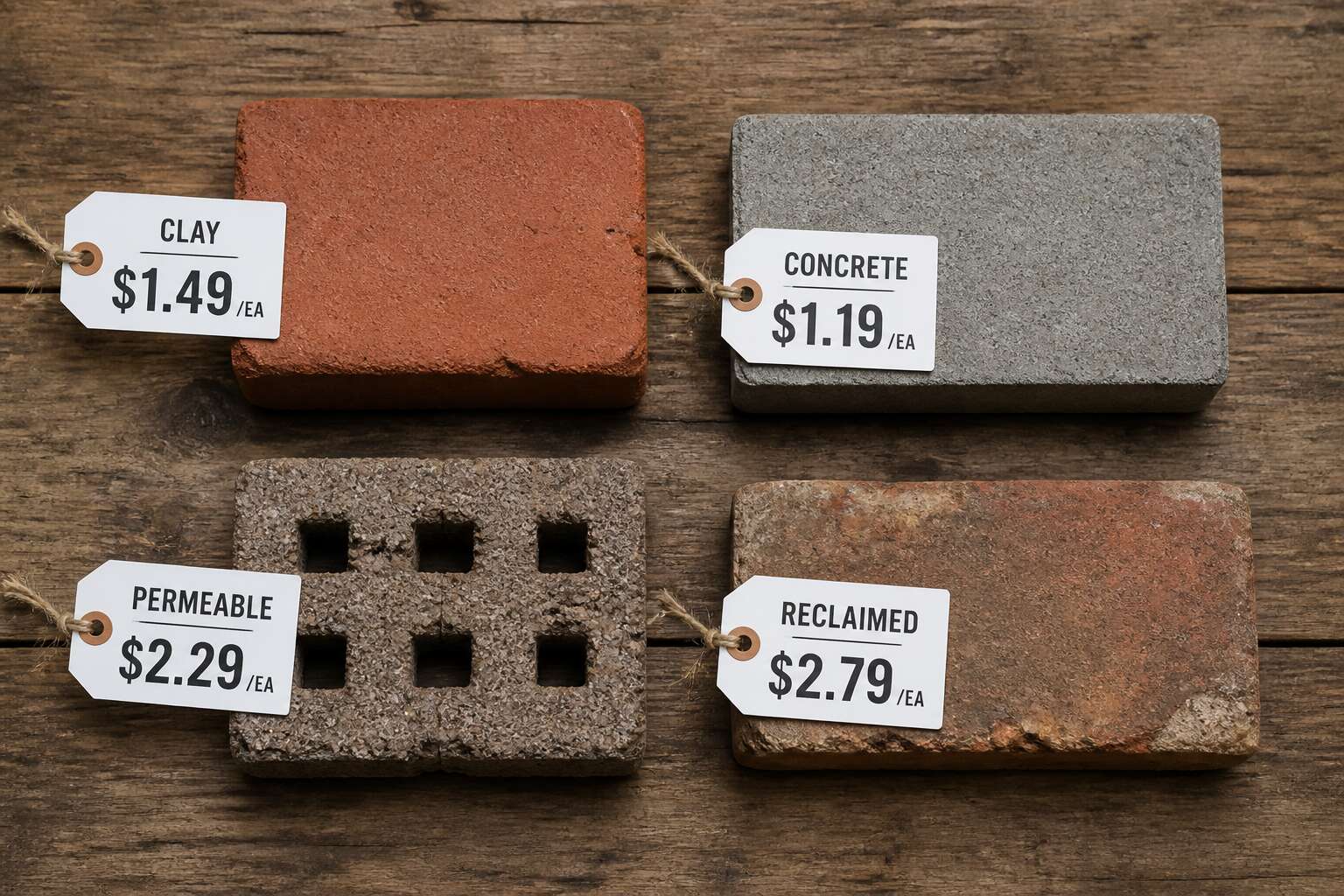
Concrete Pavers vs. Clay Brick: Price Per Unit
A crass focus on price per unit reveals only the invoice, not the true ledger of your patio’s future. The initial outlay for concrete pavers is generally gentler on the wallet, often making them the default choice for the budget-conscious homeowner. In South Africa, you might find concrete units from roughly R15 to R35 each, depending on the finish and thickness. This affordability, however, is a siren’s call that ignores the potential for surface wear and colour fading over a decade of harsh Highveld summers.
Clay brick, conversely, commands a heftier premium, typically ranging from R25 to R60 per paver. This is not mere pretension. The material’s inherent colour, fired into the clay, resists the sun’s bleaching effects with a stoic dignity. Furthermore, clay’s natural hardness offers a formidable resistance to the scuffs and scrapes of daily life.
Consider the distinct characteristics of clay brick:
– Its colour is impervious to UV degradation.
– It offers a denser, harder surface than most concrete.
– Its classic aesthetic often increases property appeal.
Concrete, on the other hand, offers a chameleon-like array of shapes and colours, yet these are frequently skin-deep. A cost comparison of different types of brick pavers must therefore weigh the immediate savings of concrete against the longevity of clay. While the latter asks for a larger initial investment, it often negates the need for premature replacement, which is a financial consideration all its own. The true cost, as with most things in life, is only revealed in the years of service rendered, not the price tag on the day of purchase.
Porcelain Pavers: Premium Pricing Explained
There is a moment, usually around the third quote from a contractor, when South African homeowners start muttering about gold-plated driveways. Porcelain pavers often trigger this reaction. The cost comparison of different types of brick pavers takes a sharp upward turn here, and the price requires a bit of forensic accounting to understand.
A premium is justified when you examine the manufacturing. These units are fired at extreme temperatures, resulting in a body that laughs at moisture absorption. The typical price range of R200 to R400 per square meter is not just for the looks, although they are undeniably sharp. You are paying for a surface that will not stain easily and handles the temperature swings of a Joburg thunderstorm without cracking.
Consider what inflates the invoice:
1. High-pressure production processes that reduce porosity.
2. Precision cutting for tight, uniform joint lines.
3. Surface treatments that replicate natural stone with uncanny accuracy.
This is not about material snobbery. The cost comparison of different types of brick pavers reveals that porcelain simply skips the maintenance phase entirely. You will never seal it. You will never chase faded colours. It is the final invoice, not the initial estimate, that tells the true story of your project’s value.
Natural Stone Options: Cost Variability and Factors
Natural stone is the variable that complicates any hardscaping estimate. In South Africa, the price of slate from a Mpumalanga quarry bears no resemblance to sandstone hauled up from the Cape. Where concrete and clay units offer consistent pricing, natural stone demands a conversation about the specific batch.
The cost comparison of different types of brick pavers gets complicated here because stone is not manufactured, it is extracted. The variability comes down to a few decisive factors:
- Quarry location and the distance to your site
- Stone type, from slate to quartzite to bluestone
- Thickness and whether the stone is tumbled or sawn
- Colour consistency, which is never guaranteed
That last point catches most homeowners off guard. Two deliveries of the same stone can look entirely different, and contractors factor that risk into the quote. The cost comparison of different types of brick pavers only holds meaning when you know the quarry, the batch, and the supplier’s tolerance for waste.
Average Cost Per Square Foot by Material
Let’s talk square metres, because that’s where the cost comparison of different types of brick pavers gets real. In South Africa, concrete units range from R150 to R350 per m². Clay sits higher, around R250 to R500. Porcelain starts at R400 and climbs. Natural stone? Expect R300 to R1,000+ depending on the source.
Here is the rough breakdown by material:
- Concrete pavers: R150 to R350 per m²
- Clay brick pavers: R250 to R500 per m²
- Porcelain pavers: R400 to R800 per m²
- Natural stone: R300 to R1,000+ per m²
These figures assume a standard 60mm unit and basic installation. Add reinforced bases or custom cuts and your estimate grows. The cost comparison of different types of brick pavers only matters when you pair the per m² price with the paver’s expected lifespan. Cheap concrete might save you now, but you may end up replacing it sooner than you think.
Understanding Installation Costs
Base Preparation and Sub-base Material Fees
They say the ground beneath your feet is the first thing you pay for, and with brick paving, that old saying holds true. The pavers themselves are only half the story. The real cost comparison of different types of brick pavers often gets skewed because people forget the foundation. You can buy the cheapest clay brick on the market, but if your base preparation is shoddy, you will be pulling it all up within a few years.
The sub-base is the workhorse. It is the crushed stone and sand that sits below the pavers, and it takes the weight of vehicles and the pressure of daily life. In South Africa, the soil varies wildly from the clay of Gauteng to the sandy soils of the Cape. This means the depth of your sub-base is not a luxury, it is a necessity. A proper installation requires a compacted layer of crushed stone, known as G5 or G7 material, which is then topped with a leveling course of river sand. The cost here is determined by the cubic meters you need, and that is dictated by how much traffic your paved area will see.
Do not be fooled by the initial quote for the bricks. You must factor in the machinery and labour needed for this step. A small team with a plate compactor will take time to ensure the layers are stable. The process is physical and slow, but it is the only way to prevent dips and hollows.
Here are the components that make up this hidden cost:
– Supply and delivery of crushed stone (G5 or G6)
– River sand for the bedding layer
– Hiring a plate compactor or the cost of the crew’s equipment
– Labour for spreading, leveling, and compacting each layer
A common pitfall is skipping the geotextile membrane. This fabric is laid down to stop the sub-base from mixing with the natural soil below. It is a small price to pay compared to the cost of a failing patio. It keeps the layers separate, which maintains the structural integrity of the entire surface. So, while the cost comparison of different types of brick pavers focuses on the visible surface, remember that the silent, unseen layers are where your money is truly buried. Getting this wrong means the aesthetic appeal of your expensive paving is lost to shifting sand and water damage.
Labor Rates: Regional Differences and Market Trends
Labor rates are the sneaky variable in any cost comparison of different types of brick pavers. You can price the bricks perfectly, then watch the installation quote double because your area has more builders than a sandcastle competition. In South Africa, the difference between regions is stark. Johannesburg’s booming property market keeps skilled pavers busy, so their hourly rate climbs. Cape Town, with its seasonal rain, sees labour prices dip in winter when work slows down. Durban sits somewhere in between, but the humid climate often demands faster crews who charge a premium for rushing between showers.
Market trends show a growing shortage of certified installers. The older generation is retiring, and young workers see paving as a grind, not a goldmine. That scarcity pushes prices up. Here is what drives regional variation:
– Cost of living in the city versus rural areas
– Availability of trained labourers nearby
– Seasonal weather patterns that pause projects
– Competition between paving companies in your area
For a true cost comparison of different types of brick pavers, never assume labour is a flat rate. Ask three quotes from different regions and watch the numbers swing like a braai fire in a gale. It is the difference between a weekend job and a month-long saga.
Pattern Complexity and Its Impact on Labor Time
When you begin a cost comparison of different types of brick pavers, the initial price tag is rarely the final story. The true expense is an equation that includes material density, installation complexity, and the longevity of the surface beneath your feet. For a South African homeowner, the choice between clay, concrete, and porcelain often comes down to how these factors interact with the local climate.
Clay pavers generally carry a higher upfront price per square meter, but their fired durability often means they maintain their color and structural integrity for decades. Concrete pavers are typically the budget-friendly option, offering a lower entry point, though they may require sealing to prevent fading under harsh UV rays. Porcelain, a relatively new contender in the local market, has a premium price that reflects its low porosity and ability to resist staining in high-traffic areas.
Here is a typical breakdown of what you might expect to pay per square meter for the materials alone:
– Clay pavers: R180 to R350, with a dense, rustic finish that suits heritage homes.
– Concrete pavers: R120 to R220, offering a wide range of shapes and colors for a modern aesthetic.
– Porcelain pavers: R350 to R600, featuring a sleek, precise finish that mimics natural stone.
The cost comparison cannot ignore the sub-base, however. A soft, unstable ground requires a deeper layer of crushed stone and cement, which adds a labor cost that may actually exceed the price of the paver itself. This is where the regional labor rates discussed earlier become critical; a cheap paver installed on a poorly prepared base will shift, crack, and require costly repairs. Ultimately, the “cheapest” option is the one that suits your soil and your budget without compromise, so verify the supplier’s specifications before you commit to a single unit.
Equipment Rental and Tool Costs
Forget the material price alone; a proper cost comparison of different types of brick pavers must include equipment rental. In South Africa, a plate compactor costs R400 to R800 per day. A wet saw adds another R350 to R600.
Don’t overlook the small tools either. Rubber mallets, spirit levels, and jointing brushes seem trivial, yet they can shift your total by 10%. Believe me, the rental bill surprises many homeowners! Typical daily rental expenses look like this:
- Plate compactor: R400 to R800
- Wet saw: R350 to R600
- Chalk line and screed rails: R50 to R150
These tools decide whether your installation stays tight for years or loosens within months.
Permit Fees, Disposal, and Cleanup Expenses
Permit fees in South Africa are a hidden layer of bureaucracy. Some metros charge R850 simply to review your site plan, while others ask for R300. Skip this expense and the inspector may order you to dig everything up. Budget for it before you start, or prepare for a very awkward conversation with your neighbour about why their driveway now ends at your property line.
Disposal and cleanup costs add their own sting. Broken clay bricks, old sand, and cement bags cannot vanish by wishing. You will pay for a skip or a bakkie trip to haul the wreckage away.
- Skip hire (2 cubic metres): R900 to R1,400
- Bakkie load removal: R350 to R600
- Final sweep and magnetic nail pickup: R200 to R450
These line items belong in any cost comparison of different types of brick pavers. Many homeowners forget that the final price must include getting rid of yesterday’s mistakes. A clean site is not a luxury; it is a line on the invoice.
Lifespan and Maintenance Costs
Durability and Expected Replacement Frequency
A paver’s true cost reveals itself only after a decade of South African sun and storms. Clay brick, fired at high temperatures, offers a lifespan exceeding 50 years without structural failure. Concrete pavers, while cheaper upfront, typically demand replacement after 25 to 35 years. This divergence forms the crux of any Cost comparison of different types of brick pavers. Daily maintenance, such as joint sand renewal and periodic sealing, adds a recurrent expense that owners frequently overlook.
Weeds infiltrate joints, and edge restraints wear down. A single cracked unit is easy to swap, but widespread spalling forces a full reset. The frequency of these interventions directly dictates the long-term financial burden. In coastal regions, salt erosion accelerates degradation, shortening the replacement interval for cheaper varieties. Common maintenance tasks include:
- Replacing joint sand every 3 to 5 years
- Power washing and sealing every 2 to 4 years
- Spot replacement of cracked or chipped units
Durability determines whether you pay once or pay repeatedly. A clay paver that survives 80 years costs less per decade than a concrete version replaced at year 30, even if the initial price was lower.
Sealing, Cleaning, and Annual Upkeep
Owning a paver patio is a bit like owning a classic car. It looks fantastic on the driveway, but it has a voracious appetite for your weekend mornings and your cash. The true sleeper cost in any cost comparison of different types of brick pavers is not the price tag. It is the ritualistic upkeep that follows you for decades.
Sealing is the primary offender here. A good quality sealer shields the surface from oil stains and UV fading, but it degrades. To maintain that protective layer, you are looking at resealing every two to four years. In a region like Gauteng, with its high UV index, you might find yourself reaching for the paint roller more often than you would like. Professional sealing can set you back anywhere from R40 to R80 per square metre, a figure that suddenly makes that initial price difference between clay and concrete feel rather trivial.
Cleaning is the other relentless task. A simple garden hose will not cut it. You need a pressure washer to clear out the grit, but using one incorrectly can blast the joint sand right out of the cracks. That leads to a slippery, unstable surface.
The recurring financial drain often looks like this:
– Annual weed control and spot cleaning.
– Replacement of joint sand every three to five years.
– Reapplication of sealant every few seasons.
– Power washing sessions that require either your sweat equity or a professional’s invoice.
Here is the rub. The cost of these chores does not care which material you chose. A cheap concrete paver stains just as easily as an expensive clay one, but the expensive one stings more when you realise you are paying to protect it. Many homeowners skip the maintenance on cheaper units, deciding it is more economical to replace them entirely in a decade. This creates a strange economic limbo where the initial investment dictates your future labor. If you spent your entire budget on stone, you will find the funds for the sealer. If you went budget, you will accept the wear and tear as a cost of doing business. The annual upkeep is not a variable cost. It is a mandatory subscription fee that you never signed up for, but you must pay to keep the good times rolling. Ultimately, the “cheap” option often convinces you to do the work yourself, pricing your own time at zero, just to avoid paying the piper again. It is the maintenance that dictates the real lifetime value, far more than the initial square metre rate. Your wallet will feel the pinch either way, but only one method offers the dignity of fading gracefully. The other just fades into a thicket of weeds. It is a vital chapter in the cost comparison of different types of brick pavers, and frankly, the one people skip when they are counting cents.
Repair Costs Over a 20-Year Period
When calculating the true cost of a hardscaping project, the initial quote is merely the opening chapter of a longer financial story. The real divergence between materials only becomes apparent over a 20-year period, where lifespan and recurring maintenance obligations separate the wise investment from the costly mistake.
For a standard residential driveway or patio, concrete pavers typically offer a service life of 20 to 25 years. They are durable, but they are also porous. In the South African climate, with its intense UV rays and sudden summer downpours, the surface will fade and may develop a powdery residue called efflorescence. This does not compromise structural integrity, but it significantly affects curb appeal, often forcing owners to invest in chemical cleaners and high-pressure washing to restore the original color.
Clay brick pavers, by contrast, are a geological product. They are fired at extreme temperatures, making them denser and inherently more resistant to fading and chemical erosion. A well-laid clay paver base can easily last 50 years or more, outliving the mortar or sand joints that hold them together. The trade-off is the initial installation skill required, which is higher than for concrete, but the practical longevity often means the replacement cycle is eliminated entirely within a 20-year planning window.
Porcelain pavers are the modern upstart in this narrative. They offer the highest resistance to scratching and staining, but they are brittle. A heavy point load, such as a falling pot plant or a shifting car jack, can cause a crack that necessitates a full unit replacement. While the paver itself might last indefinitely, the risk of impact damage over two decades is a realistic variable that needs consideration in the cost comparison of different types of brick pavers.
When we move beyond the lifespan of the unit itself, we must examine the hidden costs of the substrate. The sand bedding layer is the silent workhorse of any project. Over time, heavy rains wash the sand out from between the joints, and ant colonies can excavate the base material entirely. If the bedding layer fails, the pavers will sink or shift, creating trip hazards. Repairing this requires lifting the affected section, re-leveling the base, and re-laying the units. This labour-heavy process is where the real financial damage occurs, often exceeding the cost of the materials themselves.
– The Inflation Factor: The cost of replacement materials in Year 15 will be significantly higher than Year 1 rates, driven by fuel costs and quarry fees.
– The Sand Replenishment Cycle: Professional polymeric sand, which hardens to prevent weed growth, must be reapplied every 3 to 5 years to maintain stability.
– The Sealing Debate: While sealing protects against oil stains, it also requires stripping and reapplication, which is a labour-intensive cost that clay and concrete owners face repeatedly.
The maintenance obligations are classified by material. Concrete requires a mid-term refinishing, while clay offers a forgiving patina that hides wear. Porcelain demands the least ongoing effort to keep clean, but the highest vigilance against chipping. The seasonal rainfall in Gauteng, or the coastal salt air in the Cape, will accelerate the wear on cheaper options faster than premium ones. This means the “cheaper” paver often demands a maintenance budget that is three times higher than premium products to maintain the same aesthetic quality.
Ultimately, the 20-year cost projection reveals a counterintuitive reality: the highest initial price tag is often the most economical over the long run, not because of the paver itself, but because of the reduced intervention required to keep it functional. The lifespan of the paver is secondary to the lifespan of the supporting structure below it. For the homeowner, the smartest move is not to buy the stone that looks the best on day one, but the one that requires the least intervention on day 7,300.
Weighing Price Against Performance
Initial Investment vs. Property Resale Value
I find that few homeowners realize how much a paved entrance contributes to resale value. In South African suburbs, the cost comparison of different types of brick pavers hinges on long-term returns, not the initial quote. A R50,000 investment in premium porcelain may recover more value than a cheaper pressed concrete mix!
Durability changes the equation. Clay brick handles harsh sun and heavy vehicles. Natural stone offers timeless status. Homebuyers notice these details, so a thorough cost comparison of different types of brick pavers should include resale projections. Consider these factors:
- Local buyer preferences for paver materials
- Consistency with architectural trends
- Visible maintenance history of existing paving
A modest upfront cost saving could diminish your negotiating power later. The long-term resale picture matters as much as the original quote.
Warranty Coverage and Manufacturer Guarantees
A warranty is only as strong as the manufacturer behind it. When I weigh the cost comparison of different types of brick pavers, I look past the initial quote to the guarantee’s fine print. Some suppliers promise a decade of structural coverage but exclude colour fade, efflorescence, or chipping. Others void the warranty unless a certified contractor handles the installation.
The claims process matters just as much. Ask these questions:
- Does the guarantee cover replacement or merely repair?
- Who pays for transport and labour on faulty units?
- Can the warranty transfer to a future property owner?
South African homeowners often prefer SABS approved products and a local distributor with a clear claims record. Imported porcelain may impress, but enforcing a foreign manufacturer guarantee becomes another matter entirely. That uncertainty should steer any cost comparison of different types of brick pavers more than a discount.
Environmental Impact and Sustainability Credits
The upfront price tag often lies about the true cost comparison of different types of brick pavers. A cheaper unit that fractures under load or loses its colour within two years forces a premature replacement. That expense undoes any initial savings. Performance must include the paver’s ability to withstand the highveld’s ultraviolet radiation and the abrupt temperature shifts of a Cape winter.
Environmental impact now influences the cost comparison of different types of brick pavers for discerning developers. Clay brick production involves kiln firing, which consumes significant energy. Concrete pavers use cement, a material with its own carbon footprint. However, many local manufacturers now offer recycled aggregate options. These alternatives reduce landfill pressure and often carry a price advantage.
Sustainability credentials can shift the economic ledger. SABS approval confirms quality, but a growing number of projects seek Green Building Council of South Africa credits. These points can affect property valuations and municipal approvals.
– Clay pavers often provide a longer service life, reducing replacement frequency.
– Recycled concrete pavers lower material costs and environmental burden.
– Porcelain tiles require less water for cleaning, easing long-term utilities.
The most prudent cost comparison of different types of brick pavers weighs the initial rand against the ecological debt deferred to the future. A paving project that endures for decades without ecological compromise offers the most compelling return on investment. The land, after all, remembers what we place upon it.
Financing Options and Payment Plans
Financing turns the cost comparison of different types of brick pavers into a monthly decision rather than a lump sum shock. Many suppliers offer staggered payment plans aligned to project milestones, which helps homeowners manage cash flow during construction.
I have seen clients choose a cheaper paver because the quote fit their immediate budget, only to face replacement costs years later. A payment plan on a premium product often proves wiser. Common options include:
- Store credit with zero interest for the first six months.
- Lay-by agreements that release materials once paid.
- Bank loans secured against the property.
Each option carries its own interest rate and administrative fee. Compare these against the long-term performance of the paver. The cost comparison of different types of brick pavers should include the total cost of credit in addition to the ticket price.
Hidden Costs: Drainage and Edge Restraints
One client’s regret taught me more than any manual ever could. They chose the least expensive paver, a standard concrete unit, and saved a considerable amount upfront. Within eighteen months, the winter rains washed out the joint sand along the border, and the leading edge began to slump. The initial cost comparison of different types of brick pavers had not accounted for the soil’s clay composition. The hidden costs lie beneath the visible surface.
Drainage is the silent determinant of a patio’s longevity. Water that pools under the pavers creates hydrostatic pressure, which erodes the base layer and causes the surface to become uneven. A proper drainage solution, including a geotextile fabric separator and a correctly sloped sub-base, adds a tangible expense. Skipping this step turns a modest installation fee into a structural failure. The same logic applies to edge restraints. Without a solid concrete haunch or a steel edging system, the pavers at the perimeter will migrate. That movement compromises the entire field, demanding costly realignment work that a premium product would not prevent unless the restraint is installed.
The cost comparison of different types of brick pavers often ignores these ancillary requirements. In South Africa, where abrupt downpours are common, the cost of managing water runoff and securing the perimeter can add significantly to the quote. You should consider these factors:
– A drainage pipe system to channel water away from the foundation.
– A perforated land drain to alleviate sub-surface water pressure.
– Galvanised steel edge restraints that resist corrosion and shifting.
Each component serves a specific purpose. Weep holes in a retaining wall, for example, allow trapped water to escape. A paver’s price per unit becomes irrelevant if the base washes away. The performance of your investment hinges on these unseen elements, making the initial figure a fraction of the true liability.
Comparing Total Cost of Ownership Across Materials
Three in five South African homeowners repave within ten years, not because the old surface was ugly, but because the total cost of ownership was miscalculated. The cost comparison of different types of brick pavers often stops at the quote. It should extend across decades.
Concrete units are strong but fade under Highveld UV. Clay brick holds its colour yet requires precise sand joints. Porcelain resists staining but demands a flawless base. Natural stone varies widely, which is both its charm and its risk.
When measuring true value, look beyond the initial rand. Calculate the lifespan, maintenance intensity, and salvage value. Consider the following:
- Expected years before first major repair
- Annual cleaning and sealing expense
- Replacement cost after 20 years
- Resale impact on property value
Only then does the price per square metre reveal the true cost.

0 Comments