Pre-Installation Considerations
Before the first stone is laid, the ground underneath sets the limits. A flagstone paving installation in South Africa must contend with expansive clay soils in Gauteng and abrasive coastal winds in the Cape. The earth shifts, drains, and settles differently across regions.
Site assessment determines everything! You need to understand drainage patterns, root systems, and the load the surface will carry. Each factor changes how the flagstones will behave.
- The slope and existing water flow
- The type of subsoil and its compaction
- The intended use, pedestrian or vehicular
Ignoring these elements can lead to costly failures. Weathering, frost heave, and erosion occur regardless. A thorough pre-installation review protects your investment from shifting and cracking within a season. With that groundwork done, the flagstone paving installation becomes a lasting feature rather than a recurring repair.
Essential Tools and Materials
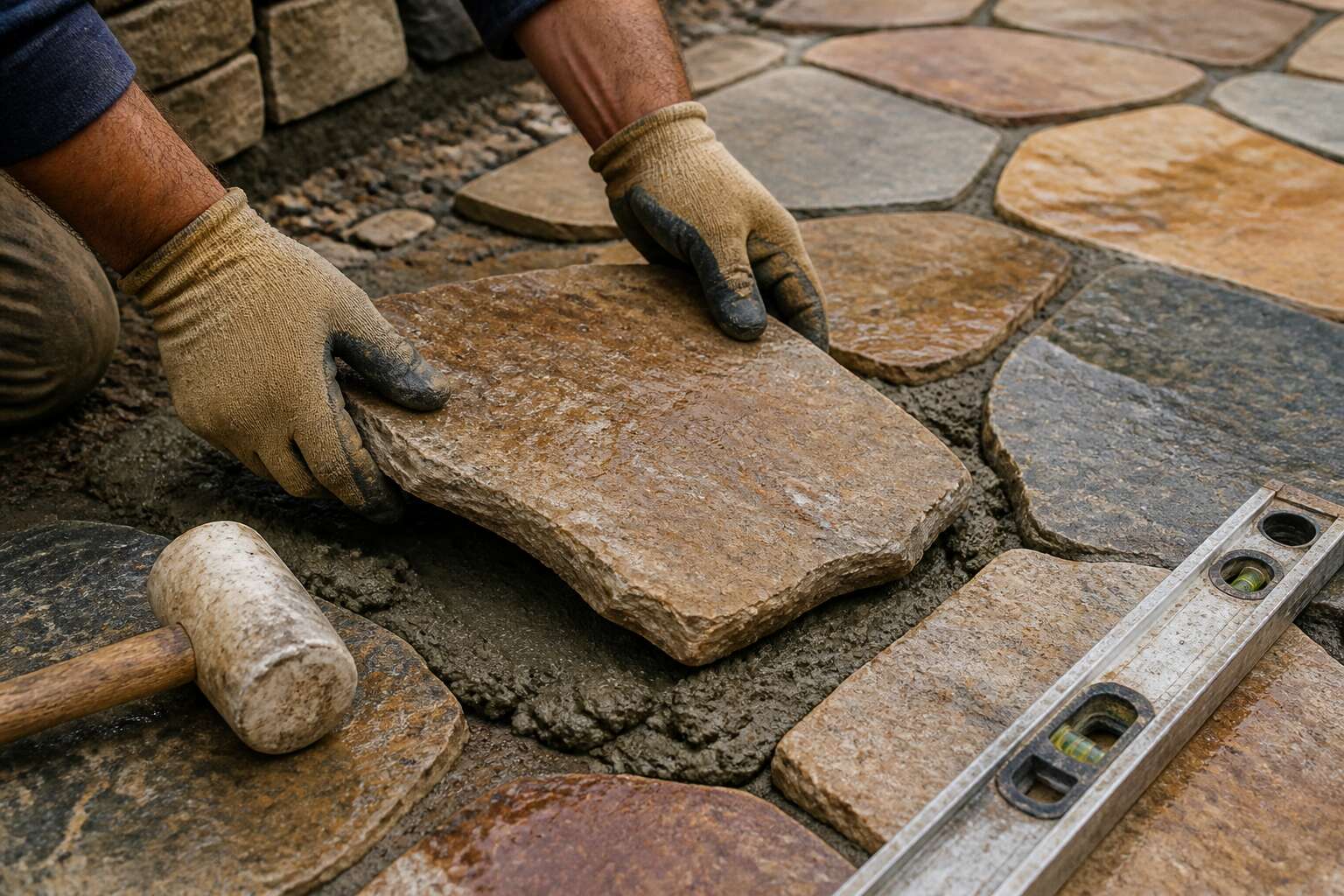
Every flagstone paving installation begins long before the first stone meets the earth. In the arid South African landscape, your tools are your covenant with durability. I favour a heavy rubber mallet for the gentle persuasion a sandstone slab requires. A plate compactor is non-negotiable. This machine binds your base course into a foundation that shrugs off winter rains.
Your materials list deserves equal reverence:
- Sharp river sand for bedding the flagstones
- Ordinary Portland cement for jointing
- A geotextile membrane to suppress invasive weeds
Gather these before you break ground. Trust me, improvisation is the enemy of a level terrace!
Preparing the Site and Base
A flagstone paving installation begins long before the first stone is set. The ground beneath your feet dictates everything, and in South Africa, that ground can be anything from sandy coastal soil to dense Highveld clay. I have seen beautiful projects fail because the site preparation was rushed. Soil is stubborn. It moves, it settles, and it punishes shortcuts.
Start by stripping away the topsoil and any organic matter. You need a stable base, not a garden bed. Once the area is cleared, excavate to a depth that accommodates both the base material and the flagstone itself. Then, follow these steps in order:
- Compact the subgrade with a plate compactor.
- Spread a layer of crushed stone, typically 100mm deep.
- Compact that layer, then add another, smaller aggregate.
- Level the final surface with a straightedge and a spirit level.
This process is the backbone of any flagstone paving installation. Without a properly prepared base, even the most exquisite stone will shift and crack within a season. Take the time to get it right. Your flagstones will thank you later, trust me.
Flagstone Installation Techniques
The first rule of flagstone paving installation is that stone is lied to. A completely level patio is a myth, a placebo spirit level that makes installers sleep better. The real job is managing a puzzle of irregular, raw material.
A proper sub-base is your only insurance. This process requires patience and a ruthless eye:
1. Excavate to the required depth, accounting for the stone thickness plus base layers.
2. Lay a geotextile membrane to keep invasive weeds from staging a botanical coup.
3. Compact a layer of crushed rock, then a finer aggregate for a level bedding surface.
South African stone is notoriously varied, from the weathered greys of the Highveld to darker slate-like hues. Each piece reacts differently to the ground beneath it. The technique lies in reading that character, adjusting the bedding sand under each slab to prevent the dreaded wobble. It is tedious work. Your back will complain. A patio that outlasts the warranty on your wheelbarrow, however, is its own quiet reward.
Finishing and Sealing
The final flagstone is set and most people admire the work. But the real transformation comes later, when the sealer is applied. Sealing is the quiet final act of any flagstone paving installation. It protects the stone from the Highveld sun, winter rain, and the red dust in every crack.
Before you start, the stone must be bone dry. Even a hint of moisture traps cloudiness beneath the surface. I test the sealer on an offcut first. A penetrating sealer soaks into the pores, while a film-forming product sits on top. Your choice depends on the stone and foot traffic. Consider these factors:
- The porosity of your specific flagstone
- Whether the area is shaded or exposed
- How often you plan to clean the surface
Work in small sections with thin, even coats. Two thin layers outperform one thick one, which pools and leaves blotches. Once sealed, the colour deepens and the surface rejects spills.
Maintenance and Long-Term Care
Flagstone paving installation is a commitment, much like adopting a very stubborn pet. It requires attention, but not the needy kind. Over time, Cape Town’s weather will test your patio’s patience. The sandstone absorbs moisture, the slate collects dust, and the quartzite, well, it pretends it doesn’t care. This is where maintenance becomes a quiet social ritual. You will find yourself inspecting the joints between stones, wondering if that ant colony has filed for permanent residency.
Some homeowners swear by a gentle brush and water. Others, more optimistic, hope the rain will handle everything. Neither is entirely wrong. The secret lies in noticing small changes before they become grand statements:
– A wobbly stone
– A widening gap
– A patch of moss that thinks it owns the place
These are the details that separate a well-kept terrace from a rustic ruin. When you do intervene, use a mild cleaner and avoid pressure washing on full blast. That machine can erode the very character you paid for. Sweep away debris regularly and check the joint sand after heavy storms. Your flagstone paving installation will reward you with decades of dignified service, provided you treat it like a guest rather than a servant.

0 Comments