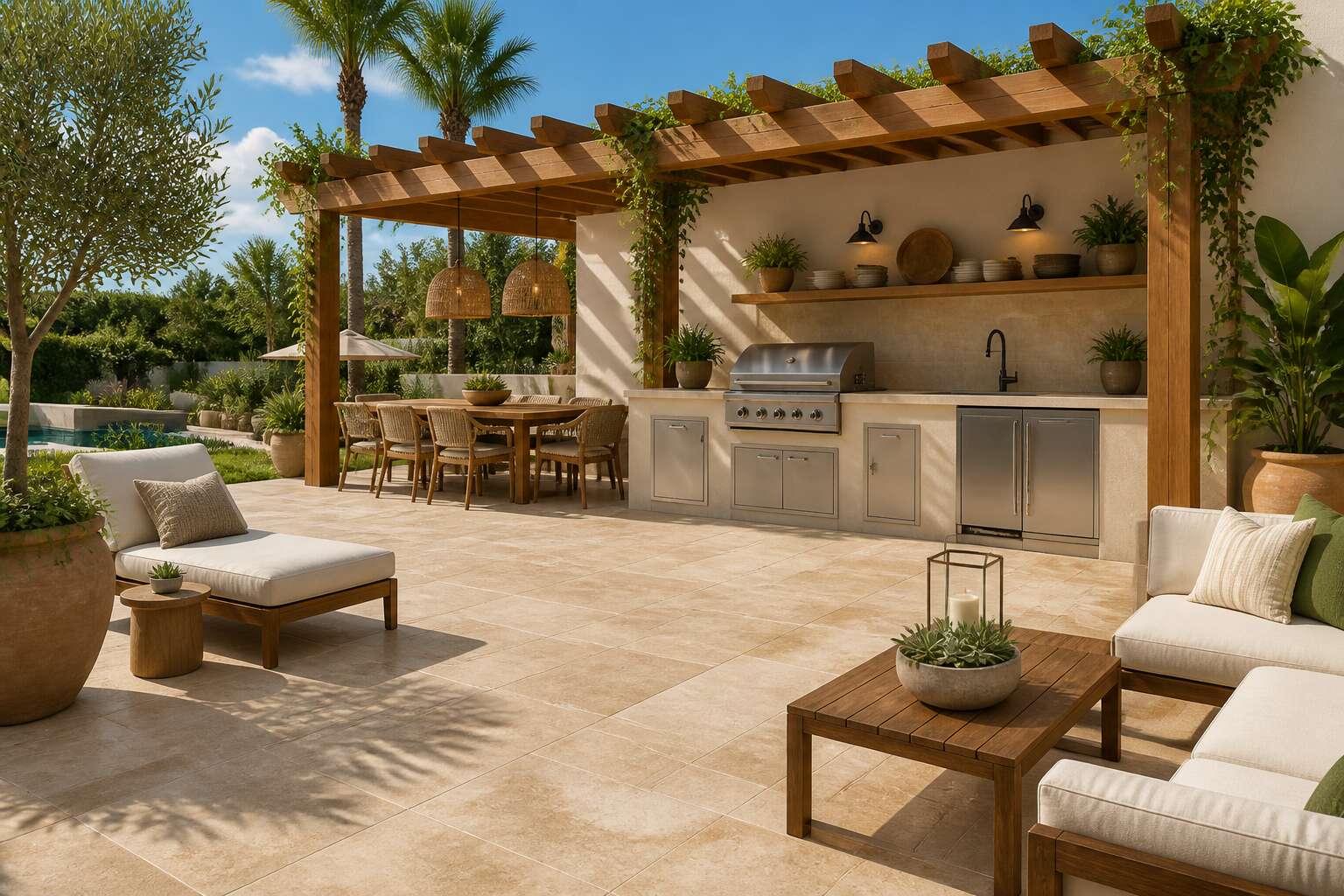
Choosing the Right Surface Materials
Evaluating Durability and Longevity
Selecting surface materials for outdoor entertainment area paving feels like a puzzle until you study the substrate. I have seen granite outlast sandstone by decades in Highveld sun. Porcelain pavers resist moisture but crack under point loads.
- Test slip resistance when wet
- Check compressive strength ratings
- Ask about freeze thaw cycles
That last point matters more than you think. A subtle crack in winter becomes a hazard by summer. Focus on the binding mixture and the thickness, because longevity starts beneath the visible layer.
Balancing Aesthetics with Functionality
Guests notice the ground before the braai. That is the reality of any outdoor entertainment area paving. The surface sets the tone for every gathering, from a summer sundowner to a winter lunch.
Balance begins with the finish. A tumbled edge softens the formality of a large patio, while a honed surface reflects light and makes a compact courtyard feel generous. I have seen the same paver change character depending on joint width and laying pattern. Wider joints read as rustic. Tight joints read as refined.
- Consider how the surface looks after rain and in low evening light
- Match the paver tone to the brick or plaster of the house
- Weigh the visual weight of large pavers against the scale of the yard
Functionality does not fight aesthetics. The two meet in the details. Colour hides scuffs. Texture feels comfortable under bare feet. Scale suits the space.
Understanding Cost Versus Value
A paving contractor once told me that the material choice is where most budgets quietly go wrong. Concrete pavers hide their weaknesses until cracked; natural stone demands patience with sealing; clay brick ages with a character that is hard to predict. Each option for outdoor entertainment area paving carries different maintenance costs and replacement timelines.
For outdoor entertainment area paving, porcelain has become a contender because of its low water absorption, which suits the South African climate. But the price per square metre is steep! You are buying a surface that rarely stains, yet the upfront outlay may exceed what the property value recovers.
Keep these cost drivers in mind:
- Bedding layer preparation, not the paver itself, often decides the lifespan.
- Cutting waste on irregular layouts can inflate the material bill by fifteen percent.
- Sealing requirements vary dramatically between finishes.
Prioritizing Slip Resistance for Safety
A wet slate surface can turn a braai evening into an emergency room visit. Slip resistance outweighs texture in outdoor entertainment area paving, especially around pools where water and bare feet mix.
The coefficient of friction tells the real story. Different finishes behave differently:
- Tumbled finishes grip well but harbour grime.
- Honed surfaces feel smooth yet become treacherous when wet.
- Textured porcelain performs admirably, though ratings vary by batch.
Ask suppliers for the wet pendulum test values, beyond their brochure claims.
Consider the surface after rain, not in the showroom. For outdoor entertainment area paving, demand a wet slip rating of R11 or higher. The bedding layer’s drainage capacity matters equally, since standing water multiplies risk.
Matching Materials to Your Climate
Your local climate sets the first rule of material selection. Outdoor entertainment area paving on the Highveld must survive brutal UV and sudden hail, so dense porcelain or granite makes sense. Coastal homes face salt spray that corrodes soft stone. Limestone will pit and crumble within years.
Match the paving to your region’s conditions:
- High rainfall areas need permeable pavers or a textured finish that drains quickly.
- Hot, dry regions reward light tones that reflect heat instead of storing it.
- Cold, frost prone nights require low porosity materials to prevent cracking.
Ask local suppliers about their products’ performance in your specific town. The right material endures seasons, not just Sunday afternoons.
Designing an Inviting Layout
Defining Distinct Functional Zones
A braai can gather a crowd or scatter it. The difference is usually underfoot. In South Africa, the outdoor entertainment area paving defines how guests move between the fire, the table, and the lounging pit. A single flat stretch gives no direction. The space needs distinct zones.
Start with the cooking line, where the paver resists grease and heat. Then the dining run, flat and wide for plates. Let the lounging area drop a level or shift joint patterns. Guests notice the shifts without thinking. Common zones to define:
– Cooking, set apart from foot traffic
– Dining, flat and stable under tables
– Lounging, recessed to hold conversation
– Transition, where paving meets lawn
The outdoor entertainment area paving must hold these zones together as one continuous flow. A clear sightline from the braai to the seating area keeps the evening moving. A change in level or texture keeps each function distinct, and no barriers are required.
Planning Traffic Flow and Transitions
Traffic flow makes or breaks an outdoor gathering. Guests should move from the braai to the table to the lounging area without stepping over chairs or weaving through conversations. The outdoor entertainment area paving guides this movement through wider walkways near the cooking line, a gentle level change at the lounge pit, and joint patterns pointing toward the dining run.
Transitions deserve equal care. When paving meets lawn, a flush edge prevents tripping and lets guests drift between surfaces. Where two paving materials meet, a staggered joint softens the boundary.
In my experience, three paths matter most:
- Kitchen door to the braai
- Braai to the serving table
- Dining table to the lounge seating
Each route needs at least 1.2 meters of width. Narrower strips break conversation and create bottlenecks. The outdoor entertainment area paving should make the evening feel effortless, not choreographed.
Incorporating Patterns and Textures
Pattern and texture are the difference between a patio that looks designed and one that looks delivered. The outdoor entertainment area paving sets the mood before anyone sits down. A herringbone layout near the braai anchors the cooking zone, while large format slabs in the lounging area make the space feel bigger. Simple tricks, but they work.
Texture also serves a practical purpose. A tumbled paver reflects less glare than a honed finish, which matters on a Highveld summer afternoon. Rough surfaces hide the odd wine spill far better than polished ones. To build visual rhythm, try pairing contrasting materials:
- Smooth granite setts against textured cobble
- Timber look porcelain beside natural stone
- Riven slate strips cutting through concrete pavers
The outdoor entertainment area paving should reward the eye from every angle, whether guests are leaning on the fire pit or stretched out on a lounger.
Integrating Lighting for Evening Gatherings
When the sun drops behind the koppie, the patio becomes a canvas. Lights should direct footsteps without demanding attention. Arrange loungers first, then mark every route with a subtle glow.
Warm LED strips under the bench keep the braai zone visible. Small spotlights aimed at the paving joints create a staggered rhythm. Try these placements:
- Step lights along the paved edge
- Recessed dots where the slabs meet
- Lanterns near the fire pit base
Light changes how texture reads after dusk. Rough slate swallows brightness, while smooth porcelain throws it back. Your outdoor entertainment area paving earns its keep when guests stay an hour past dessert.
Installation Fundamentals for Lasting Results
Preparing a Stable Sub-Base
Every outdoor entertainment area paving installation has a part nobody photographs. The sub-base. Get this wrong and your pavers will shift, crack, and generally misbehave within a season. South African soils are unpredictable. Expansive clay in Gauteng swells when wet. Coastal sands drain freely but lack stability. Both demand proper preparation. Compact the native soil first. Then add crushed stone in layers. Compact each layer separately. This process is tedious, I admit it. It is also non-negotiable.
Depth depends on what the area must support. A simple seating zone requires less than a zone hosting a braai, heavy furniture, and enthusiastic guests. Drainage matters too. Water pooling under pavers is the fastest route to uneven surfaces.
- Test soil composition before anything else
- Compact in thin layers, roughly 100 millimetres each
- Use a plate compactor, not a tamper that bounces
Invest the effort now. Your outdoor entertainment area paving will stay flat and functional for years. That is a promise, not a guess!
Ensuring Proper Drainage and Water Management
I’ve watched beautiful paving fail within months. Water is the culprit. A summer thunderstorm can dump 50 millimetres of rain in an hour. That deluge must move somewhere. Your outdoor entertainment area paving needs a consistent fall, roughly 15 millimetres per metre, directing runoff away from the house.
Installation fundamentals start with levels and edge restraints. Puddles breed moss, soften joints, and undermine the base. Drainage is structural. Build for it!
- Use crushed stone bedding for percolation
- Lay geotextile fabric to stop fine soil migrating upward
- Install a linear drain along the roofline where paving abuts the home
Get the hydraulic design right in Gauteng’s clay or coastal sand. Water moves through the sub-grade, not the pavers themselves. Done properly, the entire surface stays level and safe for decades.
Deciding Between Professional Installation and DIY
The difference between a professional installation and a DIY disaster often comes down to five millimetres. Laying outdoor entertainment area paving looks straightforward on video. Then you discover that cutting pavers around a curved braai nook requires a wet saw, and your angle grinder just wrote off three expensive slabs.
Getting the fundamentals right starts with unglamorous technique.
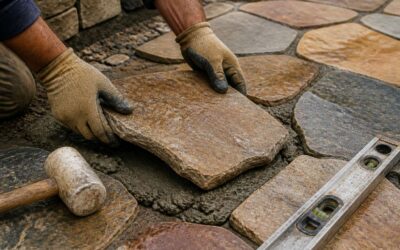
- Butter each paver’s base and edges with mortar before setting
- Tap into position and run a spirit level over every single unit
- Sweep polymeric sand into the joints and mist gently to activate
Contractors charge a premium, but they bring laser levels, proper cutting gear and years of fixing mistakes on someone else’s bill. If your outdoor entertainment area paving is a simple rectangular layout, DIY is viable. If it involves steps, curves or a pool surround, call in the professionals. Your weekend is worth the expense!
Managing Expansion Joints and Edging
Expansion joints are the least photogenic part of any paving project. They are the difference between a patio that lasts decades and one that heaves within two winters. Concrete and clay pavers move with temperature swings, so rigid installations crack. Place joints every few metres and fill them with flexible sealant, not mortar.
Edging deserves equal respect. Without a solid edge restraint, pavers creep sideways, and your outdoor entertainment area paving develops gaps you never planned for. Aluminium or galvanised steel edging works well, as does a concrete haunching.
Remember these numbers:
- Leave a gap of at least 10mm where paving meets walls or pools.
- Use a compressible filler board in those gaps.
- Seal with polyurethane, not silicone, for UV resistance.
Skip these steps and your patio shifts unevenly underfoot. Your outdoor entertainment area paving will thank you for the extra hour of work.
Maintenance and Long-Term Care
Routine Cleaning and Stain Removal
Your outdoor entertainment area paving sees braai splatters, wine spills, and muddy footprints. Routine care keeps it looking sharp without much effort. Sweep weekly to remove grit that grinds into surfaces. For most pavers, warm water and a mild soap handle everyday grime.
Stains need faster action. Oil from a dropped wors or sauce from a buffet can set within hours. Blot the spill, scrub with a soft brush and a dedicated paver cleaner, then rinse thoroughly. For stubborn marks, a pressure washer on a low setting works, but test in an inconspicuous spot first. A quality sealant, renewed every couple of years, reduces absorption and keeps stains from bonding to the paver.
Sealing and Protecting the Surface
Sealing becomes the quiet guardian of your outdoor entertainment area paving. A penetrating sealer sinks into the stone, blocking moisture without changing the finish. Acrylic coatings add sheen but wear faster under heavy footsteps.
Reapply every two to three years, depending on climate and usage. A simple water test reveals when protection fades: if droplets soak in, it is time.
Consider these factors when planning your sealing schedule:
- Intense UV exposure during South African summers
- Frequent braai activities and oil splatters
- The porosity of your chosen pavers
Fresh sealant prevents efflorescence, that chalky white stain, and keeps algae from taking hold in shaded corners. Renewing the layer preserves the natural colour and texture, ensuring your outdoor entertainment area paving remains resilient through many seasons.
Repairing Cracks and Weather Damage
Damage accumulates in silence. A hairline fracture in your outdoor entertainment area paving widens with each rainstorm and temperature swing. The Highveld’s thunderstorms expose what mortar tries to hide. Water finds the weakest point, and weakness always reveals itself.
Repairing weather damage is an exercise in honesty. You must assess whether a cracked paver can be lifted and reset, or whether the sub-base has shifted beyond recovery. Replacement stones should match the original batch, but colour variations persist. That imperfection becomes part of the surface’s history.
- Inspect joints after hailstorms
- Remove cracked pavers before edges crumble
- Compact the sub-base before reinstalling
Neglect accelerates decay. The longer you wait, the more the damage spreads, turning a single crack into a sunken section. Attending to these wounds preserves the quiet dignity of your entire outdoor entertainment area paving.
Preventing Weed Growth Between Joints
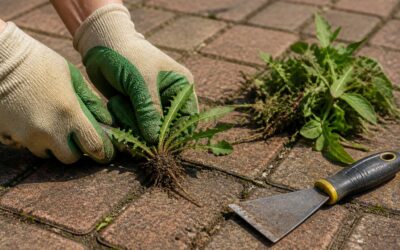
Weeds are patient. They find the narrowest crack between pavers and make themselves at home. In South Africa’s climate, the joints between your outdoor entertainment area paving become highways for kikuyu grass and dandelion seeds.
The trick is to stop them before they establish. Polymer sand jointing compound prevents weed seeds from finding purchase. It hardens after watering, creating a stable barrier.
Weekly sweeping dislodges seeds before they germinate. I have seen joints that looked sealed, yet weeds still pushed through. Pay attention to the edges where wind deposits debris.
- Check joints after heavy rain
- Replenish jointing sand when it washes away
- Pull weeds by the root, not the leaf
For persistent growth, a flame weeder works well on established weeds. Apply it on a windless day and follow with fresh jointing sand. This routine keeps your outdoor entertainment area paving looking sharp.
Seasonal Maintenance Checklists
Summer downpours in Gauteng can shift your outdoor entertainment area paving faster than a braai turns boerewors. A seasonal maintenance checklist prevents that sinking feeling, literally. Autumn leaves and jacaranda flowers break down into tannin stains if they sit too long, so sweep before they glue themselves to the surface. Winter brings contraction, meaning hairline gaps widen; inspect edges after the first cold snap.
- Check fall zones for low spots after storm season
- Hose down sandy residue from high traffic corners
- Re-level any pavers that have started rocking
Spring is the payoff, but only if you caught problems early. Set a reminder for each equinox, and your outdoor entertainment area paving will stay ride ready for every gathering. Consistency beats emergency fixes, and your back will thank you.
Refreshing or Upgrading the Existing Surface
Time eventually exacts a toll on even the most robust surfaces. The pavers that once formed a flawless terrace now show their history: faded tones, a worn texture underfoot, and a handful of stubborn stains from many summers of entertaining. This moment of wear is not a defeat. It is the natural prelude to a transformation that can redefine the entire character of your backyard. Refreshing the existing surface of your outdoor entertainment area paving offers a chance to inject new life without the disruption of a full excavation.
The options for this renewal are remarkably versatile. You might consider the following routes for a meaningful upgrade:
– Re-sanding the joints with a polymeric sand to stabilise the base and refine the visual line.
– Applying a new sealant with a slip-resistant additive to enhance safety after rain.
– Introducing a contrasting border pattern using a complementary paver colour to break up a monotonous expanse.
– Power-washing and then applying a semi-transparent stain designed for concrete to deepen the colour.
The decision to upgrade instead of replace hinges on the integrity of the base beneath. A stable slab mixed with quality outdoor entertainment area paving does not need to be discarded for the sake of fashion. By refreshing the top layer, you preserve the structural investment while paying attention to the aesthetic details that invite people to linger. This approach respects the work already done and frames the paved area as a living part of the home, ready for another long season of sun-downers and spirited conversation.

0 Comments